Magnesium Alloys for Automotive and EV Applications
Material and sourcing guidance for lightweight structures, housings, battery systems and vehicle components.
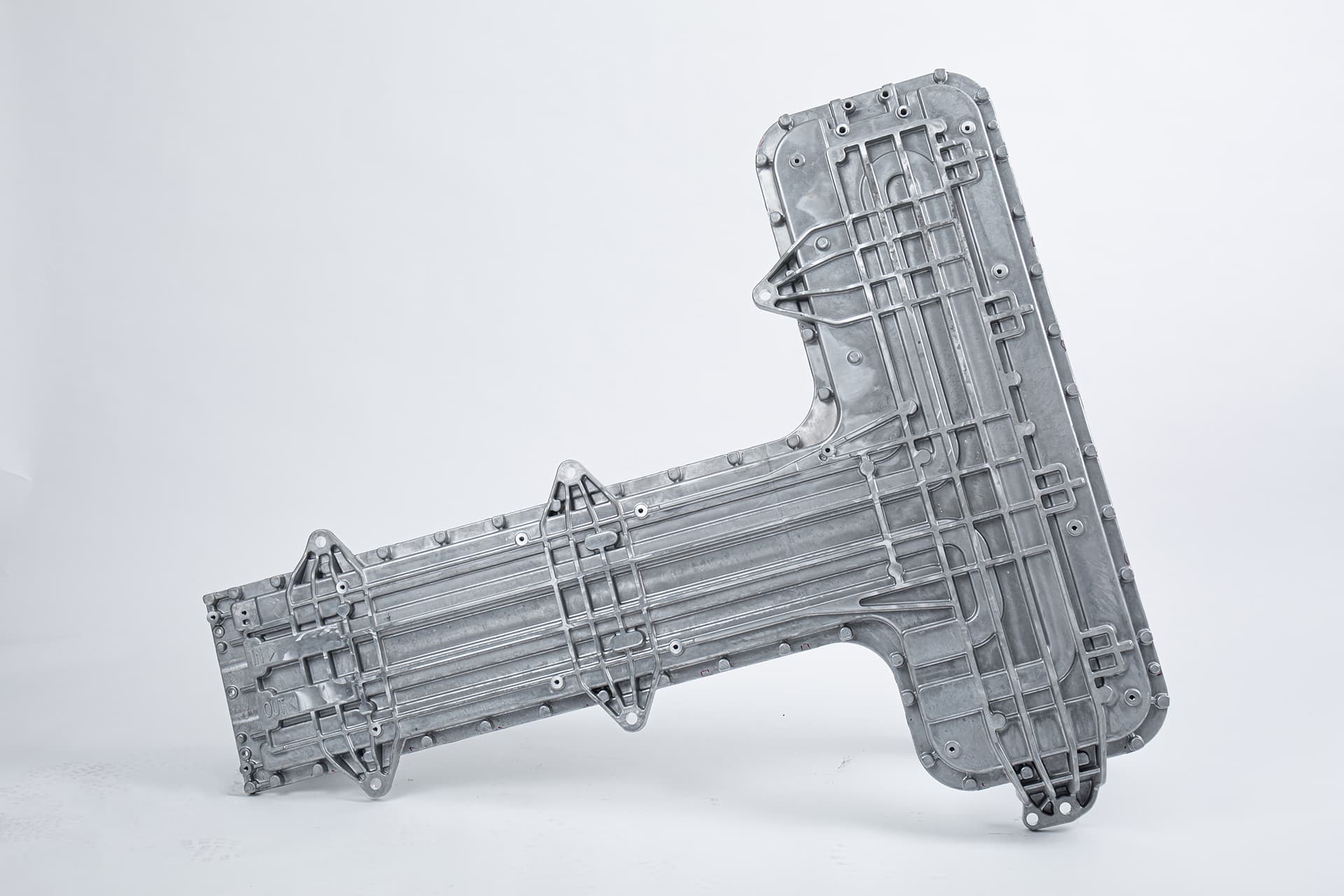
Compare magnesium die casting, rolled plate, thick plate and extrusion routes for automotive and electric-vehicle projects, with alloy-selection priorities, design risks and RFQ requirements.
Where magnesium fits in vehicle lightweighting
Magnesium alloys are evaluated in automotive and electric-vehicle programs when mass reduction must be balanced with structural performance, manufacturability, thermal conditions and production scale. Potential directions include housings, brackets, frames, supports, seat and steering structures, battery-system components and other project-specific parts.
The material is not a drop-in replacement for steel or aluminum. A successful design must address load paths, crash or impact behavior, creep at service temperature, corrosion, galvanic contact, joining, coating, repair and end-of-line inspection.
Product routes and current sourcing ranges
| Product route | Current Matrix Mg range | Project direction | Key decision factors |
|---|---|---|---|
| Magnesium die-cast components | AZ91D, AM60B, AS41 or project-specific alloy review | Complex housings, brackets and integrated structural parts | Impact, castability, temperature, wall thickness, tooling and annual volume |
| Rolled magnesium medium plate | AZ31B; 2–35 mm; width up to 1.2 m | Battery enclosures, panels, machined structures and development parts | Thickness, flatness, forming or machining, surface and joining |
| Magnesium thick plate | Cast or open-die forged plate; AZ91D / ZK61; 10–200 mm | Tooling, fixtures, prototypes and machined structural parts | Production route, allowance, tolerance, material condition and volume |
| Magnesium extrusion profiles | AZ31, AZ61, ZK60; custom sections | Rails, supports, frames and continuous vehicle structures | Section geometry, wall thickness, straightness, tooling and machining |
Alloy selection should follow the dominant requirement
Impact and energy absorption
For safety-related structures, elongation, impact response, joint design and validation can matter more than maximum tensile strength. AM60B is commonly evaluated where ductility and energy absorption are important, while final suitability depends on the component and test requirements.
Castability and complex geometry
AZ91D is widely considered for pressure die casting because it supports complex geometry and useful strength. Thin walls, ribs, bosses, porosity limits, machining stock and sealing surfaces should be reviewed with the tooling concept.
Temperature and dimensional stability
Parts near motors, power electronics, transmissions or thermal systems require a service-temperature profile. Creep resistance, fastener retention, dimensional change and coating durability must be validated under the actual duty cycle. AS41 or other alloy systems may be considered when moderate-temperature creep behavior is a design driver.
Corrosion, joining and surface protection
Magnesium should be isolated appropriately from dissimilar metals where galvanic corrosion is possible. Drainage, sealing, fasteners, adhesives, conversion coatings, painting and edge protection should be treated as part of the product design—not added after material selection.
Joining options depend on part form and loads. Mechanical fastening, adhesive bonding, welding and hybrid joints each require project-specific review and validation.
Information to send with an automotive RFQ
- 2D/3D drawings, datums and critical characteristics
- Vehicle location, load cases, duty cycle and service temperature
- Target alloy or required strength, ductility, creep and corrosion performance
- Prototype quantity, annual volume and program timing
- Joining, sealing, coating, machining and assembly requirements
- Validation plan, inspection documents, traceability and packaging requirements
Frequently asked questions
Which magnesium alloy is best for automotive use?
There is no universal best grade. AZ91D, AM60B, AS41, AZ31, AZ61 and ZK60 serve different process and performance needs. Selection should follow the component geometry, load, temperature, joining, corrosion and production requirements.
Can Matrix Mg evaluate prototype and production routes?
Yes. Thick plate or machined stock may support early prototypes, while die casting, rolled plate or extrusion may suit later production. The preferred route depends on geometry, volume and validation needs.
What must be validated before vehicle use?
Validate material condition, dimensions, fatigue or impact behavior as applicable, creep, corrosion, joints, coatings, sealing and the complete component test plan defined by the customer.
Submit the vehicle location, drawing and program requirements for a project-specific material and sourcing review.