News & Insights
Stay updated on magnesium alloy industry trends and technology

How to Conduct PMI on Magnesium Alloy Incoming Materials: A Guide to XRF, OES, and Composition Re-Verification
Compares handheld XRF and spark OES capabilities and limitations for magnesium alloy grade identification, covering light-element detection, surface condition, calibration, sampling, lab re-verification, and batch traceability.
Read More →
How to Implement SPC in Magnesium Alloy Die Casting Mass Production: Linking PFMEA, Control Plans, and Capability Indices
Explains how to convert PFMEA risks into actionable control plans and SPC for magnesium alloy die casting—covering proper use of control charts, Cp/Cpk and Pp/Ppk, cavity stratification, reaction plans, and continuous improvement.
Read More →
How to Conduct PPAP for Magnesium Alloy Die-Cast Components: APQP, Prototypes, and Submission Checklist
For automotive and high-volume procurement projects, this article outlines the documentation and evidence required—from APQP through PPAP—for magnesium alloy die-cast components, including drawings, process flow diagrams, PFMEA, control plans, MSA, capability studies, and material/performance test reports.
Read More →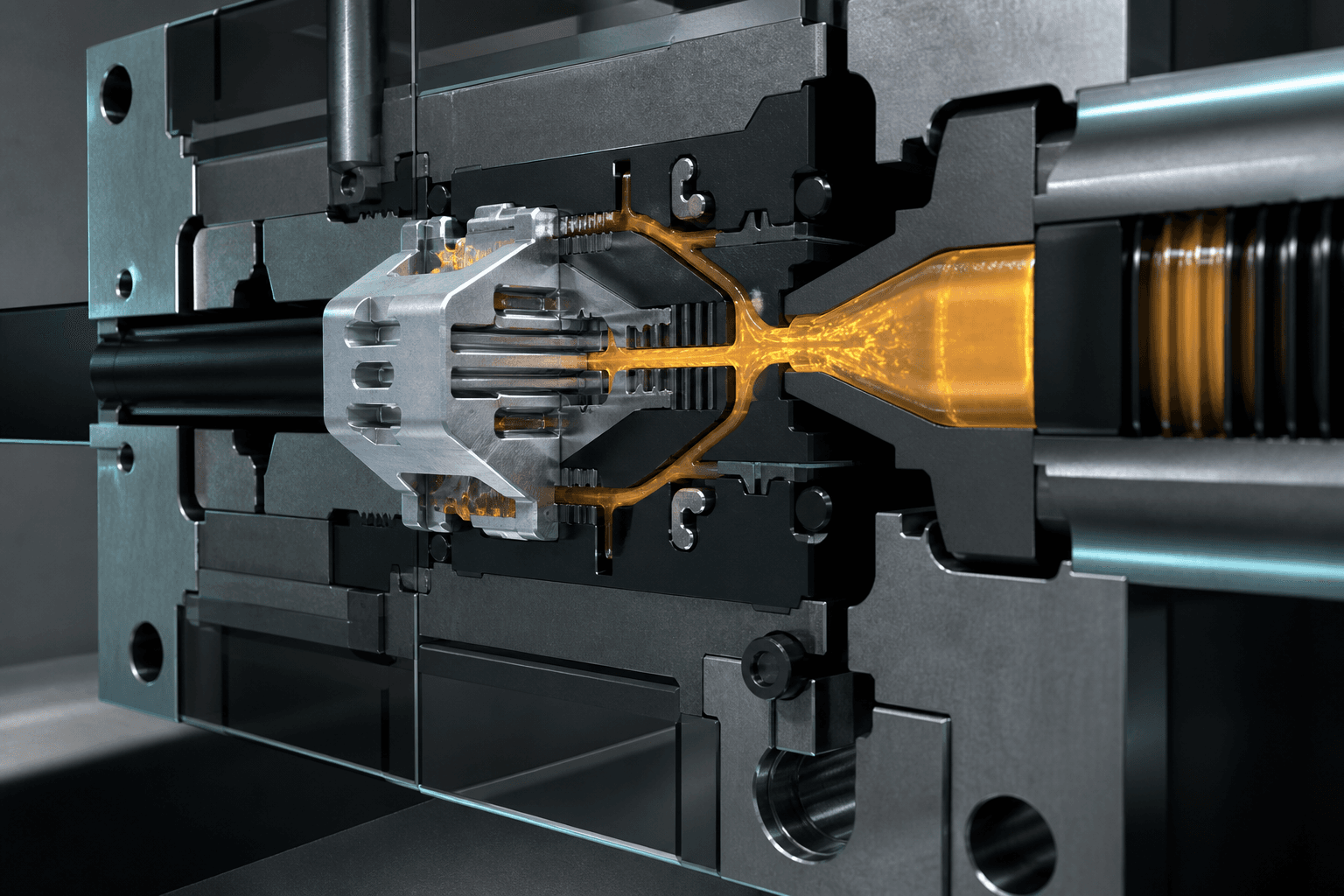
How Do Magnesium Alloys and Plastics Achieve Integrated Molding?
Covers mechanical interlocking, surface microstructure design, thermal expansion matching, in-mold positioning, sealing, moisture management, and galvanic corrosion mitigation for magnesium-alloy insert molding with engineering plastics.
Read More →
How to Select Magnesium Alloy Welding Wire: A Matching Guide for AZ61A, AZ92A, and Rare-Earth Alloys
Compare magnesium alloy welding wires across six dimensions—base material composition, welding process, strength, ductility, corrosion resistance, and service temperature—to clarify why AZ61A, AZ92A, and rare-earth systems (e.g., WE43) are not interchangeable based on strength alone.
Read More →
Can Magnesium Alloy Castings Be Repair-Welded? Defect Assessment, Rework Process, and Release Boundaries
Explains how to verify alloy grade, defect type, contamination, and load-bearing zones before repair-welding magnesium castings—and establishes a rework workflow covering bevel preparation, cleaning, preheating, welding, heat treatment, NDT, and dimensional revalidation.
Read More →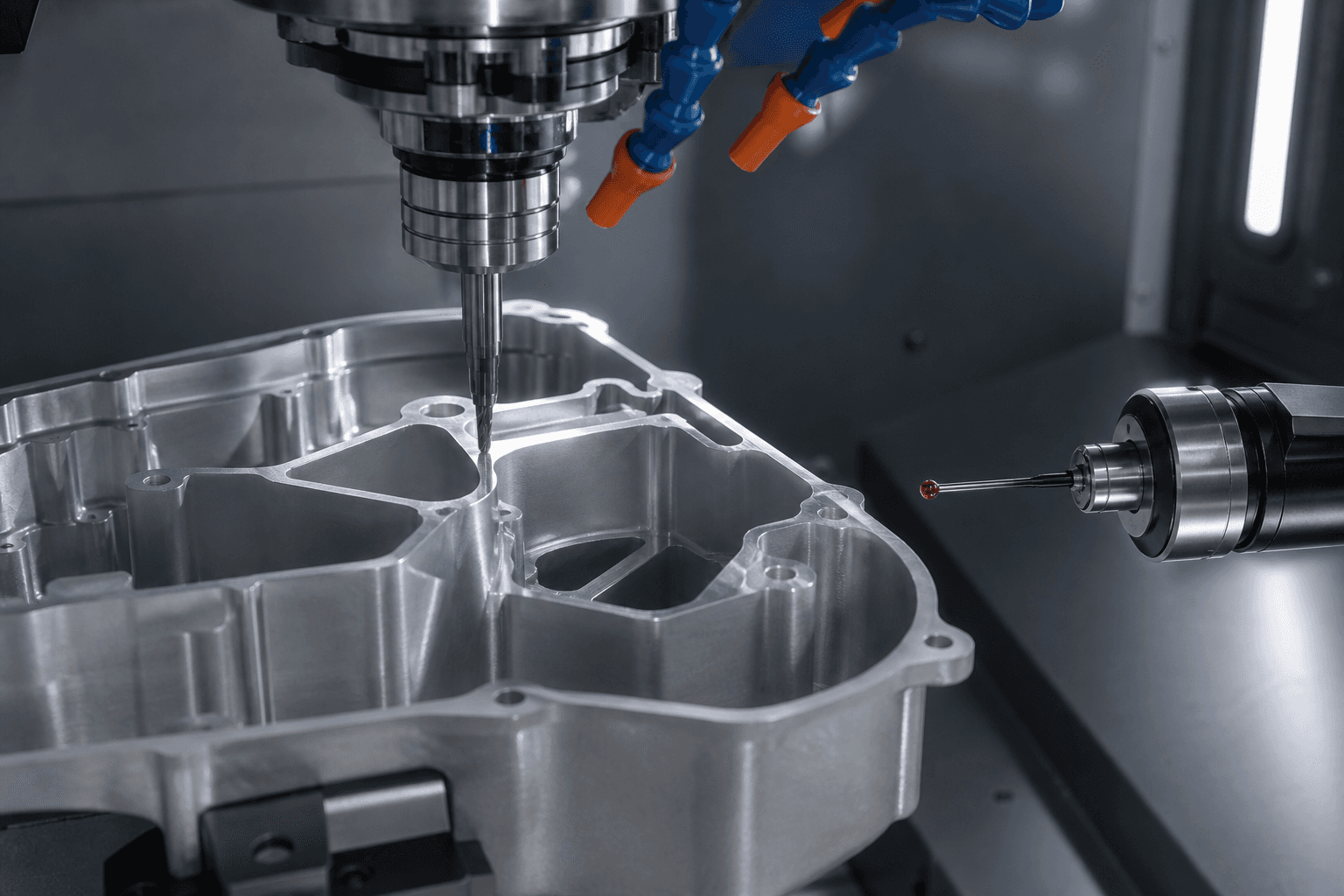
How to Ensure Surface Integrity in Precision Machining of Magnesium Alloys: Tooling, Burrs, and Inspection
Explains surface integrity control in precision magnesium alloy machining—covering tool geometry, cutting heat, chip evacuation, workholding, burrs, surface scratching, and residual stress—and links these to safety and coating performance.
Read More →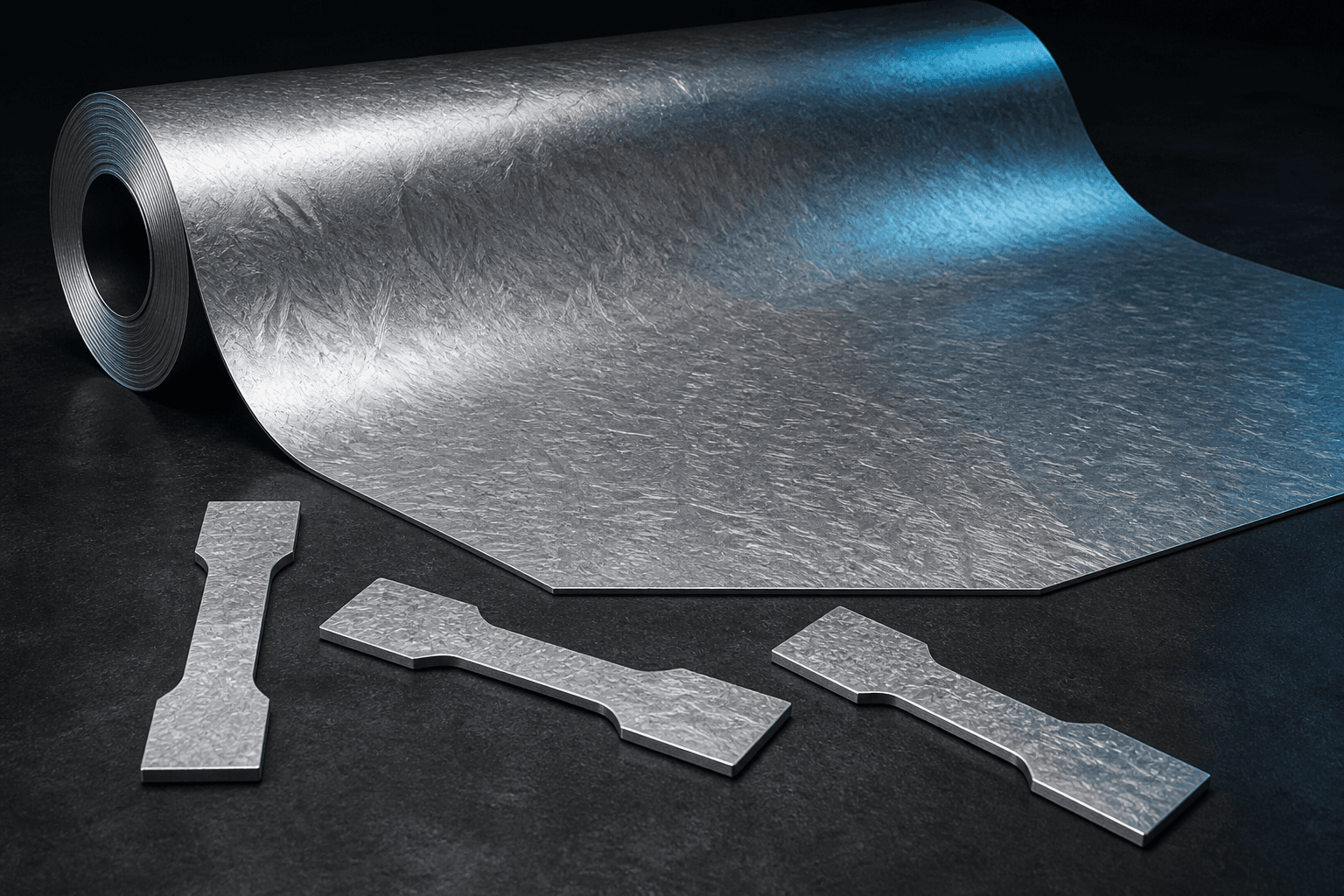
Why Do Magnesium Alloy Sheets Exhibit Directionality? Rolling Texture, Anisotropy, and Sampling Guidelines
Explains how the hexagonal crystal structure and rolling-induced texture cause directional variations in longitudinal, transverse, through-thickness, tensile, and compressive properties—and covers drawing notation, sampling, forming simulation, and batch acceptance.
Read More →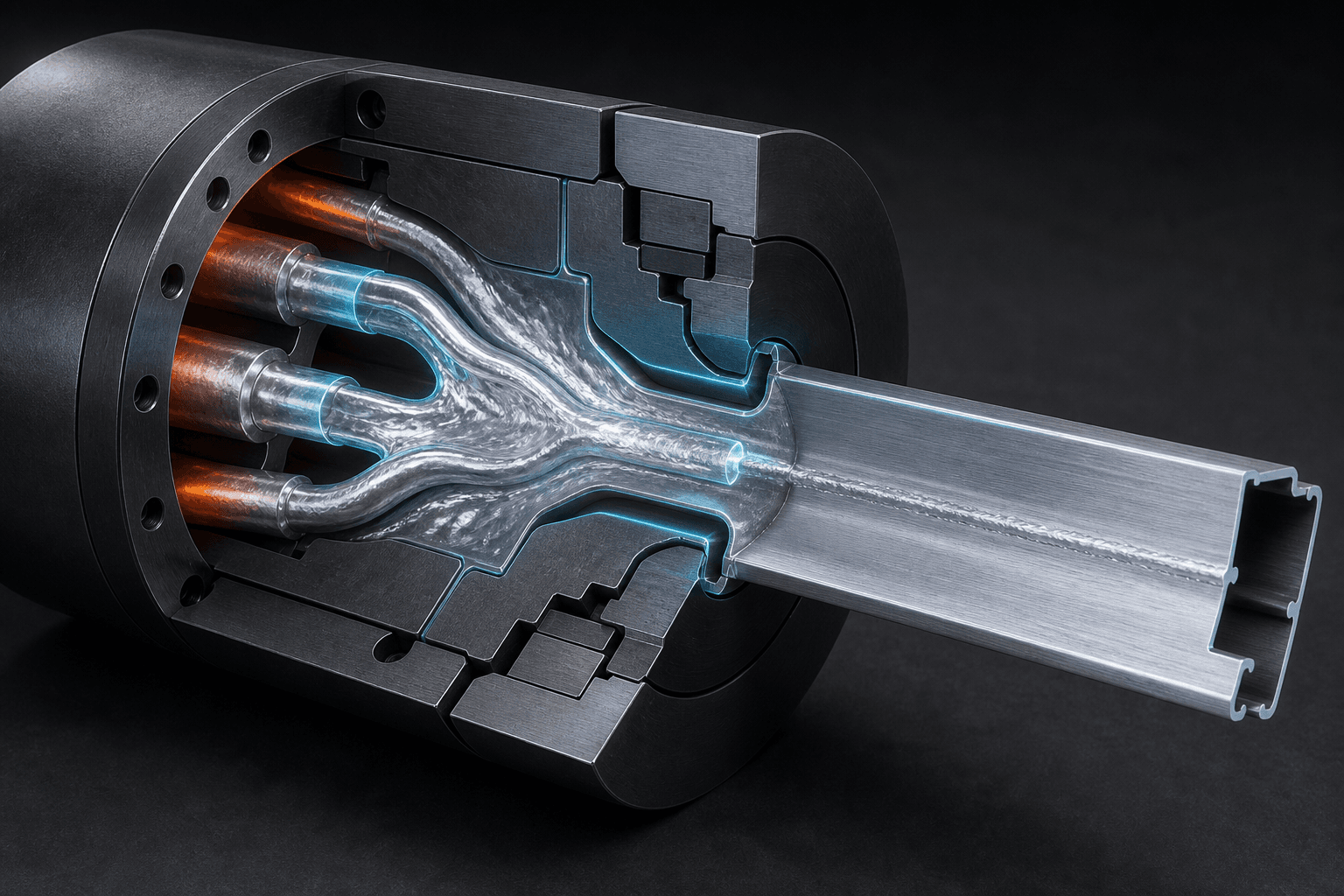
Are Weld Seams in Magnesium Alloy Hollow Profiles Reliable? A Guide to Porthole Dies, Microstructure, and Verification
Explains metal flow separation and high-pressure weld seam formation in porthole-die extrusion of magnesium alloys, covering seam location, temperature, extrusion ratio, microstructure, non-destructive testing, and destructive validation.
Read More →
How to Diagnose Surface Defects in Magnesium Alloy Extrusions: Cracks, Pitting, Streaks, and Die Adhesion
Differentiate magnesium alloy extrusion defects—including cracks, pitting, die lines, streaks, die adhesion, and oxidation—by direction relative to extrusion, periodicity, location across die orifices, and batch origin; then follow a systematic root-cause investigation path from billet to die and puller.
Read More →
Why Do Magnesium Alloy Castings Warp or Crack During Heat Treatment? Controlling Solution, Quenching, and Aging
Analyzes blistering, warping, cracking, and property scatter in magnesium alloy castings during solution treatment, quenching, and aging—covering furnace loading, support design, temperature uniformity, and pre-heat-treatment porosity verification.
Read More →
How to Choose Between Magnesium Alloy Squeeze Casting, Gravity Casting, and High-Pressure Die Casting?
A comparative analysis of squeeze casting, gravity casting, and high-pressure die casting for magnesium alloys—covering porosity, wall thickness, heat treatment compatibility, mechanical properties, dimensional accuracy, tooling, cycle time, and production volume.
Read More →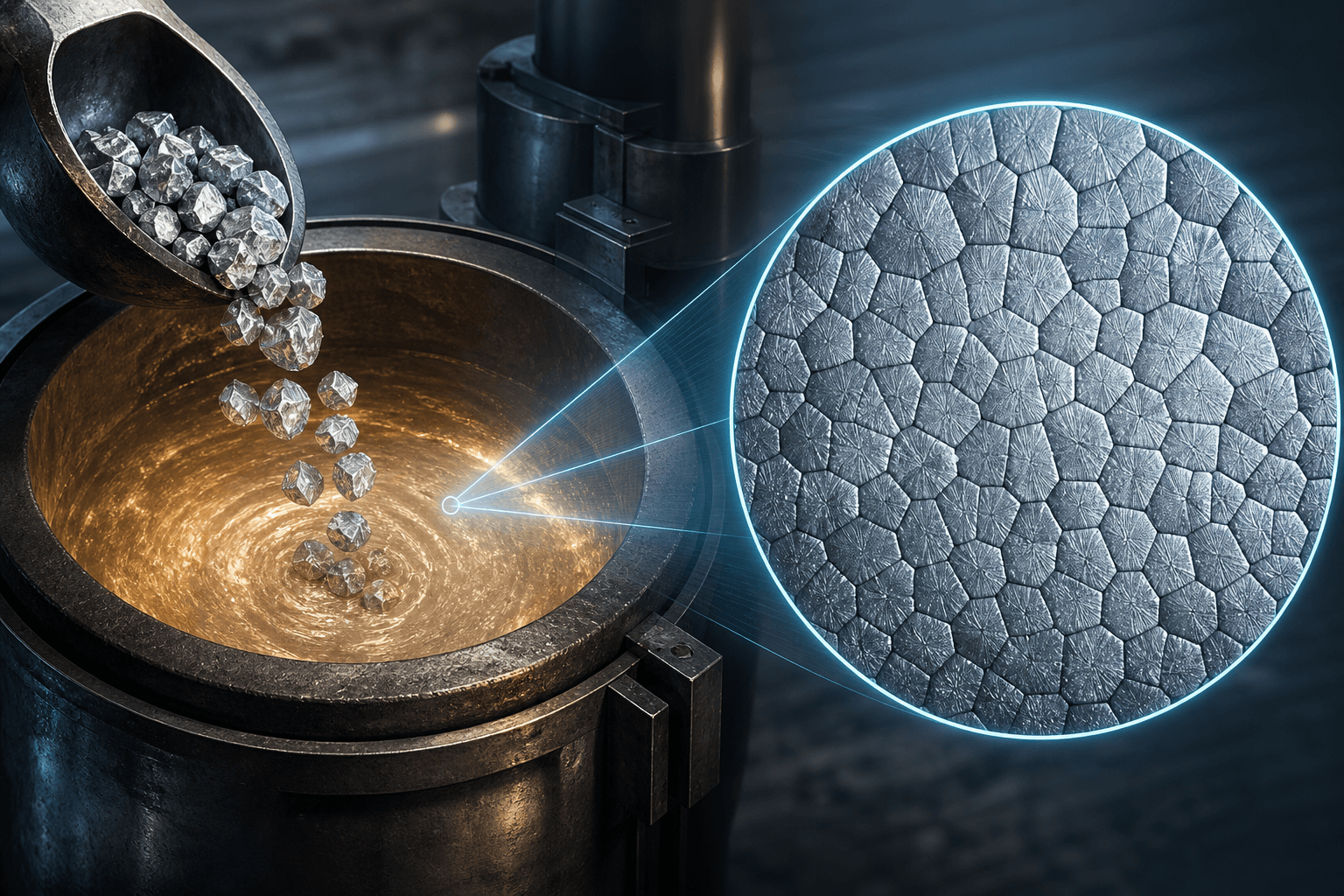
How to Select Magnesium Alloy Master Alloys? A Guide to Mg-Zr Grain Refinement and Composition Rebalancing
Explains the role of magnesium alloy master alloys in composition rebalancing, impurity removal, and grain refinement—focusing on applicable alloys, addition practices, settling behavior, sampling protocols, and microstructure validation boundaries for Mg-Zr systems.
Read More →
How to Control Magnesium Alloy Melt Cleanliness? A Guide to Inclusion Control, Flux Management, and Filtration Acceptance
Explains how oxides, flux residues, and foreign particles form in Mg melts; compares sedimentation, skimming, refining, inert gas treatment, and filtration methods; and outlines an inclusion acceptance protocol for castings.
Read More →
How to Achieve SF₆-Free Melting of Magnesium Alloys: Cover Gas Selection and Retrofit Validation
Explains why magnesium melts require protection, compares SF₆-free cover gas and flux-based approaches, and details retrofit validation methods—covering gas blending, distribution, temperature control, off-gas management, safety, and cast quality.
Read More →
How to Use Die Release Agents for Magnesium Alloy Die Casting: A Troubleshooting Guide for Porosity, Carbon Buildup, and More
Covers die release agent concentration, spray coverage, atomization, mold temperature, drying time, and cycle timing to optimize demolding and cooling control in magnesium alloy die casting—enabling systematic troubleshooting of porosity, carbon buildup, sticking, and coating failures.
Read More →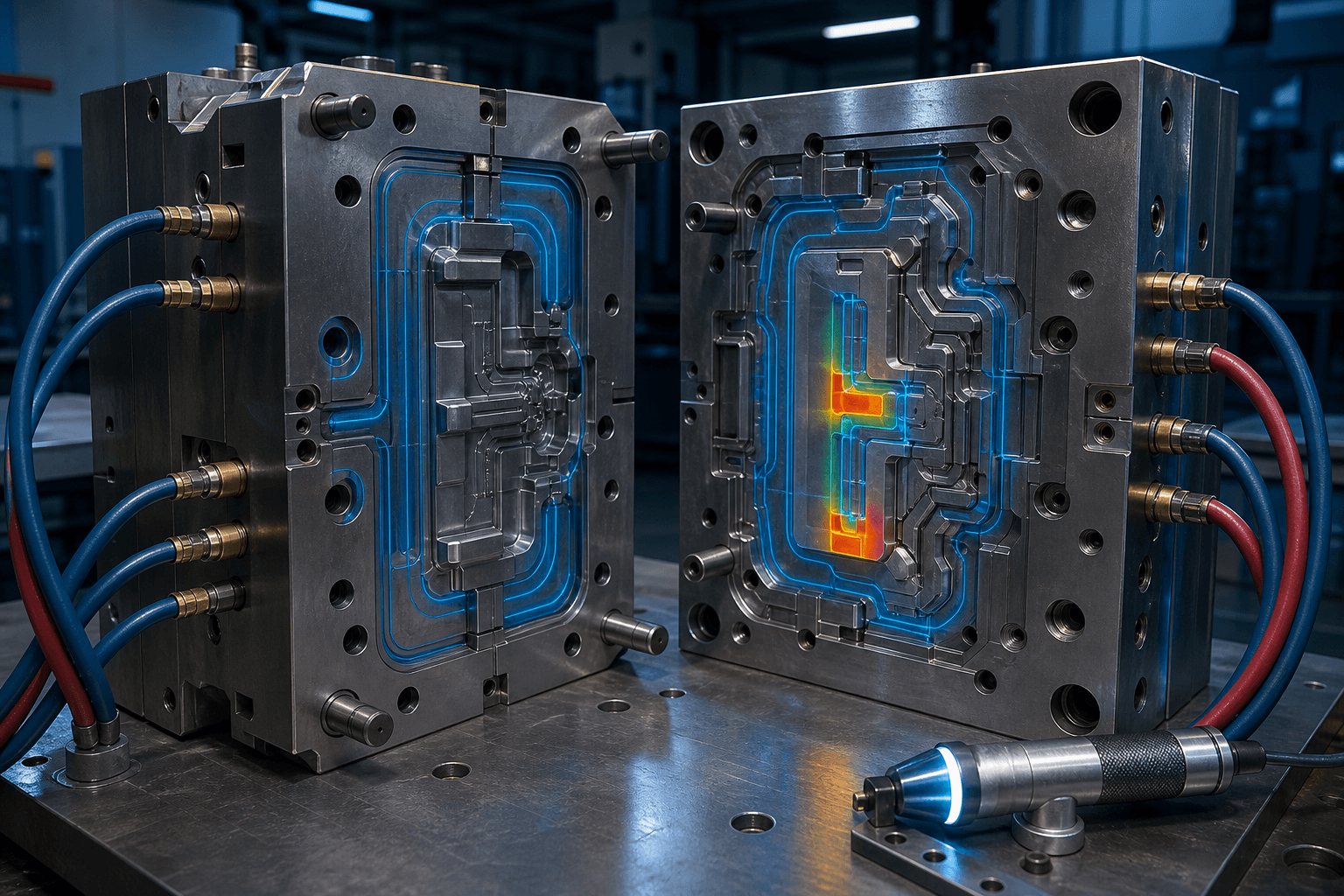
How to Achieve Thermal Balance in Magnesium Alloy Die-Casting Molds
Explains how mold temperature distribution, cooling circuit design, spray application, and cycle timing affect cold shuts, soldering, shrinkage porosity, and thermal fatigue—and outlines monitoring and maintenance methods for extending mold service life.
Read More →
How to Monitor Magnesium Alloy Die Casting: Shot Curves, Cavity Pressure, and Process Fingerprints
Build a traceable process fingerprint for magnesium alloy die casting—covering slow shot, fast shot, intensification, vacuum, cavity pressure, mold temperature, and melt temperature—and explain how alarm limits, trend analysis, and defect root-cause tracing are implemented.
Read More →
How to Design Gating Systems for Magnesium Alloy Die Casting: A Guide to In-Gates, Overflows, and Venting Validation
Explains how sprues, runners, in-gates, overflows, and venting systems work together in magnesium alloy die casting—and outlines a systematic gating and venting design methodology validated through mold flow analysis, short-shot trials, sectioning, and mass production.
Read More →
Hot-Chamber vs. Cold-Chamber Die Casting for Magnesium Alloys: Equipment, Cycle Time, and Part Boundaries
A comparative analysis of hot-chamber and cold-chamber die casting for magnesium alloys—covering furnace layout, metal transfer, cycle time, part dimensions, alloy compatibility, oxide inclusions, and equipment maintenance—plus a project selection and acceptance checklist.
Read More →
How to Accept Recycled Magnesium Alloys? A Guide to Scrap Sorting, Contaminant Control, Composition Reblending, and Traceability
Explains scrap grading, control of dissimilar metals and oil contamination, melt reblending, inspection of composition and corrosion-sensitive impurities, batch traceability, and release criteria for closed-loop recycled magnesium alloys.
Read More →
Can Magnesium Alloy ASTM, EN, JIS, and GB Grades Be Directly Cross-Referenced?
Explains why similar magnesium alloy grades do not guarantee full equivalence—and outlines how to verify chemical composition, impurity limits, product standards, condition, dimensions, sampling, and acceptance documentation.
Read More →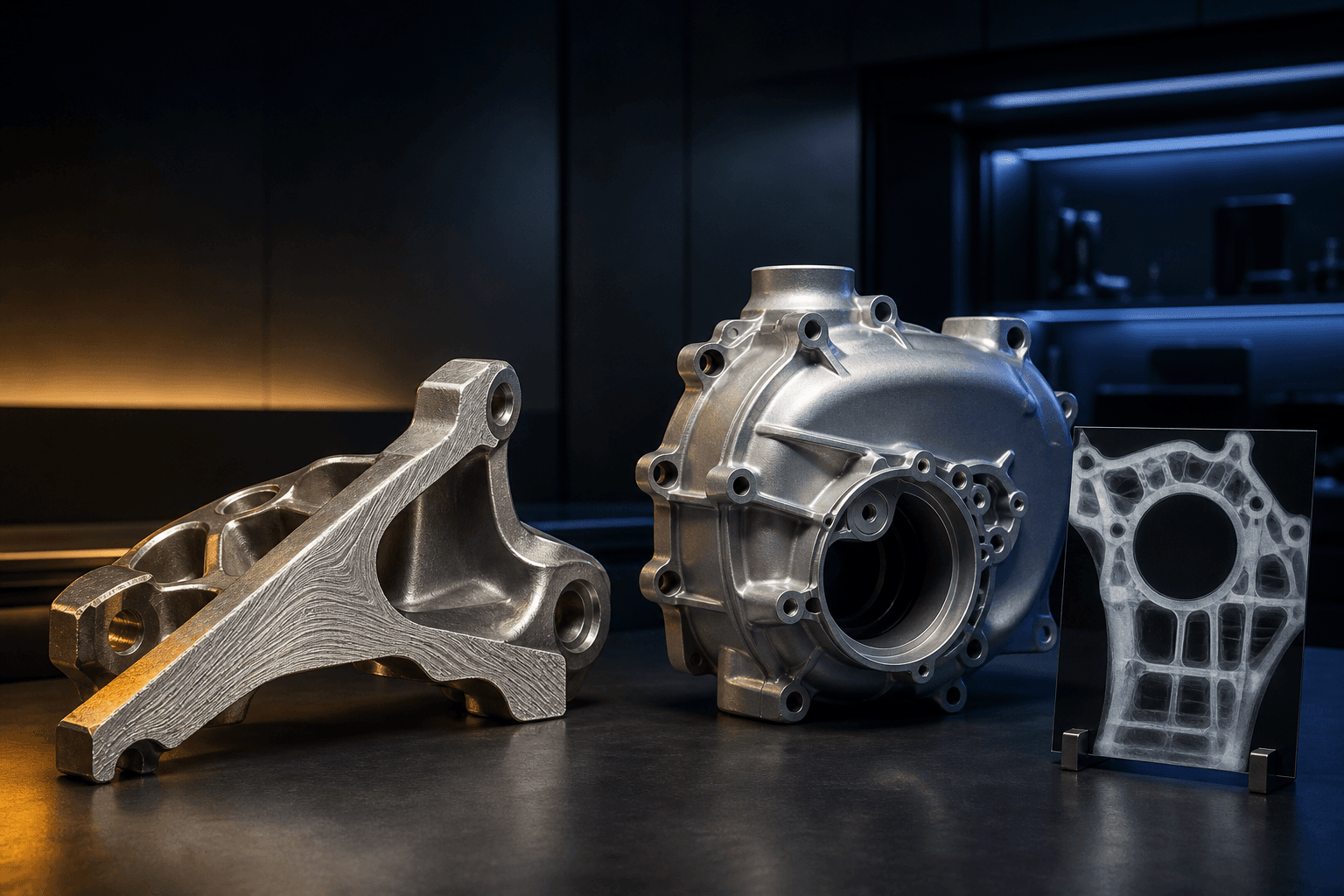
WE43 vs. Elektron 21: A Technical Selection and Qualification Guide for High-Performance Magnesium Alloys
A comparative analysis of WE43 and Elektron 21—rare-earth magnesium alloys—across product form, temperature performance, corrosion resistance, casting vs. wrought processing routes, heat treatment, data sources, and qualification requirements.
Read More →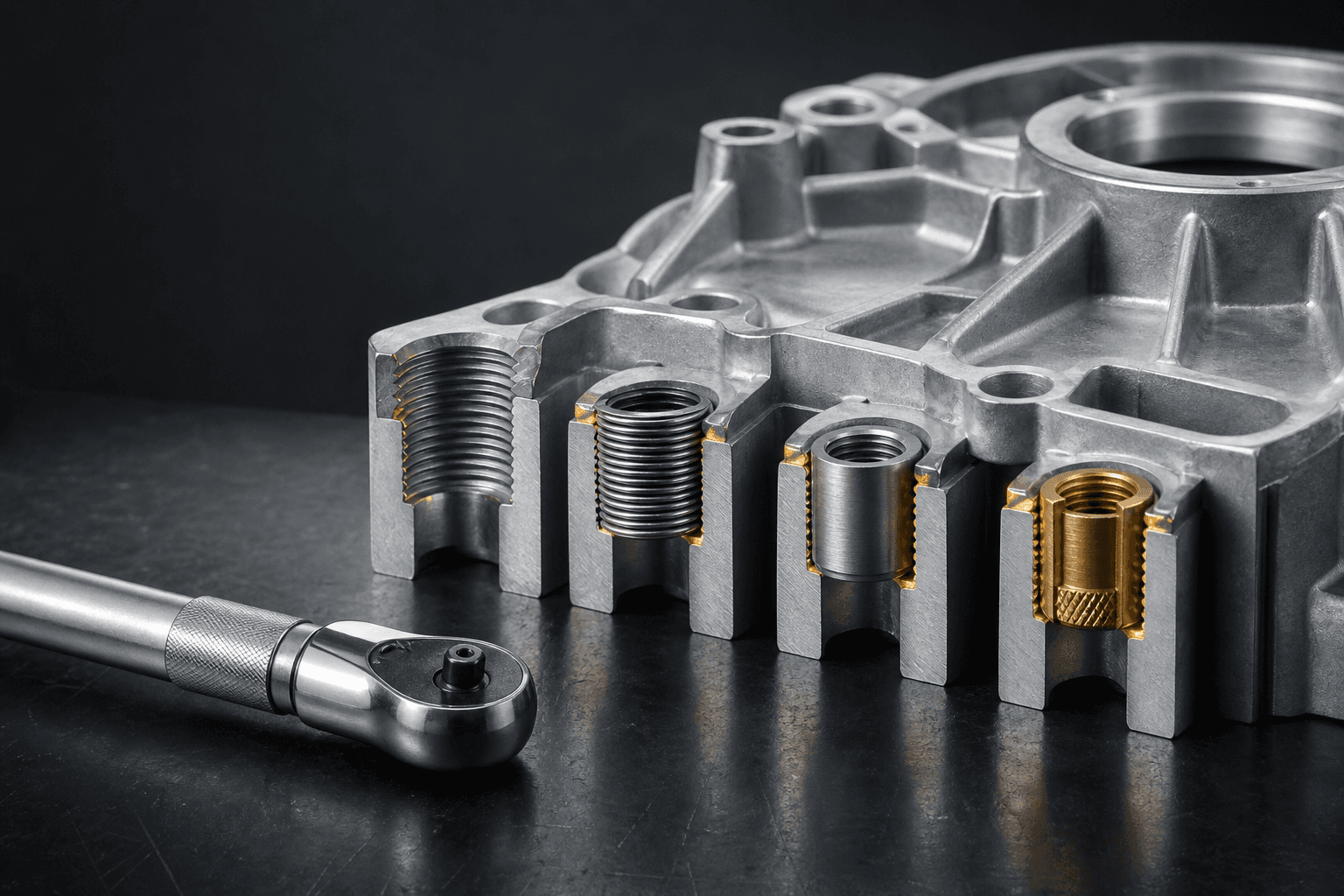
How to Design Threads and Inserts for Magnesium Alloys: Engagement Length, Torque, and Corrosion Protection Guide
Compares direct tapping, wire thread inserts, solid-threaded inserts, and die-cast embedded inserts for magnesium alloys—covering engagement length, stud design, torque control, loosening resistance, and galvanic corrosion validation.
Read More →
Why Does Magnesium-Alloy Coating Adhesion Fail? A Troubleshooting Guide for Pretreatment, Contamination, and Humidity-Temperature Exposure
Systematically diagnose blistering, delamination, and cross-cut failure in magnesium-alloy coatings—covering substrate, cleaning, oxide films, conversion treatment, coating cure, masking, handling, and environmental aging.
Read More →
How to Select Salt Spray and Cyclic Corrosion Tests for Magnesium Alloys: A B117, G85 & CCT Guide
Compares continuous salt spray, acidic salt spray, and cyclic corrosion testing for magnesium alloy coatings—clarifying applicability boundaries, scribe requirements, specimen design, evaluation criteria, and correlation to real-world vehicle or outdoor exposure.
Read More →
How to Verify Dimensional Accuracy of Magnesium Alloy Parts: Datums, Temperature, CMM Protocols, and Measurement Uncertainty
A guide for procurement and quality teams on temperature stabilization, free-state measurement, datum clamping, CMM programming, sampling plans, and gage MSA for thin-walled and large magnesium alloy components.
Read More →
How to Achieve EMI Shielding with Magnesium-Alloy Enclosures: A Guide to Seams, Grounding, Coatings, and Testing
Explains how bulk conductivity, seam leakage, grounding, conductive coatings, gaskets, corrosion isolation, and radiated/conducted emissions testing must be co-designed for magnesium-alloy enclosures.
Read More →
How to Design Thermal Management with Magnesium Alloys? Thermal Conductivity, Contact Thermal Resistance, and Thermal Validation
Explains thermal design methodologies for magnesium-alloy housings and heat-dissipation structures—from material thermal conductivity and wall thickness to die-cast porosity, contact interfaces, coatings, thermal spreading, and environmental testing.
Read More →
How to Apply Magnesium Alloy Damping Performance: A Guide to Vibration, Noise, and Structural Testing
Explains the engineering value and measurement boundaries of magnesium alloy damping, detailing how loss factor, modal frequency, stiffness, joint conditions, temperature, and surface state influence vibration and noise performance.
Read More →
How to Design for Fatigue in Magnesium Alloys: S-N Curves, Notches, Surface Effects, and Life Validation
Explains how fatigue data for magnesium alloys are influenced by alloy composition, manufacturing process, material orientation, notches, surface condition, corrosion, and mean stress—and outlines the step-by-step process from specimen testing to component-level durability validation.
Read More →
How to Develop Magnesium-Alloy Prototypes: CNC, Sand Casting, Soft-Tool Die Casting, and Transition to Mass Production
Select the optimal magnesium-alloy prototyping method—CNC, sand/low-pressure casting, soft-tool die casting, or production-tool die casting—based on validation goals, quantity, geometry, and performance requirements to prevent process mismatch between prototypes and mass production.
Read More →
Magnesium Alloy LPBF Additive Manufacturing Guide: WE43 Powder, Defects, and Qualification
A technical guide for R&D and procurement teams covering powder handling, combustion risks, elemental evaporation, porosity, anisotropy, post-processing, and part qualification in magnesium alloy laser powder bed fusion (LPBF).
Read More →
How to Design and Procure Magnesium-Alloy Forgings: A Guide to Die Forging, Flow Lines, Heat Treatment, and Inspection
This guide outlines the development pathway for magnesium-alloy forgings—from alloy selection and billet specification to forging direction, parting line design, fillets, draft angles, heat treatment, machining allowances, and first-article inspection.
Read More →
How to Select NDT Methods for Magnesium Alloy Castings: X-ray, CT, Penetrant, and Ultrasonic Testing Guide
Compare the capability boundaries of X-ray, industrial CT, penetrant testing, and ultrasonic testing for magnesium alloy castings—covering defect types, sensitivity, sampling strategy, and how to specify acceptance criteria in procurement documents.
Read More →
How to Ensure Air-Tightness in Magnesium Alloy Die-Cast Components?
Explains leakage pathways in magnesium alloy die-cast housings, pressure-decay and helium leak testing methods, fixture MSA, applicability boundaries of vacuum impregnation, and mass-production air-tightness release criteria.
Read More →
DFM Guide for Magnesium Alloy Die-Cast Parts: Wall Thickness, Ribs, Bosses, Fillets, and Draft
A DFM guide for product design and procurement teams covering uniform wall thickness, ribs, bosses, fillets, draft angles, parting lines, and machining allowances for magnesium alloy die-cast components.
Read More →
Thixomolding vs. Magnesium Alloy Die Casting: How to Choose for Thin-Wall Components
A comparative analysis of Thixomolding and conventional high-pressure magnesium alloy die casting—covering raw material form, filling behavior, porosity, minimum wall thickness, equipment, tooling, surface quality, and production volume.
Read More →
How to Evaluate Magnesium Alloy Vacuum Die Casting: Vacuum Curves, Porosity, and Heat Treatment Validation
Defines the operational boundaries of magnesium alloy vacuum die casting and outlines verification protocols for vacuum initiation, valve response, leakage, porosity, heat treatment blistering, and structural component release.
Read More →
How to Diagnose Magnesium Alloy Die-Casting Defects: A Guide to Porosity, Cold Shuts, Shrinkage Cavities, Hot Tears, and Flash
Distinguish porosity, cold shuts, shrinkage cavities, hot tears, and flash in magnesium alloy die-casting by integrating defect morphology, location, cross-section evidence, and process data—and follow a systematic diagnostic pathway covering mold flow, vacuum, temperature control, and release standards.
Read More →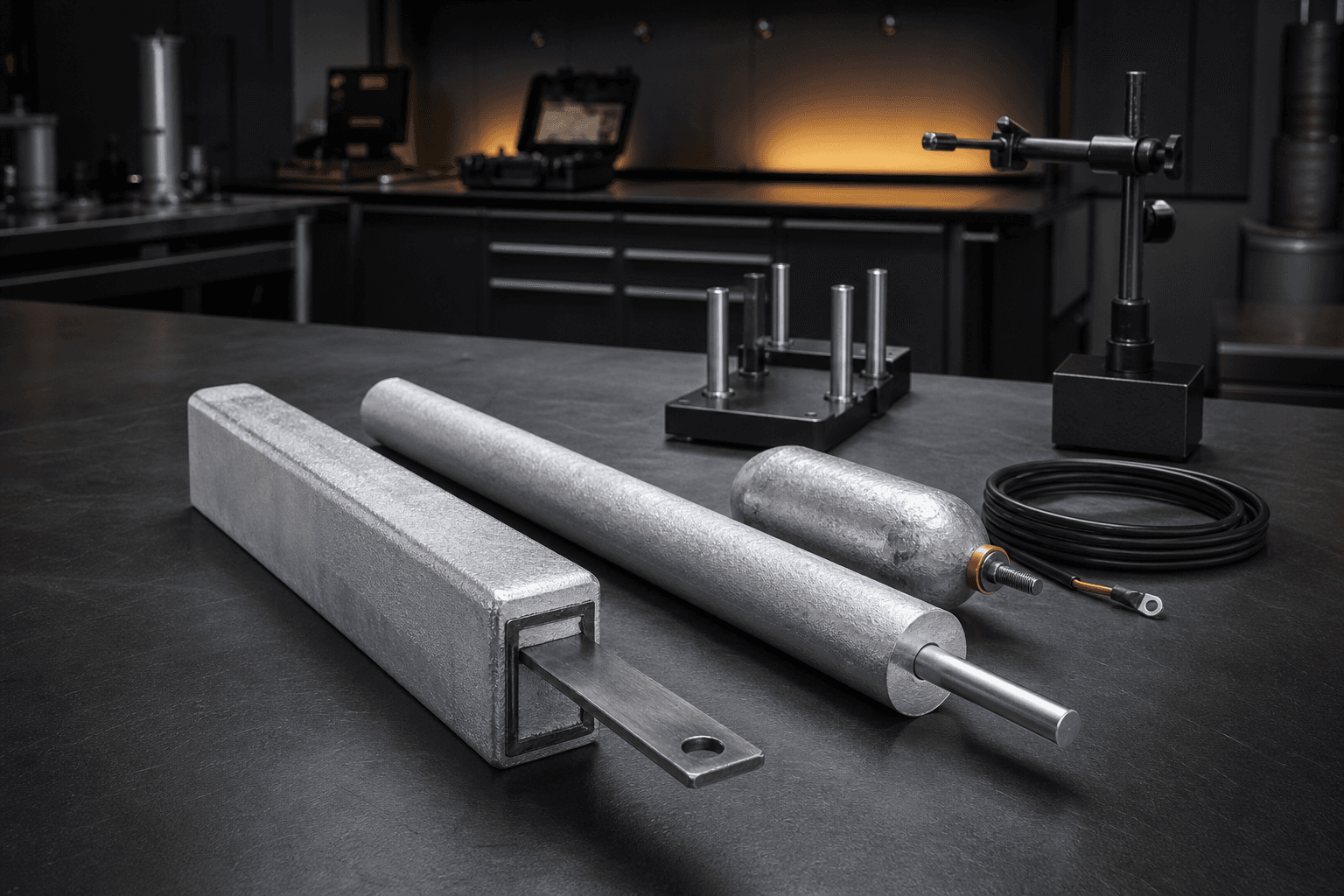
How to Select Magnesium Alloy Sacrificial Anodes: A Procurement Guide for Freshwater, Soil, and Equipment Protection
Covers application environments, alloy types (e.g., AZ31B, ZK61), shapes, backfill materials, lead wires, installation methods, and quality acceptance criteria—emphasizing specification-driven procurement over weight-based selection.
Read More →
How to Package, Store, and Ship Magnesium Alloys: A Guide to Moisture Protection, Corrosion Prevention, and Export Delivery
Practical guidance for plates, extrusions, and machined components—covering moisture-resistant packaging, isolation, scratch prevention, wooden crate securing, condensation control in storage, and export delivery acceptance.
Read More →
How to Write a Magnesium Alloy RFQ: Drawings, Alloy Grades, Tolerances & Inspection Document Checklist
A ready-to-use RFQ framework for magnesium alloys, covering material standards, drawing versions, quantities, processes, surface requirements, inspection, traceability, packaging, and change management.
Read More →
How to Interpret Magnesium Alloy Heat Treatment Temper Designations: H24, T5, T6 and Procurement/Inspection Guidelines
Explains the processing and heat treatment logic behind magnesium alloy temper designations (F, O, H, T), clarifies why H24, T5, and T6 are not interchangeable across alloy grades, and provides actionable procurement and inspection checklists.
Read More →
How to Join Magnesium Alloys? A Selection Guide for Welding, Bolting, Riveting, and Adhesive Bonding
Compares applicability of magnesium-alloy welding, bolting, riveting, adhesive bonding, and hybrid joining—covering thermal effects, sealing, corrosion resistance, serviceability, and joint validation.
Read More →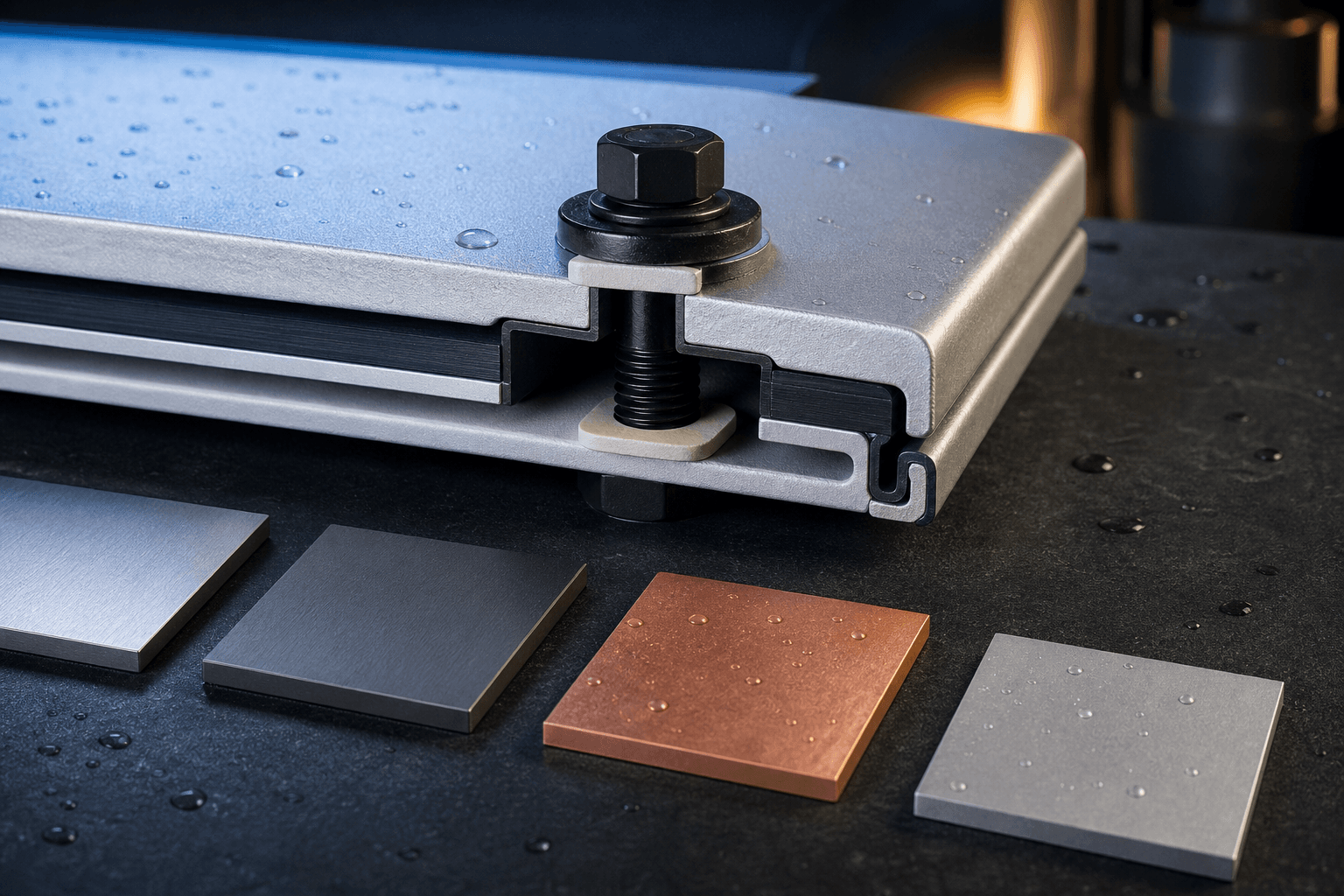
How to Prevent Galvanic Corrosion in Magnesium Alloys: A Design Guide for Fasteners, Insulation, and Coatings
Explains the formation conditions of galvanic corrosion when magnesium alloys are joined with dissimilar metals (e.g., steel, aluminum, copper), and provides a systematic approach covering fastener selection, isolation, drainage, coating design, and verification testing.
Read More →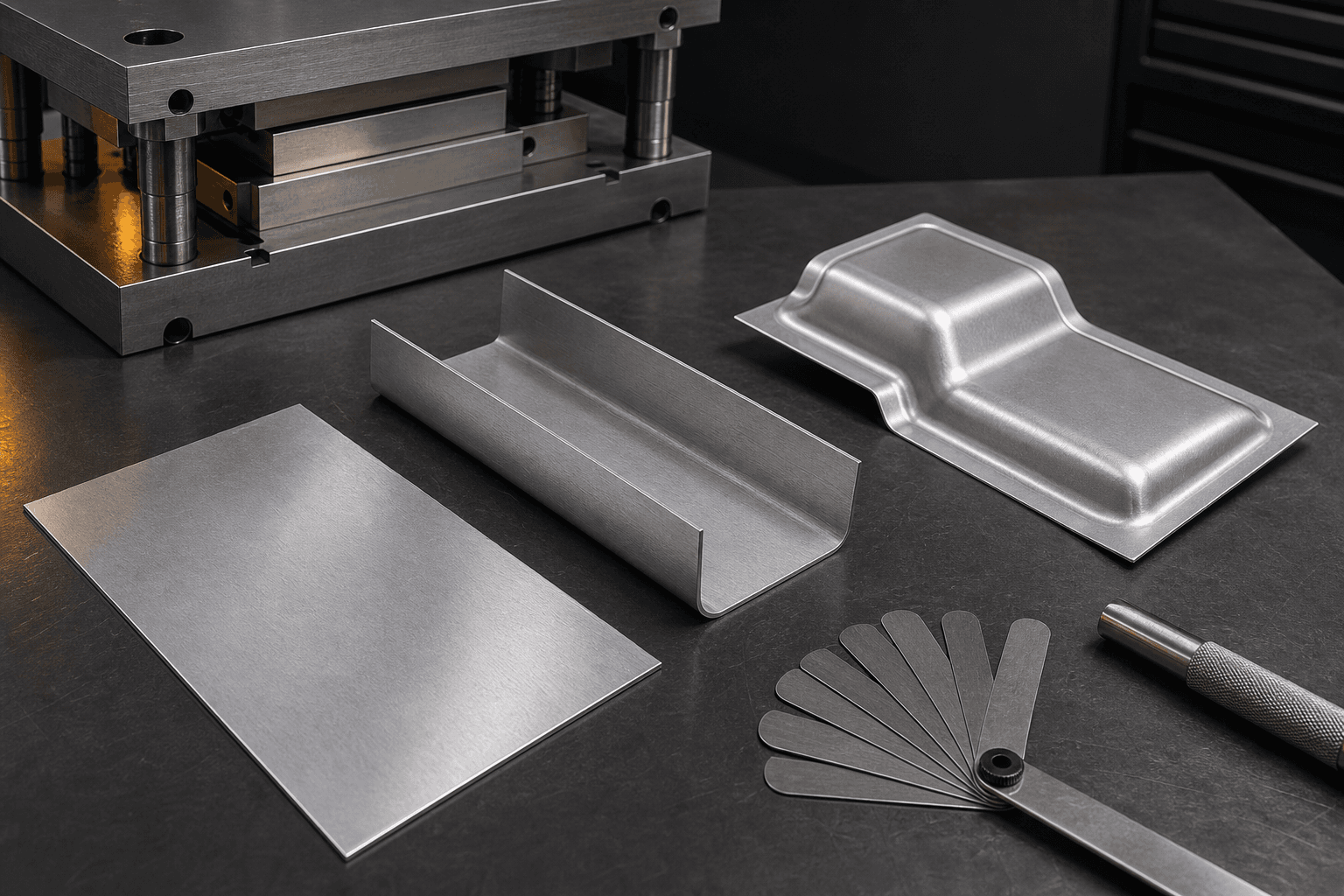
How to Form Magnesium Alloy Sheets: Bend Radius, Warm Forming, and Springback Control
This article analyzes anisotropy, temperature windows, bend radius, springback, lubrication, and first-article validation in magnesium alloy sheet bending and stamping—helping design teams reduce cracking and dimensional drift.
Read More →
Magnesium Alloy Extrusion Profile Design Guide: Wall Thickness, Tolerances, Dies & RFQ Checklist
A practical design methodology for magnesium alloy extrusion profiles—from drawings to mass production—covering extrudability assessment, wall thickness transitions, fillets, hollow sections, straightness, twist, and die development.
Read More →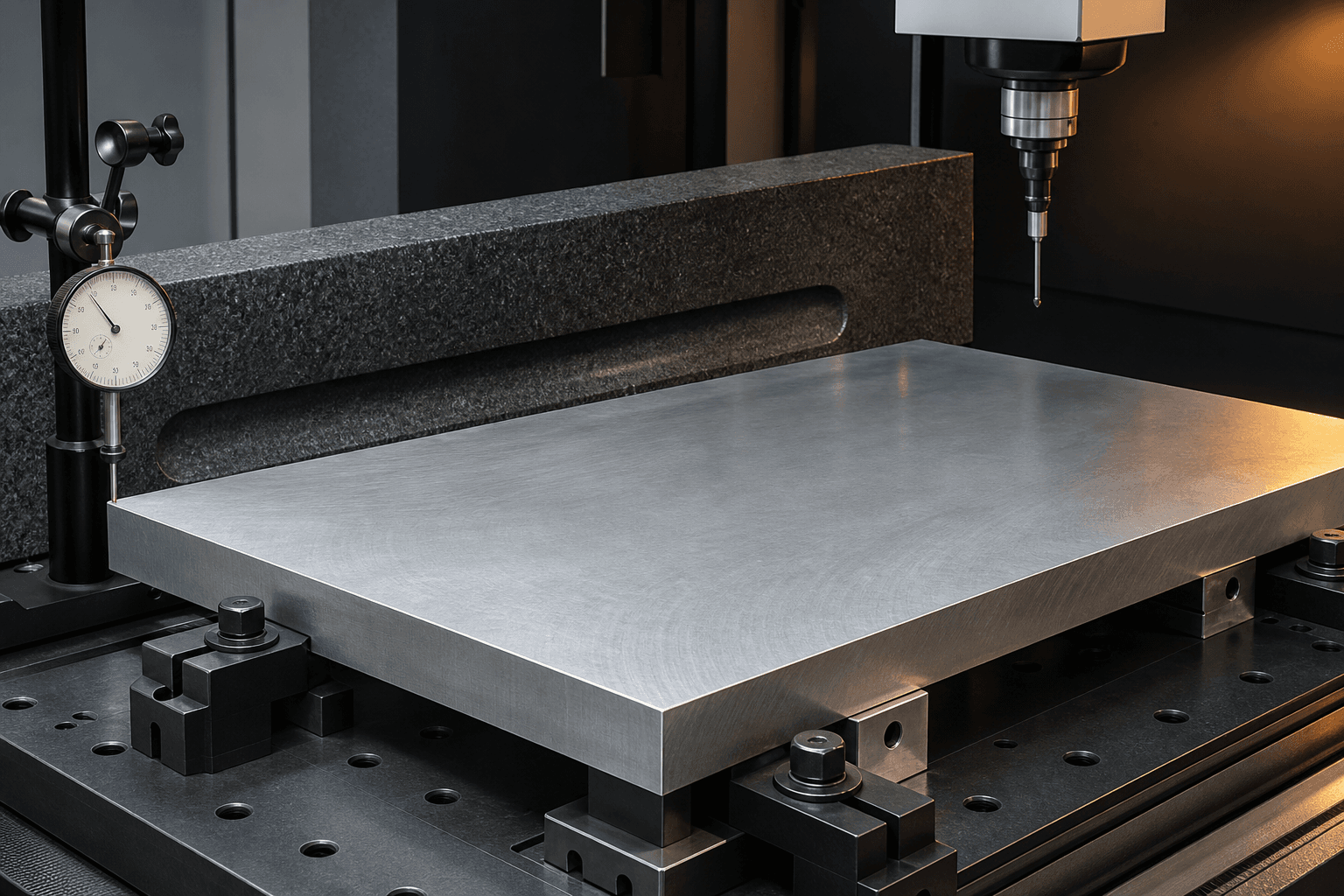
How to Control Deformation in Machining Magnesium Alloy Thick Plates?
A systematic guide addressing warpage after milling magnesium alloy thick plates—covering material condition, residual stress, rough/finish machining sequencing, symmetrical material removal, fixturing, and inspection datum control.
Read More →
How to Choose Between AZ31B, AZ61A, and ZK60: A Procurement Guide for Wrought Magnesium Alloy Sheets and Profiles
A comparative analysis of AZ31B, AZ61A, and ZK60—evaluated across product form, strength, formability, machinability, surface protection, and supply stability—to help procurement and engineering teams establish a verifiable material selection pathway.
Read More →
Magnesium Dust Safety: A Practical Guide for Machining and Finishing
A practical buyer’s guide to magnesium chip and dust safety: hazard analysis, source capture, ignition control, metal-specific collection, storage and emergency planning.
Read More →
Magnesium vs. Aluminum Cost: A Total-Cost Model for Buyers
A practical RFQ framework for comparing magnesium and aluminum by qualified-part cost, tooling, processing, quality, logistics and in-use value—not price per tonne.
Read More →
Magnesium Supply Risk: A Buyer’s Contract and Sourcing Playbook
USGS estimates indicate that China produced about 86% of the world’s primary magnesium in 2025. For overseas buyers, resilience depends on more than a long-term order: it requires clear specifications, transparent price formulas, qualified alternatives, realistic safety stock and enforceable delivery terms.
Read More →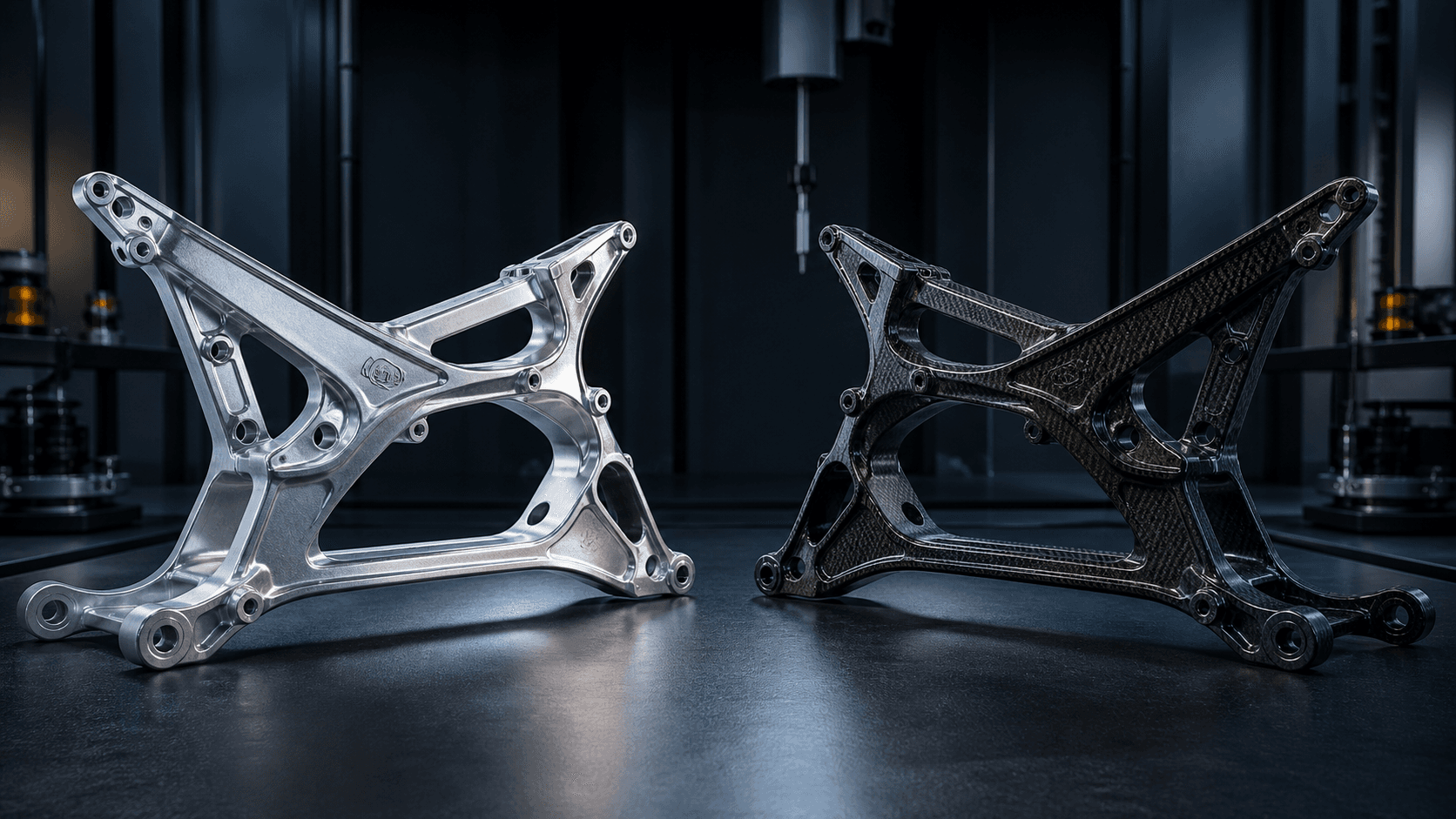
Magnesium Alloy vs CFRP: Engineering Cost and Design Guide
Magnesium alloys and carbon-fiber-reinforced polymer solve different lightweighting problems. This engineering guide compares load-path efficiency, geometry, joining, cycle time, inspection, repair, corrosion interfaces and total production cost—without declaring a universal winner.
Read More →
AZ91D vs. AM60B vs. AS41: Which Magnesium Alloy Grade Best Balances Creep Resistance and Impact Resistance for Your Project?
Selecting the right magnesium alloy die-casting grade is critical to balancing product performance and manufacturing cost across diverse industrial applications. This article provides a rigorous, cross-cutting comparison of three widely adopted grades—AZ91D (high strength & castability), AM60B (high toughness & impact resistance), and AS41 (elevated-temperature creep resistance)—analyzing their chemical composition, microstructural phases, mechanical properties, and typical use cases to deliver a practical, engineer-focused material selection guide.
Read More →
Severe Plastic Deformation of Magnesium Alloys: ECAP and HPT Guide
Severe plastic deformation can refine magnesium-alloy grains and modify texture, sometimes improving strength and ductility together. The result is not automatic: alloy, temperature, strain path, passes, heat treatment, specimen position and test direction all matter.
Read More →
Ignition-Resistant Magnesium Alloys: Ca, Rare Earths and Fire Tests
Calcium and selected rare-earth additions can improve the oxidation-film stability and ignition resistance of magnesium alloys, but they do not make every component fireproof. Safety depends on alloy, product form, section size, surface condition, heat exposure and the exact qualification test.
Read More →
Heat-Resistant Magnesium Alloys at 200°C: Creep Selection Guide
Selected rare-earth magnesium alloys can retain useful strength and creep resistance near or above 200°C, but there is no universal magnesium temperature limit. Alloy, stress, exposure time, process, heat treatment, joints and environment must be qualified together.
Read More →
Magnesium for EV Megacasting and Solid-State-Battery Vehicles
Magnesium is a candidate for large integrated EV structures, not a drop-in replacement for aluminum. Lower density can create mass-saving potential, but stiffness, crash ductility, casting defects, joining, galvanic corrosion, coatings, thermal safety and repairability must be redesigned and validated.
Read More →
Magnesium for eVTOL and Humanoid Robots: Validation Guide
eVTOL aircraft and humanoid robots are both mass-sensitive, but public evidence does not support claiming broad magnesium adoption. This guide explains where magnesium may be screened and how to validate airworthiness, fatigue, corrosion, fire, impact, thermal and service requirements.
Read More →
Magnesium Facility EHS Design: Dust, Fire and Explosion Controls
A safe magnesium facility is designed around the actual material form and process—not a generic ‘explosion-proof’ label. This EHS guide covers hazard characterization, dust hazard analysis, source capture, equipment zoning, chip and sludge management, emergency planning and management of change.
Read More →
Is MgH2 Solid-State Hydrogen Storage Commercial? Buyer Guide
Magnesium hydride offers high material-level hydrogen capacity, but heat, kinetics, reactor mass, cycling and system cost determine commercial viability. This guide separates laboratory metrics from bankable system performance.
Read More →
Are Mg–Li Alloys Ready for 3C and Aerospace? Weight Advantage, Corrosion Limits and Qualification Checklist
Magnesium–lithium alloys can reduce metal density to roughly 1.35–1.65 g/cm³, but a lightweight component still depends on stiffness, corrosion protection, joining and process control. This engineering guide separates proven material capability from application claims and provides a practical qualification checklist for 3C enclosures, UAVs and aerospace structures.
Read More →
Aluminum vs Magnesium for Gigacasting: A System-Level Selection Guide
Aluminum has the mature gigacasting ecosystem; magnesium offers a lower-density route with different stiffness, corrosion and process controls. Compare redesigned assemblies—not equal-thickness coupons—with this qualification workflow.
Read More →
Is Magnesium Low Carbon? A Lifecycle Guide to Primary Smelting, Lightweighting and Closed-Loop Recycling
Magnesium has no universal carbon-footprint value. Production route, electricity, recycled content, component design, use phase and recovery can change the result. This ISO-aligned guide shows buyers what data to request and how to calculate a defensible break-even.
Read More →
Magnesium in Wheelchairs and Sports Equipment: Benefits, Limits and Qualification Guide
Magnesium can reduce moving mass in wheelchairs and sports products, but fatigue, impact, sweat corrosion, joining and product standards determine whether the benefit is real. Use this engineering and supplier qualification checklist.
Read More →
Magnesium Alloys in Aerospace: Applications, Fire and Corrosion Qualification Guide
Magnesium can reduce mass in aerospace housings, brackets and selected structures, but adoption depends on exact alloy, fire behavior, corrosion system, fatigue evidence, traceability and program approval. This guide separates credible applications from unsupported platform claims.
Read More →
Magnesium Is 33% Lighter Than Aluminum—Why It Does Not Replace Every Material
Magnesium's density is roughly one-third below aluminum and three-quarters below steel, but component weight also depends on stiffness, corrosion, temperature, process and cost. This guide explains where magnesium wins and where it does not.
Read More →
Are Magnesium's Flammability, Corrosion and Formability Problems Solved?
Magnesium's fire, corrosion and forming risks are manageable but not universally solved. This guide separates solid parts from dust and melt hazards, explains corrosion-system design, and provides a buyer qualification matrix.
Read More →
Magnesium Hydride Storage: From 7.6 wt% Material Capacity to System Acceptance Tests
MgH₂ offers about 7.6 wt% theoretical material capacity, but reactor hardware, heat transfer, kinetics and safety determine usable system performance. This guide defines project qualification gates and acceptance-test metrics.
Read More →
Biodegradable Magnesium Orthopedic Implants: Clinical Evidence, Degradation Risks and Regulatory Boundaries
Biodegradable magnesium bone screws have clinical and regulatory evidence for specific devices and indications, but industrial magnesium is not implant-ready. This guide covers degradation, gas evolution, retained strength, biocompatibility and approval boundaries.
Read More →
Magnesium for Foldables and Drones: Enclosure, RF, Thermal and Drop-Test Guide
Magnesium can reduce mass and integrate structure in foldable devices, laptops, cameras and drones, but RF windows, thermal paths, drop durability, coating and carbon-fiber isolation determine success.
Read More →
Magnesium Integrated Die Casting for EVs: From Part Selection to Production Launch
Magnesium integrated die casting can reduce EV assembly mass and part count, but launch requires a repeatable casting window, zone-specific quality, joints, corrosion, crash, repair and stable-yield economics.
Read More →
Magnesium Manufacturing Processes: Die Casting, Extrusion, Rolling, Forging and Machining Guide
Select magnesium manufacturing by geometry, volume, properties and service environment. This buyer guide compares die casting, mold casting, extrusion, rolling, forging, machining, joining and surface treatment.
Read More →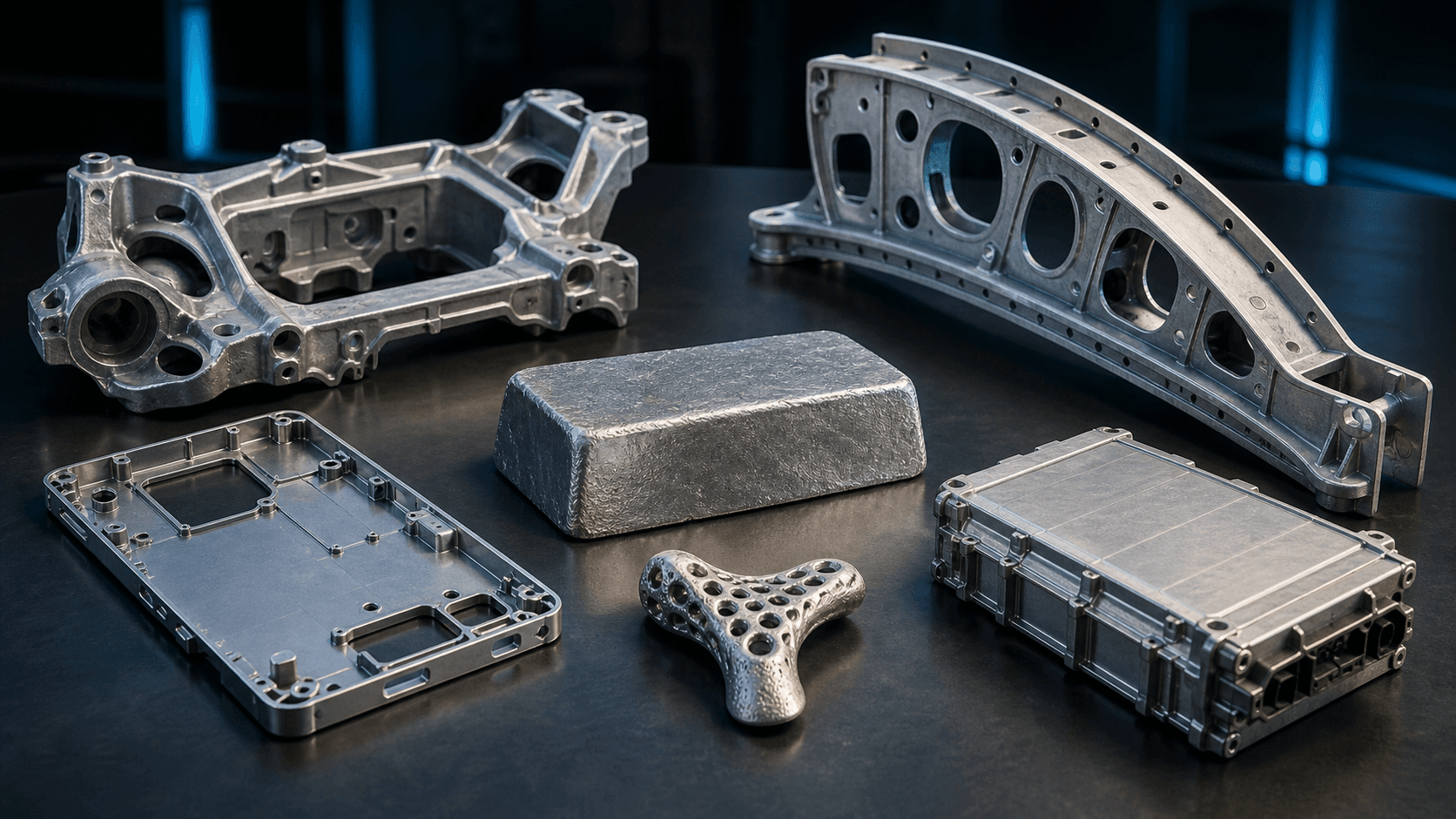
Where Magnesium Alloys Create the Most Value: Five Application Clusters and a Screening Matrix
Screen magnesium opportunities in electric mobility, electronics, aerospace/UAV, robotics and portable equipment by mass value, part integration, corrosion, process maturity and qualification risk.
Read More →
Magnesium Alloy Economics: A Should-Cost Model for Parts, Tooling, Yield and Lightweighting
Do not compare magnesium by metal price alone. This should-cost model covers input mass, cycle time, tooling, machining, coating, yield, assembly, logistics, use-phase value and scrap recovery.
Read More →
Magnesium Surface Treatment Guide: Conversion, Anodizing, PEO, E-Coat and Paint
Choose magnesium surface treatment as a complete system—from substrate and pretreatment to conversion, anodizing/PEO, primer, topcoat, galvanic isolation, testing and repair.
Read More →
Magnesium for AI Hardware: Robotics, Edge Computing, Thermal Paths and EMI Design
Magnesium does not increase chip compute; it can improve robot, edge-AI and vision hardware through lower mass, integrated housings, thermal paths and EMI shielding—when system tests prove the benefit.
Read More →
Magnesium for Drones and eVTOL: Component Selection and Flight Qualification Guide
Magnesium can reduce payload and moving mass in drones and eVTOL systems, but mission value depends on component location, vibration, fire, corrosion, carbon-fiber isolation and flight qualification.
Read More →
Is Lightweighting Necessary? A Mass-Sensitivity and Break-Even Guide for Magnesium
Lightweighting is valuable only when mass affects energy, payload, dynamics, handling or part consolidation. This guide uses mass sensitivity, total cost and carbon break-even to decide when magnesium makes sense.
Read More →
Why Magnesium Alloys Are Popular: Six Engineering Advantages and a Selection Decision Tree
Magnesium combines low density, casting integration, damping, conductivity and useful specific properties. This decision tree explains where those advantages create value—and where modulus, corrosion, heat or cost favor another material.
Read More →
Applications of Magnesium Alloys in the Automotive Industry
Magnesium alloys—among the lightest structural metallic materials available—are widely used in automotive applications such as steering wheel frames, instrument panel supports, seat frames, transmission housings, and components for new-energy vehicles. Their low density enables vehicle lightweighting, while excellent castability supports complex part manufacturing. As the industry intensifies its focus on energy efficiency and extended driving range, magnesium alloys are increasingly integral to automotive lightweighting strategies. This article outlines their fundamental properties, key applications, manufacturing processes, and industry trends.
Read More →
Applications of Magnesium Alloys in the 3C Industry
Magnesium alloys—lightweight engineering materials with excellent structural performance—are widely used in consumer electronics, including laptop casings, smartphone frames, tablet enclosures, and drone components. With low density (~1.74 g/cm³), high stiffness, inherent electromagnetic shielding, and thermal conductivity, they meet demands for slimness and portability. Primary manufacturing processes include die casting, rolling, and precision machining. While challenges remain in surface treatment, wear resistance, and cost, ongoing advancements in alloy development and forming technologies continue to solidify magnesium alloys’ role as a key lightweight material in the 3C sector.
Read More →
Magnesium for High-End Manufacturing: Supplier Qualification and Production Approval Guide
Magnesium becomes a preferred high-end material only when a supplier proves alloy-process fit, local performance, corrosion protection, capability, traceability and change control. Use this phased qualification guide.
Read More →