Heat-Resistant Magnesium Alloys at 200°C: Creep Selection Guide
Selected rare-earth magnesium alloys can retain useful strength and creep resistance near or above 200°C, but there is no universal magnesium temperature limit. Alloy, stress, exposure time, process, heat treatment, joints and environment must be qualified together.
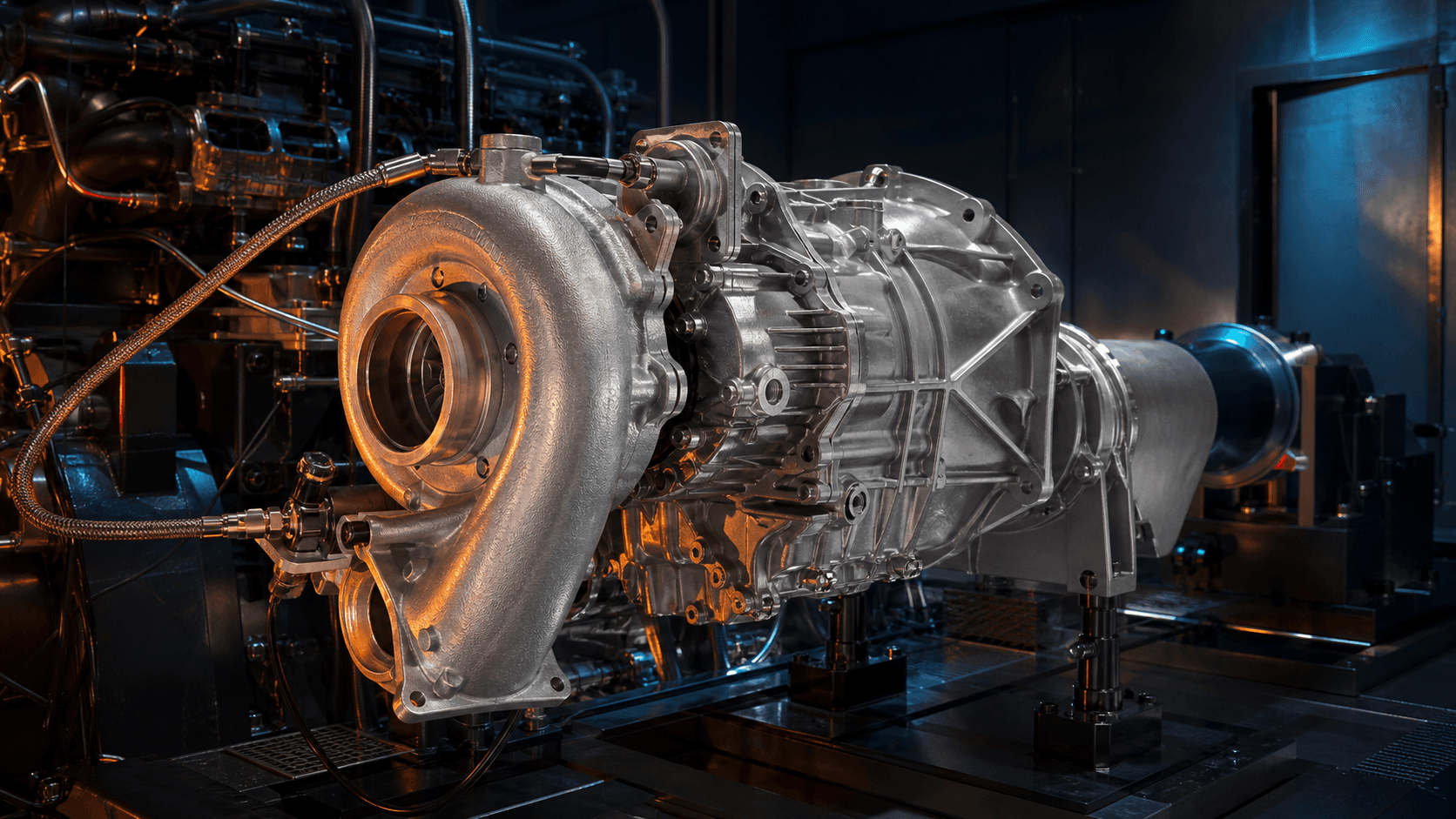
Can magnesium alloys operate at 200°C?
Selected magnesium alloys can operate near or above 200°C in defined load and exposure conditions, but “200°C capable” is not a complete specification. Creep depends on temperature, sustained stress and time. A housing that sees brief thermal peaks is a different problem from a bolted flange carrying load for thousands of hours.
Rare-earth-containing systems such as AE, WE and other Mg–RE alloy families can use thermally stable intermetallic phases, precipitates, solute clusters or stacking-fault structures to slow deformation at elevated temperature. The acceptable alloy still depends on product form, process route, heat treatment, corrosion protection and the component’s allowable distortion.
Why do common Mg–Al alloys lose creep resistance?
Many conventional Mg–Al alloys obtain useful room-temperature properties from phases that can coarsen or lose effectiveness during prolonged heating. Grain-boundary sliding, dislocation motion, diffusion and microstructural evolution can then produce time-dependent strain below the short-term yield strength.
Rare-earth additions may improve high-temperature behavior by:
- forming thermally stable Mg–RE or Al–RE phases;
- reducing the role of less stable Mg₁₇Al₁₂ in some systems;
- creating precipitates or solute structures that impede dislocation motion;
- stabilizing grain boundaries and microstructure;
- modifying casting behavior, texture and recrystallization.
These mechanisms vary by alloy. “Contains rare earth” does not guarantee a specific creep life.
Screening the main alloy families
| Alloy family | Typical engineering role | Strengths to verify | Risks and trade-offs |
|---|---|---|---|
| AZ/AM Mg–Al alloys | General die castings at moderate temperature | Cost, castability, room-temperature properties | Creep resistance may decline as exposure temperature and time increase |
| AE Mg–Al–RE alloys | Heat-resistant high-pressure die castings | Creep, castability, dimensional stability | RE chemistry, intermetallic morphology, porosity and stress sensitivity |
| WE Mg–Y–RE–Zr alloys | Premium cast or wrought elevated-temperature parts | Strength, creep, fatigue and heat-treatment response | Higher material/process cost, casting control and corrosion protection |
| QE Mg–Ag–RE–Zr alloys | Specialized high-temperature castings | Creep and precipitation response | Cost, heat treatment, supply and application-specific data |
| New low-RE or multi-element systems | Research and emerging applications | Lower RE content with stable precipitates/stacking faults | Limited design allowables, scale-up and qualification history |
The family name is only a starting point. The exact grade, temper, casting section and supplier process determine performance.
Temperature alone cannot define the requirement
A useful specification states:
- continuous, intermittent and peak temperatures;
- duration and number of thermal cycles;
- sustained membrane, bending and bolt loads;
- allowable total creep strain and dimensional drift;
- gasket compression or bearing-load retention;
- vibration, fatigue and dwell-fatigue conditions;
- oil, coolant, salt, humidity and combustion-product exposure;
- pressure, sealing and leak-rate requirements;
- design life and inspection interval.
For a transmission housing, a small permanent distortion can affect bearing alignment or gear mesh. For an engine cover, joint relaxation can reduce gasket compression. The allowable strain may therefore be more important than a headline tensile strength at 200°C.
What do published creep studies actually prove?
A 2022 study comparing WE41, WE42 and WE43 under its defined compressive-creep conditions found WE43 had the best creep resistance of the three, linked to thermally stable phases. A 2021 AE44 study at 200°C showed that the measured creep behavior changed strongly with applied stress and microstructural interactions. A 2024 low-RE study reported stable grain-boundary phases, stacking faults and dynamic precipitation after 100-hour creep exposures at 200–220°C.
These are valuable mechanisms and screening data. They do not establish a universal service rating because specimen geometry, stress mode, time, processing and acceptance criteria differ from a production component.
Long-term creep testing matters
A short elevated-temperature tensile test measures immediate strength; it does not predict thousands of hours of time-dependent deformation. Qualification may require:
- creep curves at several temperatures and stresses;
- minimum creep rate and total strain at the design life;
- stress-relaxation or bolt-load-retention tests;
- thermal cycling with representative constraints;
- fatigue or dwell-fatigue after thermal exposure;
- microstructure and hardness before and after testing;
- dimensional inspection of a representative casting;
- corrosion testing after the final coating system.
Extrapolation methods can help, but they must be validated for the alloy and mechanism range. Do not extrapolate across a phase transformation or mechanism change without evidence.
Casting and process quality can control performance
High-temperature properties are sensitive to porosity, oxide films, inclusions, grain size, intermetallic distribution and heat treatment. In a pressure-containing or highly loaded casting, local defects may dominate before the nominal alloy reaches its creep limit.
A supplier qualification should define:
- chemistry and impurity limits;
- melt protection and traceability;
- casting parameters and approved production site;
- heat-treatment window;
- porosity and internal-quality acceptance criteria;
- sampling location and test orientation;
- process-change notification;
- periodic creep or stress-relaxation verification.
For complex engine or transmission housings, Matrix Mg’s magnesium die-casting parts page can support the initial geometry and process review. It does not assign a 200°C rating; the chosen alloy and finished part require dedicated qualification.
Consider joints, coatings and adjacent materials
The alloy is only one part of the thermal system:
- bolts and inserts can have different thermal expansion;
- gasket and adhesive limits may be lower than the metal’s;
- coatings can crack during cycling or lose adhesion;
- dissimilar-metal joints need galvanic isolation;
- machining can remove protective surface layers;
- local exhaust, oil or cooling conditions can create hot spots.
Instrument prototypes at expected hot spots. A single bulk temperature from simulation or a nearby sensor may miss local gradients.
Cost and supply trade-offs
Rare-earth additions can increase raw-material cost, density, sourcing complexity and melt/heat-treatment control requirements. The total-cost case should include:
- mass saved relative to aluminum or iron;
- machining and assembly reduction from part consolidation;
- tooling and casting yield;
- heat treatment and inspection;
- coating and corrosion maintenance;
- creep-related warranty or alignment risk;
- recyclability and alloy segregation;
- supply continuity for specified RE elements.
A lower-RE alloy is not automatically cheaper if it requires more testing or has lower process yield.
Qualification checklist
- Define continuous, intermittent and peak thermal profiles.
- Map sustained stress and permissible creep strain.
- Specify alloy, temper, product form and production route.
- Use representative section thickness and defect population.
- Test creep, stress relaxation and thermal cycling.
- Check fatigue, joints, seals and bearing alignment after exposure.
- Validate coating and galvanic protection.
- Confirm internal quality and process capability.
- Approve extrapolation method and design-life margin.
- Control suppliers, production sites and process changes.
Frequently asked questions
Is 200°C a hard limit for magnesium?
No. It is a useful screening temperature in many discussions, but the real limit depends on alloy, stress, exposure time, acceptable strain and environment.
Is WE43 always better than AE44?
No. WE43 and AE44 use different chemistries and process routes. The better choice depends on casting method, geometry, mechanical loads, creep life, corrosion system, cost and available qualification data.
Can a short 300°C excursion be acceptable?
Possibly, but peak duration, local stress, microstructural stability, coatings, seals and subsequent property retention must be evaluated. A peak-temperature claim is not a continuous-service rating.
Does high-temperature tensile strength prove creep resistance?
No. Tensile strength is measured over a short time. Creep and stress relaxation measure time-dependent deformation under sustained load.
Conclusion
Rare-earth magnesium alloys can expand the useful temperature range of magnesium components, including selected engine and transmission applications. The defensible claim is not “breaks the 200°C barrier,” but “meets a defined creep, relaxation, fatigue and dimensional-stability requirement for a stated thermal-load history.” Choose and qualify the alloy as part of the complete casting, joint, coating and service system.
This article provides general engineering information. Elevated-temperature material selection and life prediction require qualified engineers, applicable standards, verified design data and representative component testing.
Sources
Compressive creep behavior of the as-cast Mg-4Y-xRE alloys — https://doi.org/10.1016/j.jmrt.2022.03.144 Abnormal creep stress exponents in a high-pressure die casting Mg-Al-RE alloy — https://www.sciencedirect.com/science/article/pii/S0921509321014672 Creep behavior and dynamic precipitation of highly heat-resistant Mg alloy with low rare-earth content — https://doi.org/10.1016/j.jallcom.2024.174960 Microstructure and elevated-temperature mechanical and creep properties of Mg-4Y-3Nd-0.5Zr in a large structural casting — https://www.sciencedirect.com/science/article/pii/S0261306914002556