Magnesium in Wheelchairs and Sports Equipment: Benefits, Limits and Qualification Guide
Magnesium can reduce moving mass in wheelchairs and sports products, but fatigue, impact, sweat corrosion, joining and product standards determine whether the benefit is real. Use this engineering and supplier qualification checklist.
Executive answer
Magnesium alloys can be useful in wheelchairs, sports equipment and mobility products when lower moving mass improves handling, acceleration or user effort. They are not automatically the best choice for every frame. The decision must consider stiffness, fatigue, impact, sweat and salt exposure, joining, repairability, surface durability and the applicable product standard.
Where magnesium creates functional value
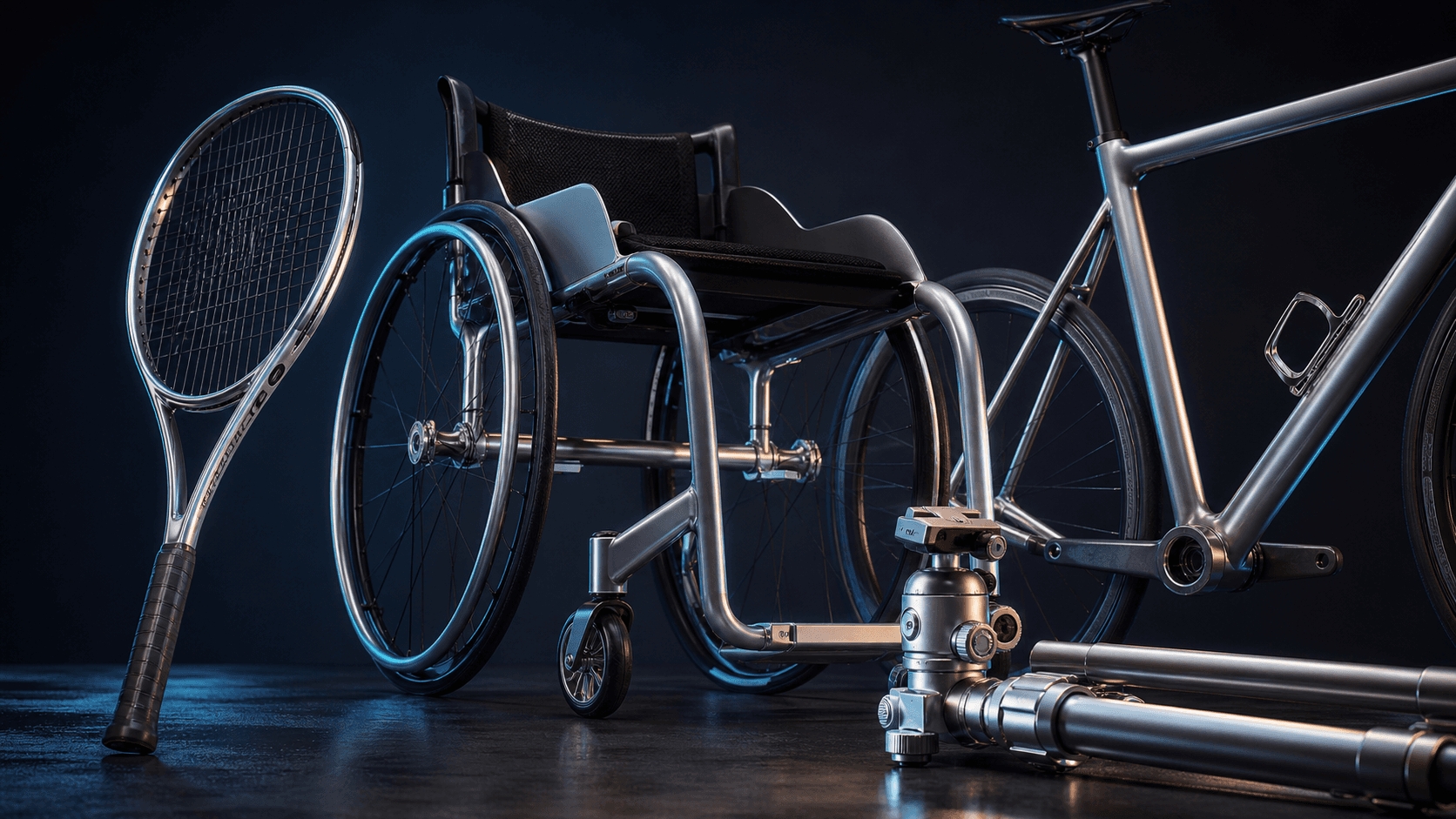
For a manual wheelchair, reducing frame and wheel-system mass may make lifting, transport and repeated acceleration easier. For rackets, bicycle components and protective or camera equipment, magnesium can combine low density, damping, castability and electromagnetic shielding. These are design opportunities, not proof that any named consumer product uses magnesium.
A valid comparison uses a complete product at equal safety and durability—not equal kilograms of raw material.
Wheelchair engineering checklist
Wheelchairs experience curb drops, repeated rolling loads, transfers, impacts, vibration and cleaning chemicals. A magnesium frame or component should be evaluated for:
- static strength, impact and fatigue using the relevant ISO 7176 test program;
- stiffness and permanent deformation after loading;
- weld, heat-affected-zone or fastener performance;
- galvanic contact with steel, aluminum or carbon-fiber parts;
- coating damage at footrests, axle mounts and folding joints;
- resistance to sweat, salt, disinfectants and outdoor moisture;
- inspection and repair instructions throughout service life.
Folding frames add joint wear and tolerance-stack risks. Rigid frames shift attention toward tube, extrusion or casting fatigue and axle-interface durability.
Sports-equipment selection
Rackets and striking equipment
Low density can move mass toward the head or other performance zones, while damping may influence feel. However, repeated impact, local stress around inserts and coating wear must be tested on the finished product. Marketing terms such as “magnesium technology” do not necessarily mean the whole frame is magnesium.
Bicycle and outdoor components
Potential candidates include pedals, hubs, housings, brackets and selected frame parts. Salt water, road grit, wet storage, clamp loads and galvanic interfaces are decisive. Safety-critical rotating or load-bearing parts require product-specific fatigue and impact validation.
Camera, rehabilitation and portable equipment
Die-cast housings, supports and handles can benefit from part consolidation and low mass. Human-contact surfaces need coating durability, cleanability and skin-contact review appropriate to the application.
Material and process routes
- Die casting suits complex housings, pedals, supports and integrated features.
- Extrusions and tubes can suit frame members when alloy, temper, joining and corrosion protection are qualified.
- Wrought sheet or plate may serve brackets, decks and formed structures.
- Hybrid structures can place magnesium only where weight saving is valuable, using isolated inserts or other materials at wear and threaded interfaces.
Do not choose the process after the geometry is frozen. The alloy, product form, heat input and coating system interact.
Corrosion and surface protection
Specify the real service environment, not only a generic salt-spray duration. Control alloy impurities, surface preparation, conversion or anodic layer, primer, topcoat, edge coverage and repair. Salt-spray testing can compare process consistency, but it does not alone predict years of mixed indoor/outdoor service.
Fasteners should be isolated where needed, drainage paths maintained and damaged coatings repairable. Sweat and cleaning-agent exposure deserve separate tests.
Supplier qualification
Request alloy designation and chemistry, mill or foundry traceability, mechanical properties in the delivered form, fatigue data, dimensional capability, coating process controls and complete assembly test reports. Confirm that samples come from production-intent tooling and joining processes.
Frequently asked questions
Is a magnesium wheelchair always easier to propel?
Lower mass can help during acceleration, climbing and handling, but rolling resistance, wheel setup, fit and user biomechanics can be more important. Test the complete configured chair.
Does magnesium absorb vibration better than aluminum?
Magnesium alloys are often associated with useful damping, but perceived comfort depends on the entire structure, tires, seat system and geometry.
Is magnesium safe around sweat and rain?
It can be, with a qualified alloy, coating, drainage and galvanic-isolation system. Bare or damaged surfaces require explicit durability assessment.
Can magnesium sports parts be repaired?
Repairability depends on alloy, casting quality, joining route, coating and safety classification. Define approved inspection and repair procedures before launch.
Buyer takeaway
Use magnesium where mass reduction has a measurable user benefit and where fatigue, impact and corrosion can be validated at product level. The most credible supplier proposal includes test evidence, not only a density comparison.
Sources
ISO 7176-8 Wheelchairs — Requirements and test methods for static, impact and fatigue strengths ISO 7176-1 Wheelchairs — Determination of static stability ISO 9227 Corrosion tests in artificial atmospheres — Salt spray tests ASTM B117 Standard Practice for Operating Salt Spray Apparatus ASTM B107/B107M Magnesium-Alloy Extruded Bars, Rods, Profiles, Tubes, and Wire ASTM B91/B91M Magnesium-Alloy Forgings