How to Form Magnesium Alloy Sheets: Bend Radius, Warm Forming, and Springback Control
This article analyzes anisotropy, temperature windows, bend radius, springback, lubrication, and first-article validation in magnesium alloy sheet bending and stamping—helping design teams reduce cracking and dimensional drift.
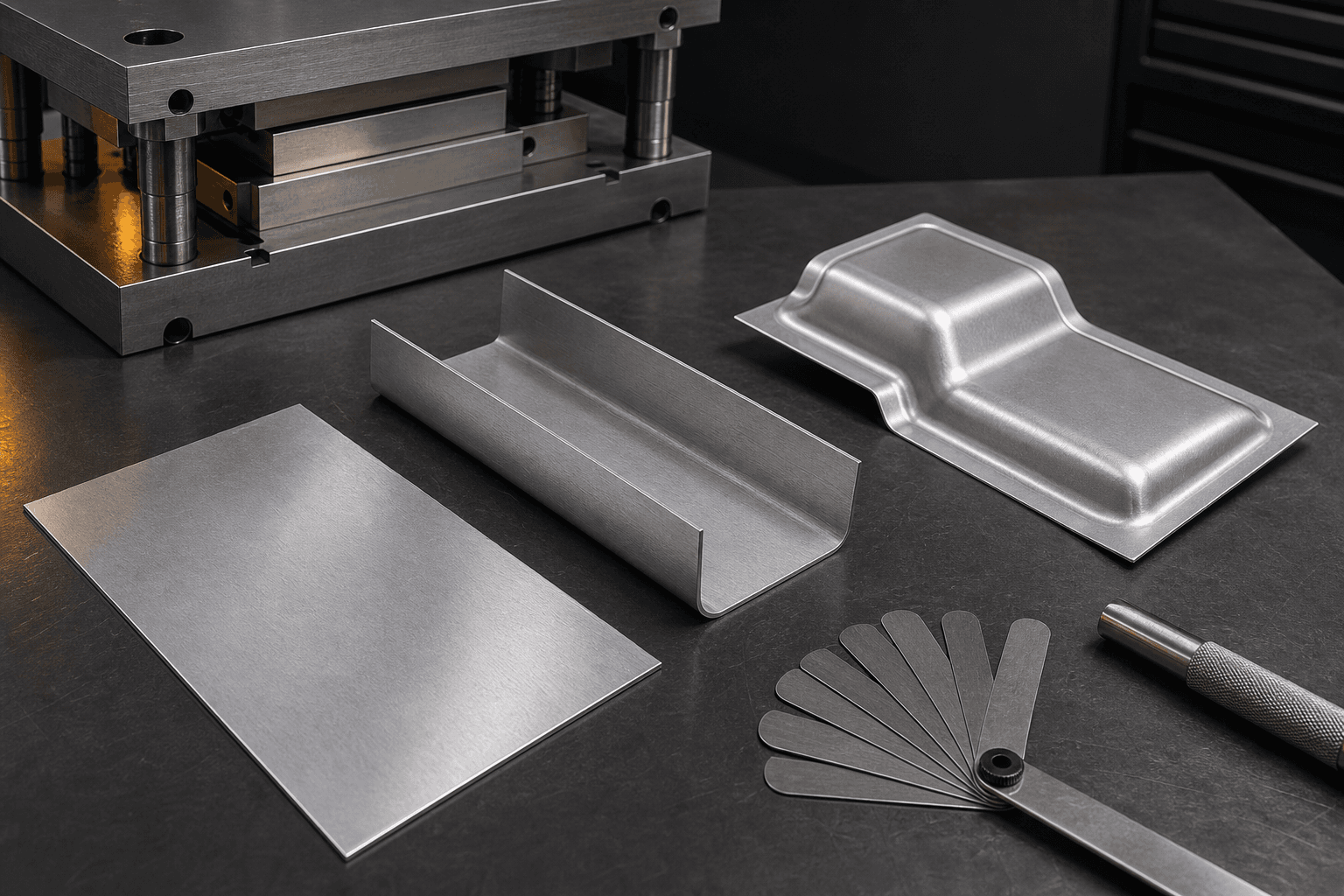
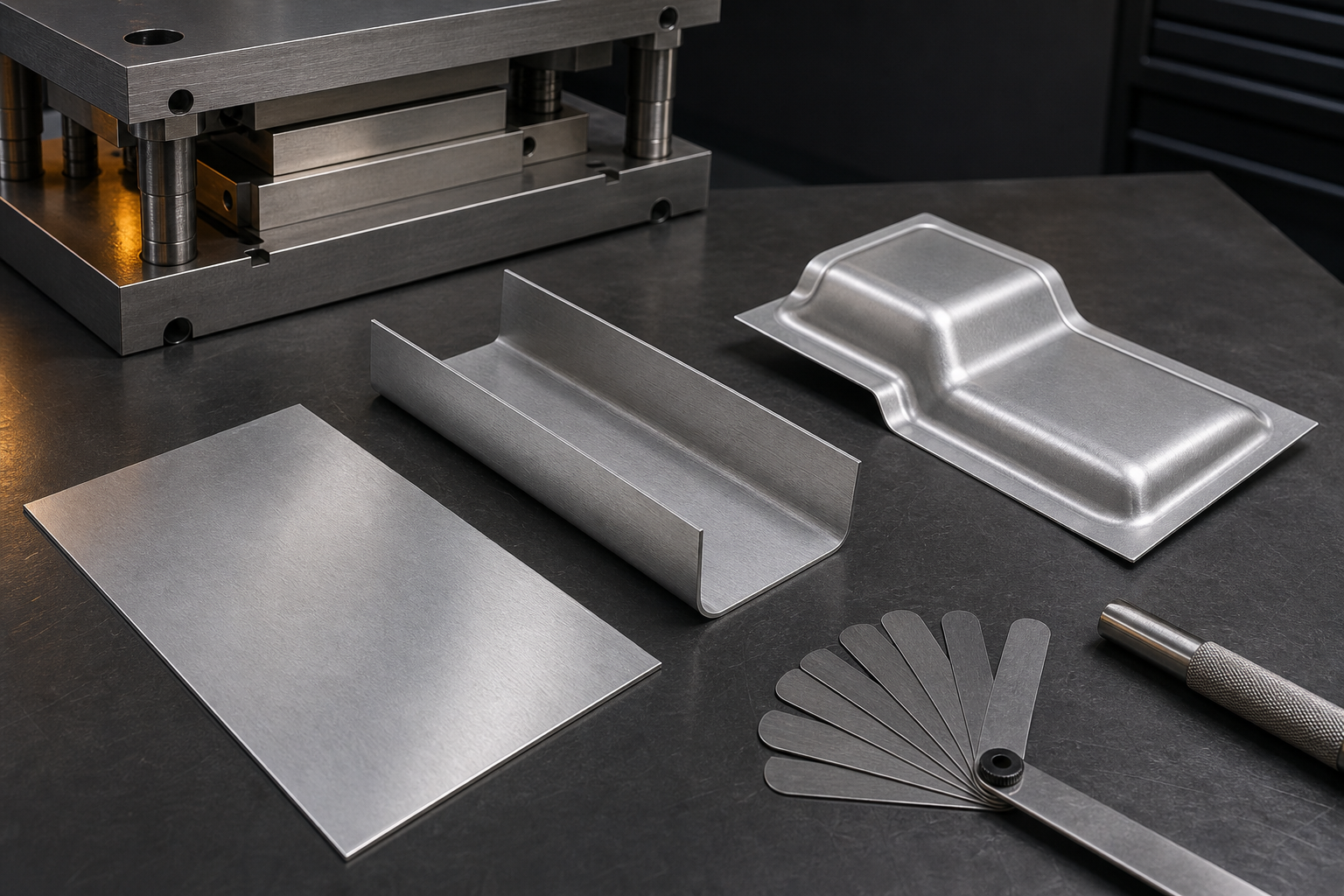
Successful bending or stamping of magnesium alloy sheets cannot be determined by room-temperature tensile data alone. Rolling texture, sheet condition, orientation, edge quality, bend radius, and forming temperature all influence outcomes. Many cracks arise not from “unformable material,” but from misalignment between part orientation and the process window—often unaddressed during design.
Why Magnesium Sheet Forming Is More Sensitive to Direction and Temperature
Rolled sheets typically exhibit pronounced anisotropy. Bending and tensile behavior may differ significantly depending on whether samples are taken along the rolling direction, transverse direction, or diagonal. Moderate heating increases available slip systems and generally widens the formability window; however, excessive temperature, non-uniform heating, or inconsistent soak times introduce surface, dimensional, and microstructural risks.
Thus, “warm forming” is not merely setting a mold temperature—it requires holistic control of sheet temperature, die temperature, transfer time, strain rate, and lubrication.
Six Critical Factors to Address During Design
- Specify sheet condition and orientation. Drawings or process cards must indicate rolling direction; the relationship between critical bend lines and rolling direction must be verified experimentally.
- Provide adequate bend radius. Minimum radius cannot be directly extrapolated from other metals—it must be validated via bending tests specific to alloy grade (e.g., AZ31B, ZK61), condition, thickness, orientation, and temperature.
- Avoid sharp corners and abrupt transitions. Smooth transitions, uniform drawing depth, and appropriate blank-holder force reduce localized strain concentration.
- Ensure high-quality cut edges. Burrs, microcracks, and rough edges—especially on drawn edges—are common crack initiation sites.
- Account for springback compensation. Springback varies with orientation, temperature, batch, and geometry; mold compensation values must be determined empirically using prototype parts.
- Integrate surface requirements into the process. Heating, lubrication, die contact, and post-forming cleaning can all affect paint adhesion or conversion coating quality.
How to Validate Warm Forming
We recommend fabricating test specimens from the target production batch that replicate the part’s strain path—not just simple 90° bends. Testing should record:
- Actual sheet and die temperatures;
- Heating and transfer time;
- Forming speed and blank-holder conditions;
- Lubricant type and application method;
- Rolling direction and sampling location;
- Cracking, thinning, springback, and surface condition;
- Cleaning compatibility and subsequent coating performance.
For volume production, define measurable upper and lower limits for temperature and time—and verify thermal uniformity across equipment zones.
Distinguishing Material vs. Process Issues
If cracking occurs consistently in one orientation or at identical geometric transitions, investigate orientation, edge quality, and localized strain. If failures appear randomly across regions, assess temperature uniformity, lubrication consistency, and inter-batch variability. If parts meet specifications immediately after forming but experience dimensional drift upon aging, examine residual stress, springback behavior, and inspection timing.
Procurement Specifications Checklist
- Alloy grade, temper, thickness, and thickness tolerance;
- Surface quality, flatness, and edge requirements;
- Rolling direction marking;
- Mechanical properties and sampling direction;
- Surface protection and packaging;
- Forming test specimen or batch validation requirements;
- Mill test reports and batch traceability.
Frequently Asked Questions
Is hot forming always required for magnesium sheets?
No. Simple bending may succeed at room temperature when material condition, orientation, and bend radius are optimized. Complex deep drawing or tighter radii usually benefit from thermal assistance—validation through testing remains essential.
Can bend radius be specified solely as a multiple of sheet thickness?
Thickness multiples serve only as preliminary communication tools—they cannot replace empirical validation for the target alloy grade (e.g., AZ31B, ZK61), temper, orientation, and temperature.
Does lubricant affect only surface appearance?
No. It also influences friction, material flow, and localized strain—and may impact downstream cleaning, coating adhesion, and assembly.
Explore available sheet supply orientations via our Product Center; for projects involving complex bending or warm forming, submit your thickness requirements, part drawings, and intended process via Contact Us.
Sources
ASTM B90/B90M — Magnesium-Alloy Sheet and Plate ASM Specialty Handbook — Magnesium and Magnesium Alloys