How to Join Magnesium Alloys? A Selection Guide for Welding, Bolting, Riveting, and Adhesive Bonding
Compares applicability of magnesium-alloy welding, bolting, riveting, adhesive bonding, and hybrid joining—covering thermal effects, sealing, corrosion resistance, serviceability, and joint validation.
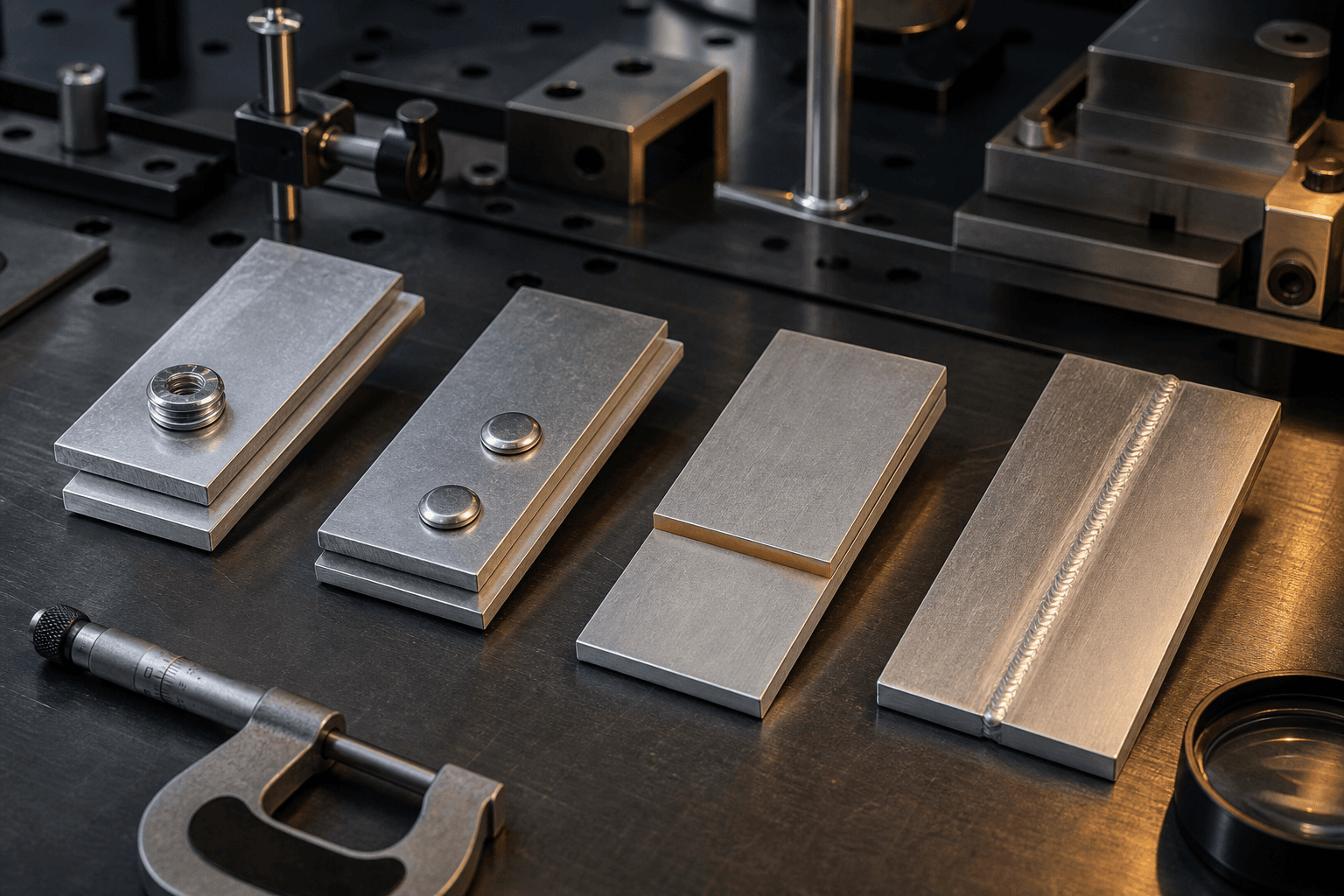
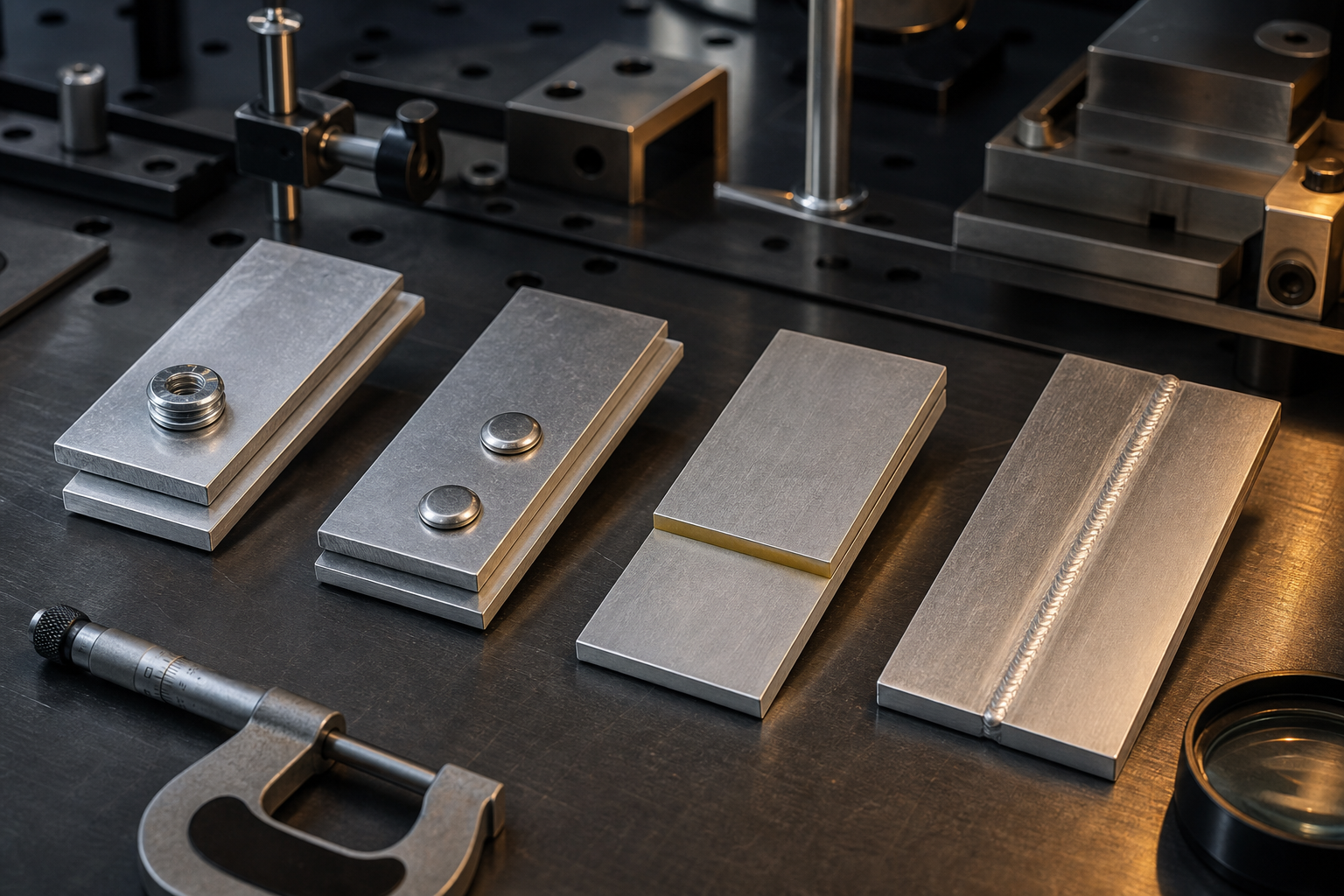
There is no universal joining method for magnesium alloys. Welding enables part consolidation and continuous sealing; mechanical fastening facilitates assembly and serviceability; adhesive bonding distributes load and isolates dissimilar metals; hybrid joining balances initial positioning with long-term reliability. Joint selection must holistically consider load requirements, environmental exposure, corrosion protection, and production takt time.
Comparative Overview of Five Common Joining Methods
| Method | Key Advantages | Key Risks | Preferred Use Cases |
|---|---|---|---|
| Welding | Continuous joint, weight reduction, sealability | Heat-affected zone (HAZ), distortion, porosity, surface cleanliness | Same-grade magnesium alloys (e.g., AZ31B, ZK61), controlled processes, continuous structural components |
| Bolted Connection | Removable, easy inspection & maintenance | Galvanic corrosion, bearing stress at holes, preload variation | Serviceable components, modular assembly |
| Riveting / Self-piercing Riveting (SPR) | High-speed cycle time, low thermal input | Local cracking, isolation of dissimilar metals | Thin-sheet lap joints, automated assembly |
| Adhesive Bonding | Uniform stress distribution, sealability & electrical insulation | Surface pretreatment, cure control, aging, reworkability | Large-area lap joints, multi-material structures |
| Hybrid Joining | Combines assembly accuracy with long-term durability | Increased process complexity and quality control requirements | High-reliability or multi-load-path joints |
Critical Considerations for Magnesium Alloy Welding
First verify whether the alloy grade (e.g., AZ31B, ZK61) and its condition (as-cast or wrought) are compatible with the intended welding process. Laser, TIG, MIG, and friction stir welding differ significantly in heat input and applicable thickness ranges. Joint design must support cleaning and shielding to minimize defects caused by oxides, oils, and moisture.
Weld parameters should not be judged solely on weld bead appearance. Validation must include cross-section analysis, porosity assessment, fusion quality, hardness profiling, and mechanical testing (tensile or fatigue). For thin-walled components, monitor assembly gap, fixture constraints, and post-weld distortion.
Mechanical Fastening Is More Than “Driving a Bolt”
Magnesium-specific concerns—including bearing strength at holes, thread durability, stress concentration, and surface damage—require dedicated evaluation. For high-load or frequently disassembled applications, consider wire inserts, solid bushings, or threaded inserts—but ensure electrochemical isolation and sealing between insert material and the magnesium substrate.
Torque specifications must be determined through joint testing—not extrapolated from steel or aluminum standards. Excessive torque may cause local indentation, thread damage, or coating failure; insufficient torque risks loosening under vibration.
Adhesive Bonding Success Depends on Surface & Process Control
Structural adhesive strength alone is insufficient. Controlled variables include time between surface preparation and adhesive application, surface contamination, bondline thickness, cure temperature, clamping pressure, and shelf life. Design should prioritize shear loading over peel, and incorporate overflow relief and sealed boundary zones.
If adhesive bonding also serves as a corrosion barrier, long-term aging tests must confirm continuous coverage. Local bondline voids or handling-induced scratches may create galvanic pathways.
Joint-Level Validation Checklist
- Dominant failure modes under static, fatigue, impact, and vibration loading;
- Exposure to extreme temperatures, humidity, salt spray, or chemical media;
- Compatibility among coatings, sealants, and adhesives;
- Assembly tolerances and gap variations;
- Repairability, disassembly, and field maintenance;
- Destructive cross-sectioning and non-destructive inspection (NDI) methods;
- Batch traceability, parameter logging, and personnel qualification requirements.
Frequently Asked Questions
Can magnesium alloys be directly tapped?
Yes—for moderate load and service-life requirements—but validation must cover thread engagement length, torque capacity, repeat disassembly cycles, and environmental exposure. Inserts are recommended for high-load or frequent-maintenance scenarios.
Can adhesive bonding fully replace mechanical fasteners?
It depends on load path integrity, cure process robustness, durability, and fail-safe requirements. Many projects adopt hybrid adhesive–mechanical solutions.
Is post-weld heat treatment always required?
No—and not all alloys or product conditions tolerate identical post-weld treatments. The decision must integrate material response, structural function, and performance targets.
If you’re developing multi-material lightweight assemblies, explore available material forms in our Product Center and submit your joint drawings, loading conditions, and operating environment via Contact Us.
Sources
AWS D17.1/D17.1M — Specification for Fusion Welding for Aerospace Applications ISO 25239 — Friction Stir Welding — Aluminium