How to Prevent Galvanic Corrosion in Magnesium Alloys: A Design Guide for Fasteners, Insulation, and Coatings
Explains the formation conditions of galvanic corrosion when magnesium alloys are joined with dissimilar metals (e.g., steel, aluminum, copper), and provides a systematic approach covering fastener selection, isolation, drainage, coating design, and verification testing.
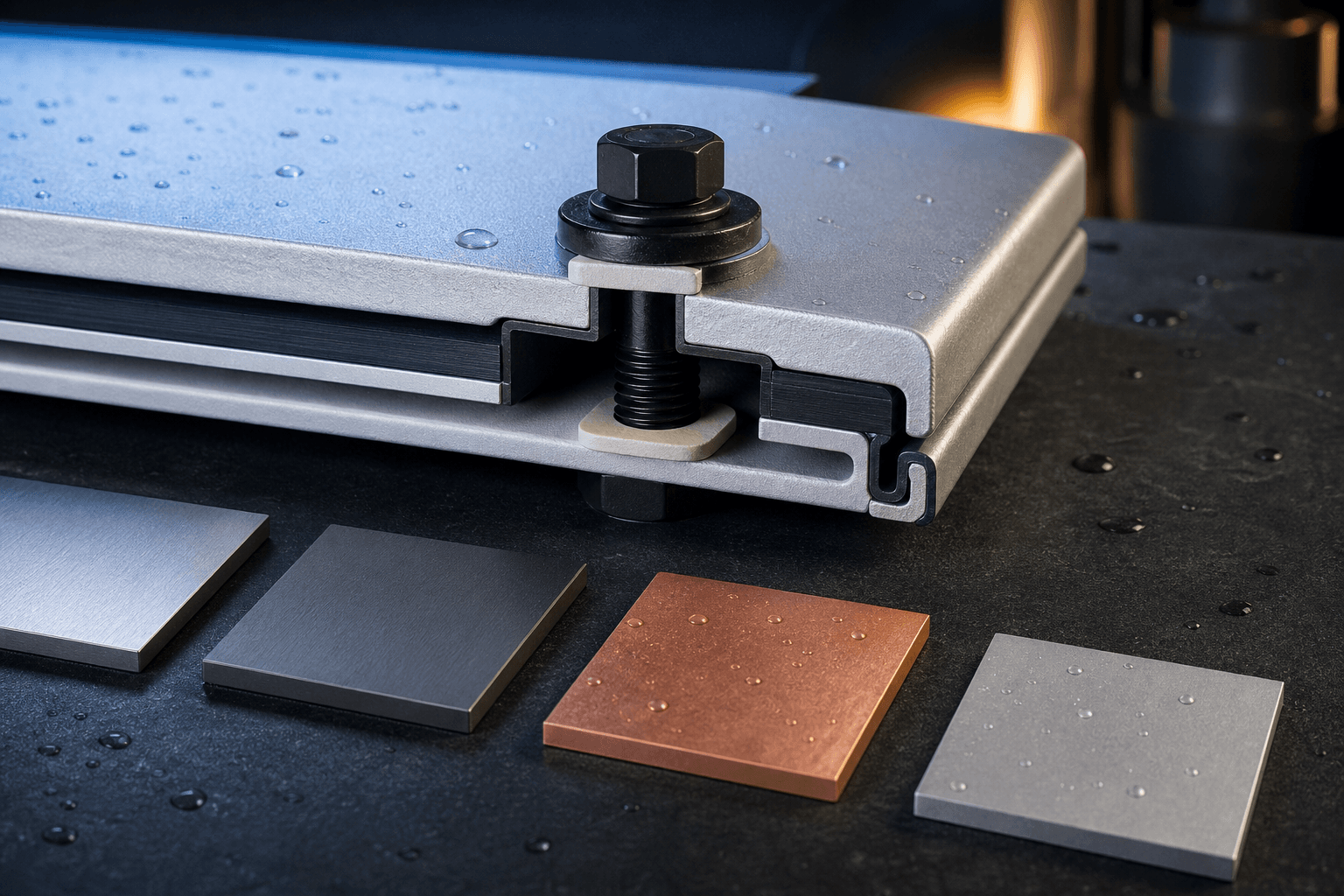
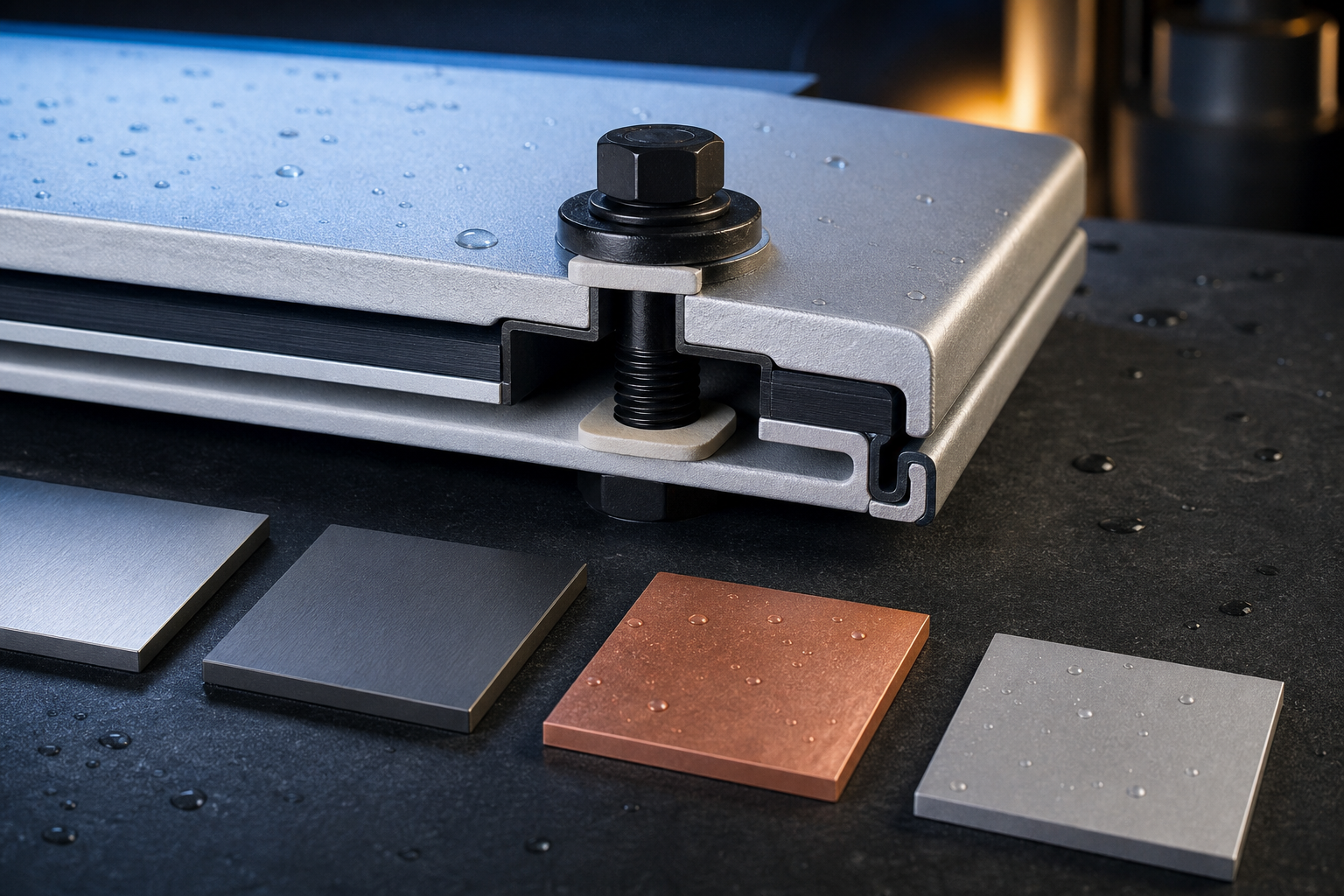
Magnesium alloy components may remain stable when isolated—but galvanic corrosion can occur when directly coupled to steel, stainless steel, aluminum, or copper alloys under conductive conditions such as water films, salt spray, or condensation.
Effective mitigation requires more than simply switching coatings: it demands simultaneous interruption of electrical contact, prevention of electrolyte ingress, and careful control of geometric details.
Three Conditions Required for Galvanic Corrosion
- Two electrochemically dissimilar metals;
- Electrical continuity between them;
- Presence of moisture, salts, or other electrolytes enabling ionic conduction.
Reliably eliminating any one condition significantly reduces risk. In practice, joints, fastener holes, coating defects, and long-term condensation are often the most challenging factors to control.
Design Is More Effective Than Remediation
Control Cathode-to-Anode Area Ratio
When a small area of magnesium is coupled to a large area of a more noble metal (e.g., steel or copper), localized corrosion intensifies. Avoid exposing narrow magnesium surfaces as anodic zones while maintaining direct electrical contact with large-area dissimilar metals.
Ensure Drainage and Eliminate Crevice Traps
Horizontal water-collecting surfaces, blind holes, lap joints, and hygroscopic gaskets prolong wetness duration. Incorporating drainage slopes, ventilation, and sealed boundaries is typically more effective than merely increasing coating thickness.
Treat Cut Edges and Threaded Holes as High-Risk Zones
Shearing, drilling, tapping, and assembly-induced scratches expose bare substrate. Engineering drawings must specify whether these areas require localized sealing, primer application, sealants, or insulating sleeves.
Fastener and Isolation Strategies
Fastener selection must go beyond mechanical strength. Key considerations include:
- Electrochemical compatibility with magnesium alloys;
- Integrity of washers, bushings, and sleeves under assembly and service;
- Risk of coating breach during tightening;
- Torque, preload, and long-term relaxation behavior;
- Restorability of isolation elements after disassembly;
- Compatibility of sealants with operating temperature and environmental media.
Non-conductive washers, shoulder sleeves, insulating coatings, and structural adhesives may be combined—but must fully cover the actual current path. Adding a plastic washer only beneath the bolt head—while leaving threaded sections in direct contact with the substrate—typically fails to provide complete isolation.
Validate Coating Systems as Integrated Assemblies
Conversion coatings, primers, topcoats, powder coatings, and electrophoretic coatings serve distinct functions. Selection must account for pretreatment quality, edge coverage, adhesion, chemical resistance, repairability, and susceptibility to assembly damage. Salt-spray results on single-coated panels do not reliably predict the service life of multi-material joints.
Verification Under Realistic Service Conditions
We recommend fabricating joint test specimens incorporating actual magnesium substrates (e.g., AZ31B, ZK61), fasteners, gaskets, sealants, and coatings—and subjecting them to:
- Temperature-humidity cycling with condensation;
- Salt-laden splash or road-deicing media exposure;
- Mechanical loading and vibration;
- Coating scribing, cut-edge exposure, and assembly-induced damage;
- Disassembly/reassembly and rework simulation;
- Visual inspection, mass loss, and joint strength evaluation after defined service cycles.
Test protocols and pass/fail criteria should be jointly defined based on application environment, customer specifications, and applicable standards.
Procurement and Quality Control Checkpoints
- Base material grade, temper, and surface cleanliness;
- Pretreatment process, coating system architecture, and responsibility assignment per layer;
- Fastener material, surface finish, and lot traceability;
- Insulator material, dimensional tolerances, and thermal/chemical resistance;
- Sealant part number, cure conditions, and shelf-life compliance;
- Assembly torque specification and anti-scratching measures;
- Joint-level corrosion validation and failure criteria;
- Rework and field-maintenance requirements.
Frequently Asked Questions
Are stainless steel fasteners strictly prohibited for magnesium alloys?
Not universally. The critical factors are the presence of robust, durable electrical insulation and sealing—and joint-level validation under representative service conditions.
Does anodizing or painting eliminate the need for insulation?
Not necessarily. Any exposed edges, threads, or assembly-induced scratches can become galvanic conduction paths.
Does longer salt-spray test duration always indicate better performance?
No. Single-parameter salt-spray hours do not correlate linearly with real-world service life. Cyclic corrosion, condensation, mechanical loading, and actual joint geometry are typically more representative.
For multi-metal assembly evaluation, explore our material portfolio in the Product Center and submit your fastener, coating, and environmental data via Contact Us.
Sources
ASTM G71 — Standard Guide for Conducting and Evaluating Galvanic Corrosion Tests SAE AMS-M-3171 — Magnesium Alloy, Processes for Pretreatment and Prevention of Corrosion