How to Apply Magnesium Alloy Damping Performance: A Guide to Vibration, Noise, and Structural Testing
Explains the engineering value and measurement boundaries of magnesium alloy damping, detailing how loss factor, modal frequency, stiffness, joint conditions, temperature, and surface state influence vibration and noise performance.
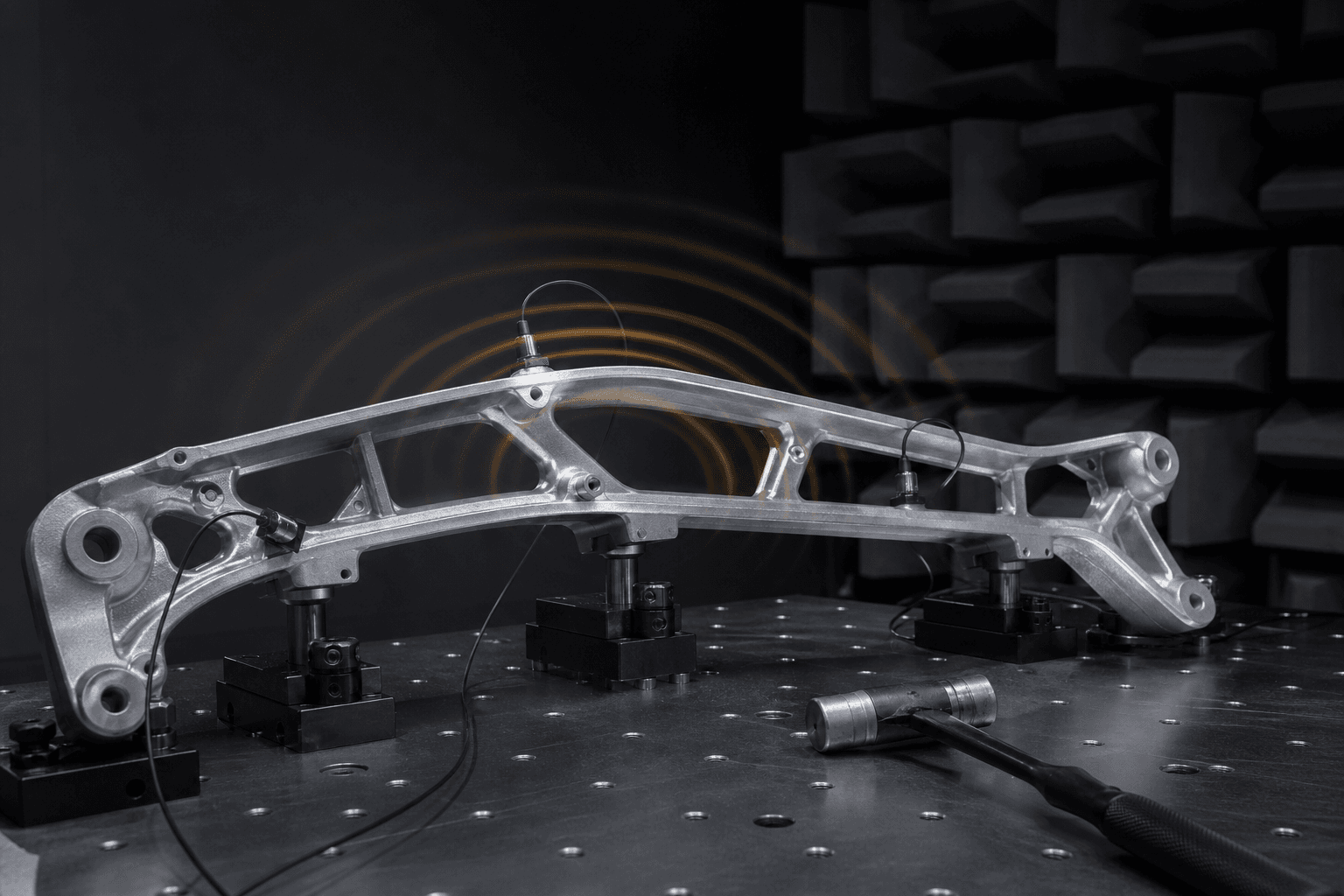
Magnesium alloys are often marketed as having “excellent damping,” but component vibration behavior is not determined by material damping alone. Elastic modulus, geometric stiffness, mass distribution, bolt preload, boundary conditions, and excitation frequency all affect resonance peaks. The correct approach is to treat material damping as a system design variable—not merely a materials marketing claim.
What Questions Does Damping Address?
Damping quantifies the capacity to dissipate vibrational energy per cycle, commonly expressed as loss factor, damping ratio, or logarithmic decrement. Values obtained via different test methods—and under varying strain amplitudes, temperatures, and frequencies—cannot be directly compared. Before material selection, clarify whether the priority is reducing peak response, decay time, structural noise, or tactile vibration.
Why Do Results Vary So Widely for the Same Alloy?
Alloy composition, casting or deformation processing, texture, heat treatment, defects, and stress state all influence material damping. More critically, in assembled systems, bolted joints, adhesive layers, shims, and contact friction may contribute significantly more energy dissipation than the base material. Testing small coupons alone cannot represent full-system behavior.
A Reliable Validation Pathway
- Compare candidate alloys using material specimens tested within the target temperature, frequency, and strain amplitude range;
- Model functionally equivalent or stiffness-matched structures—avoid comparisons based solely on identical thickness;
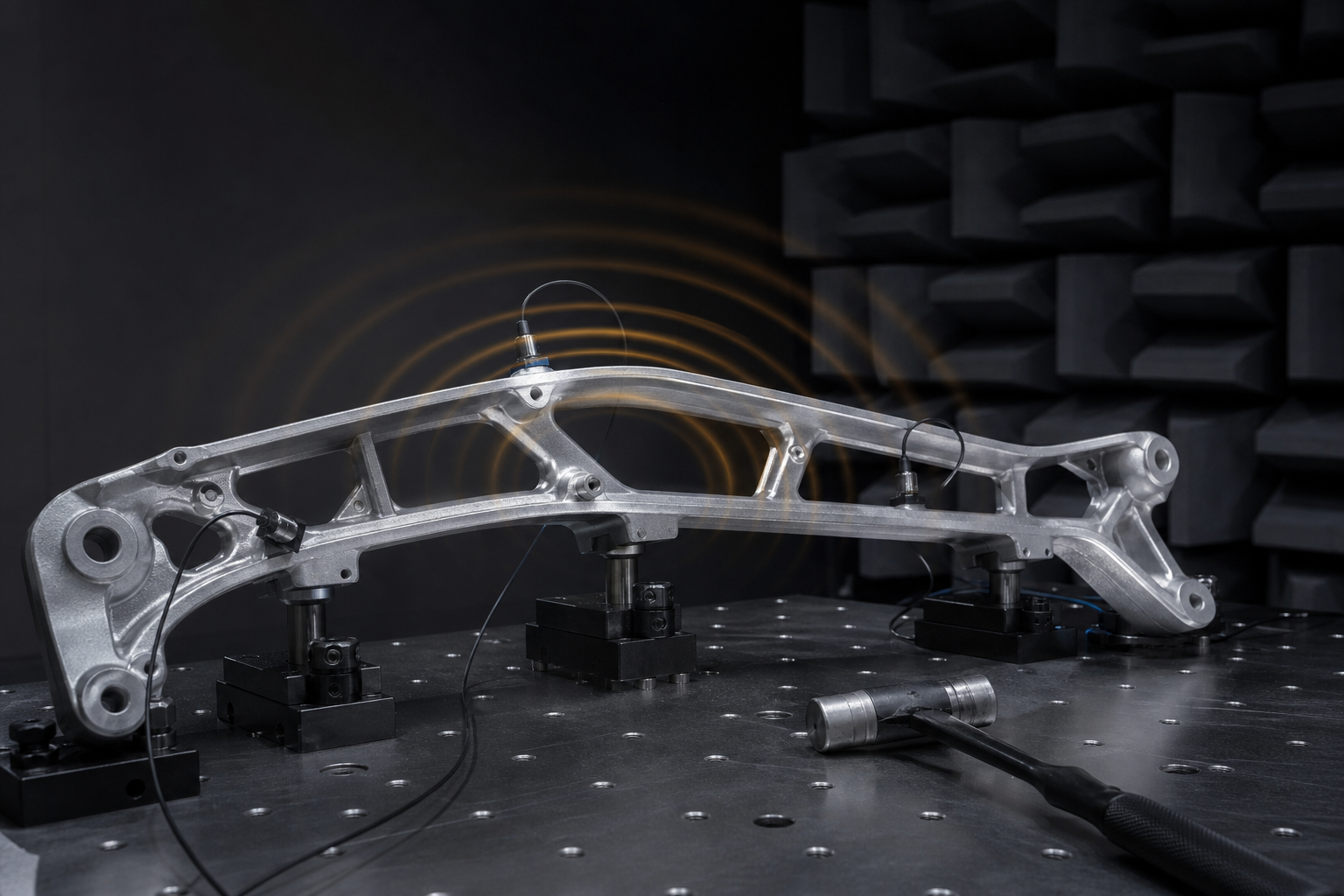
- Perform modal testing to identify natural frequencies, mode shapes, and damping ratios;
- Conduct frequency response function (FRF) testing under realistic boundary conditions and assembly preloads;
- Repeat testing after incorporating temperature cycling, aging, and joint relaxation effects;
- Finalize approval using full-system metrics: radiated noise, vibration transmission, or ride comfort.
Three Common Design Misconceptions
First, magnesium alloys have lower elastic moduli than steel or aluminum (per common engineering values); substituting at equal thickness may reduce stiffness and shift resonance frequencies. Second, weight reduction itself alters inertia and excitation transmission—changes cannot be attributed solely to damping. Third, surface treatments and isolation interfaces modify contact conditions; prototype assemblies must replicate production-level joint configurations.
Applications Where Damping Matters Most
Structures sensitive to peak vibration or decay time—including handheld power tool housings, optical/electronic equipment frames, seating and steering components, robotic end-effectors, and sports equipment—can benefit from magnesium alloy candidates. However, if dominant issues stem from looseness, bearing faults, or control algorithm limitations, material substitution is not the primary solution.
Procurement & Testing Specifications to Define Clearly
- Alloy grade, temper, manufacturing process, and sampling direction;
- Test method, frequency, temperature, and strain amplitude;
- Component mass, stiffness, and boundary conditions;
- Bolt torque, shim type, adhesive layer properties, and assembly sequence;
- Modal, FRF, and full-system evaluation metrics;
- Batch-to-batch and post-aging revalidation requirements.
For comparative analysis of weight savings versus vibration performance in magnesium alloy structures, submit your target frequency band and boundary conditions via Contact Us; see available alloys in our Product Center.
Sources
ASTM E756 — Measuring Vibration-Damping Properties of Materials ISO 7626 — Experimental Determination of Mechanical Mobility