How to Package, Store, and Ship Magnesium Alloys: A Guide to Moisture Protection, Corrosion Prevention, and Export Delivery
Practical guidance for plates, extrusions, and machined components—covering moisture-resistant packaging, isolation, scratch prevention, wooden crate securing, condensation control in storage, and export delivery acceptance.
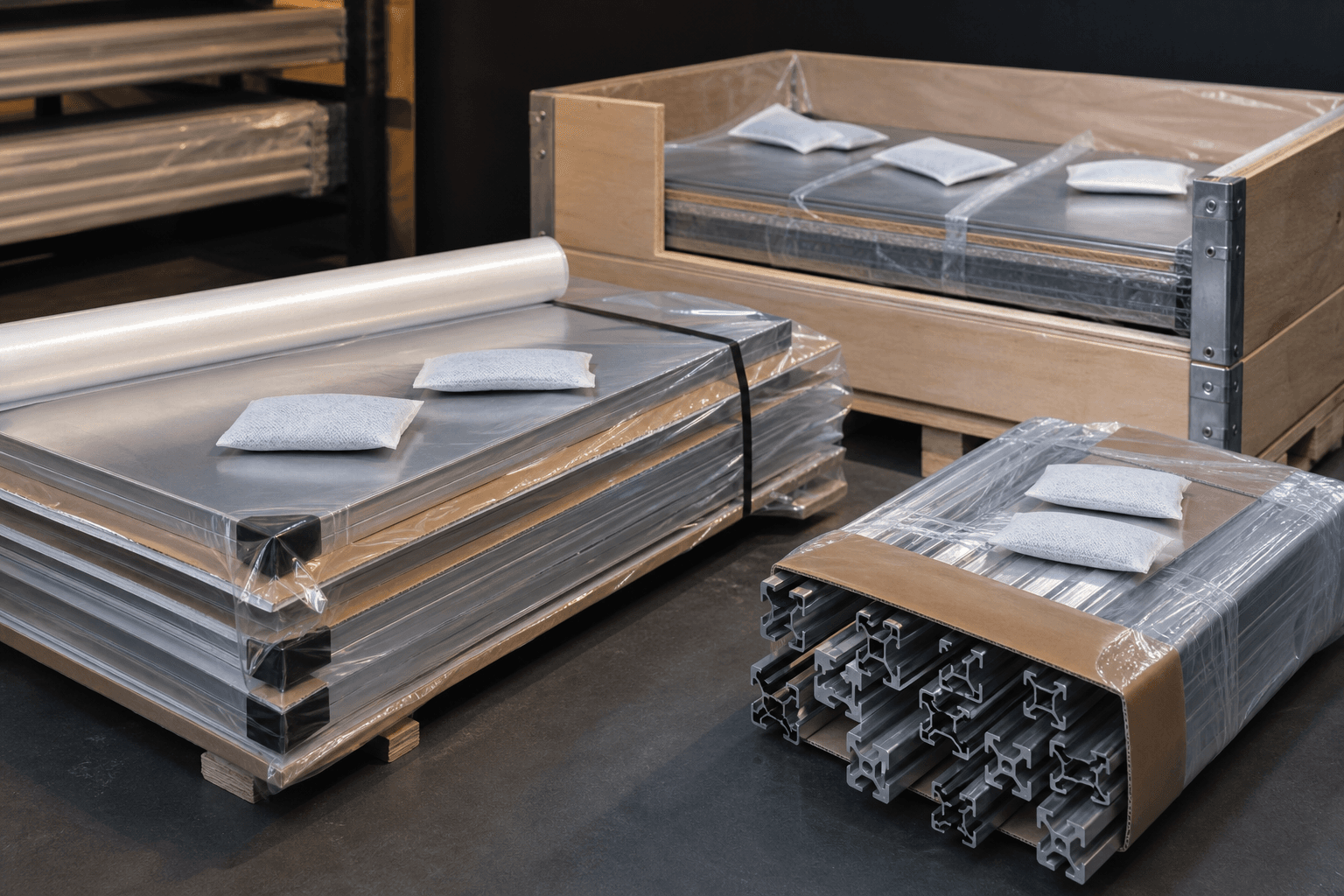
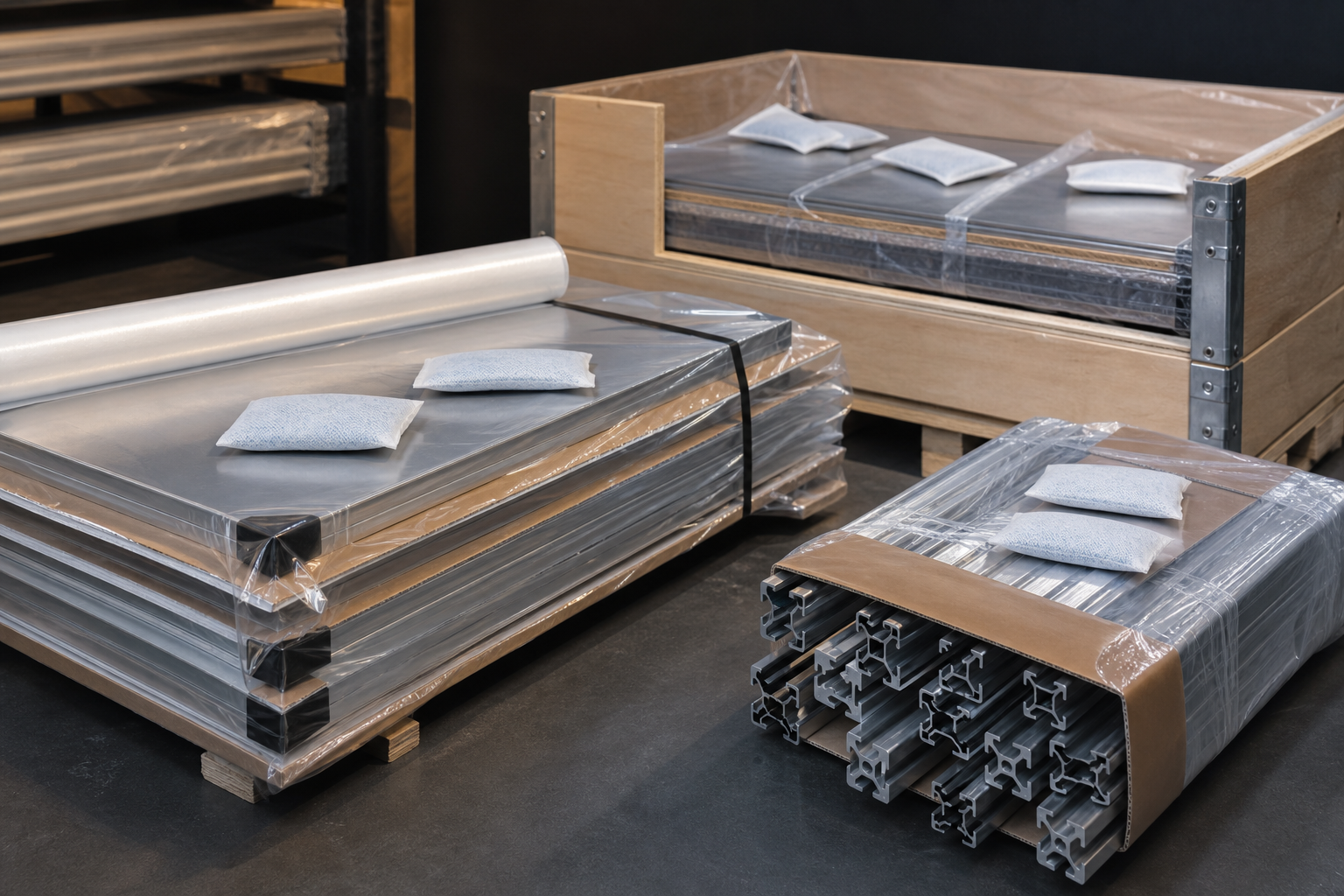
A magnesium alloy part passing factory inspection does not guarantee it will arrive undamaged. Temperature and humidity fluctuations during interregional transport, maritime condensation, packaging material contamination, contact with dissimilar metals, and handling impacts can all cause water spots, corrosion pits, dents, or scratches on surfaces. Packaging must be engineered according to product form, surface condition, transport route, and storage duration.
Identify Four Key Risks First
Moisture and Condensation
Residual moisture inside sealed packaging—or moving cargo from cold environments into warm, humid warehouses—can trigger condensation. This risk is especially critical for sea freight and cross-climate-zone transport.
Contact with Dissimilar Materials
Under humid conditions, direct contact between magnesium materials and steel straps, steel nails, or packaging surfaces containing metal particles may induce localized galvanic corrosion. Isolation materials must be continuous, abrasion-resistant, and remain effective even under compression.
Friction and Point Loads
Interlayer movement of plates, end-to-end impact of extrusions, localized pressure from strapping, and forklift contact can cause scratching or deformation. Products with high surface finish requirements demand soft isolation, edge protectors, and secure fixation.
Contamination and Chemical Compatibility
Damp wood, chloride-containing contaminants, acidic/alkaline residues, certain papers, or unsuitable rust inhibitors may compromise surface integrity. All packaging materials must undergo compatibility validation.
Packaging by Product Form
Plates and Thin Sheets
Surfaces must be clean and dry; interlayer isolation materials must be free of abrasive particles and hygroscopic contaminants. Edge protectors are mandatory; overall stacking must prevent slippage. If using barrier bags, desiccants, or humidity indicator cards, quantities should be determined based on package volume, expected storage duration, and ambient conditions—and seals must remain fully intact.
Extruded Profiles
Prioritize protection of ends, thin-walled sections, and assembly surfaces. Long profiles require sufficient support points to prevent transport-induced deflection; strap placement and tension must avoid localized indentation. Different alloys or surface finishes should be clearly labeled and isolated separately.
Machined Components
Parts must be thoroughly dried after cleaning—avoiding fingerprints and residual cutting fluids. Critical surfaces (e.g., precision-machined faces, threads, and hole edges) require validated protective methods; parts must be immobilized within the container to prevent mutual impact during transit.
Wooden Crates and Container Controls
Wooden crates must provide adequate structural strength, and internal fixturing must withstand braking forces, vibration, and handling stresses. Wood used for international shipment must comply with destination-country phytosanitary regulations. Reliable isolation must exist between magnesium components and any steel nails, steel straps, or metal brackets.
Containers must be inspected for dryness, cleanliness, and leakage risk prior to loading. For long-haul or high-humidity routes, integrated solutions—including barrier packaging, desiccants, ventilation, or condensation control—may be deployed. However, desiccant quantity must be calculated; arbitrary overloading is prohibited.
Do Not Open Immediately Upon Arrival
When cargo moves from a cold transport environment into a warm warehouse, allow sealed packages to equilibrate thermally before opening—to minimize surface condensation. Upon receipt, document external packaging condition, humidity indicator status, seal integrity, shock/tilt indicators (if used), surface condition, and quantity.
Minimum Packaging Specifications Must Include
- Product cleanliness and dryness requirements;
- Approved and prohibited packaging materials;
- Interlayer isolation, edge protection, end protection, and fixation methods;
- Requirements for barrier bags, desiccants, and humidity indicators;
- Per-crate weight limits, lifting points, and forklift entry locations;
- Labeling, batch traceability, and packing list details;
- Transport mode, estimated lead time, and maximum storage duration;
- Unpacking, resealing, and long-term storage instructions;
- Receiving inspection criteria and claims documentation requirements.
Frequently Asked Questions
Is vacuum packaging always required for magnesium alloys?
No. Selection depends on surface condition, environmental exposure, transport duration, and customer specifications. The core principles are cleanliness, dryness, effective moisture barrier, and mechanical damage prevention.
Does more desiccant always improve protection?
No. Desiccant quantity must be calculated based on packaging permeability, internal volume, and anticipated environmental conditions—and desiccants must never directly contact or contaminate the product.
Can standard stretch film provide long-term moisture protection?
Stretch film secures loads and prevents dust ingress but cannot substitute for a validated moisture-vapor barrier system.
For tailored packaging solutions for plates, extrusions, or machined components, explore our Product Center and contact us via Contact Us with your destination, transport mode, and expected storage duration.
Sources
ASTM D3951 — Standard Practice for Commercial Packaging ISPM 15 — Regulation of Wood Packaging Material in International Trade