How to Design and Procure Magnesium-Alloy Forgings: A Guide to Die Forging, Flow Lines, Heat Treatment, and Inspection
This guide outlines the development pathway for magnesium-alloy forgings—from alloy selection and billet specification to forging direction, parting line design, fillets, draft angles, heat treatment, machining allowances, and first-article inspection.
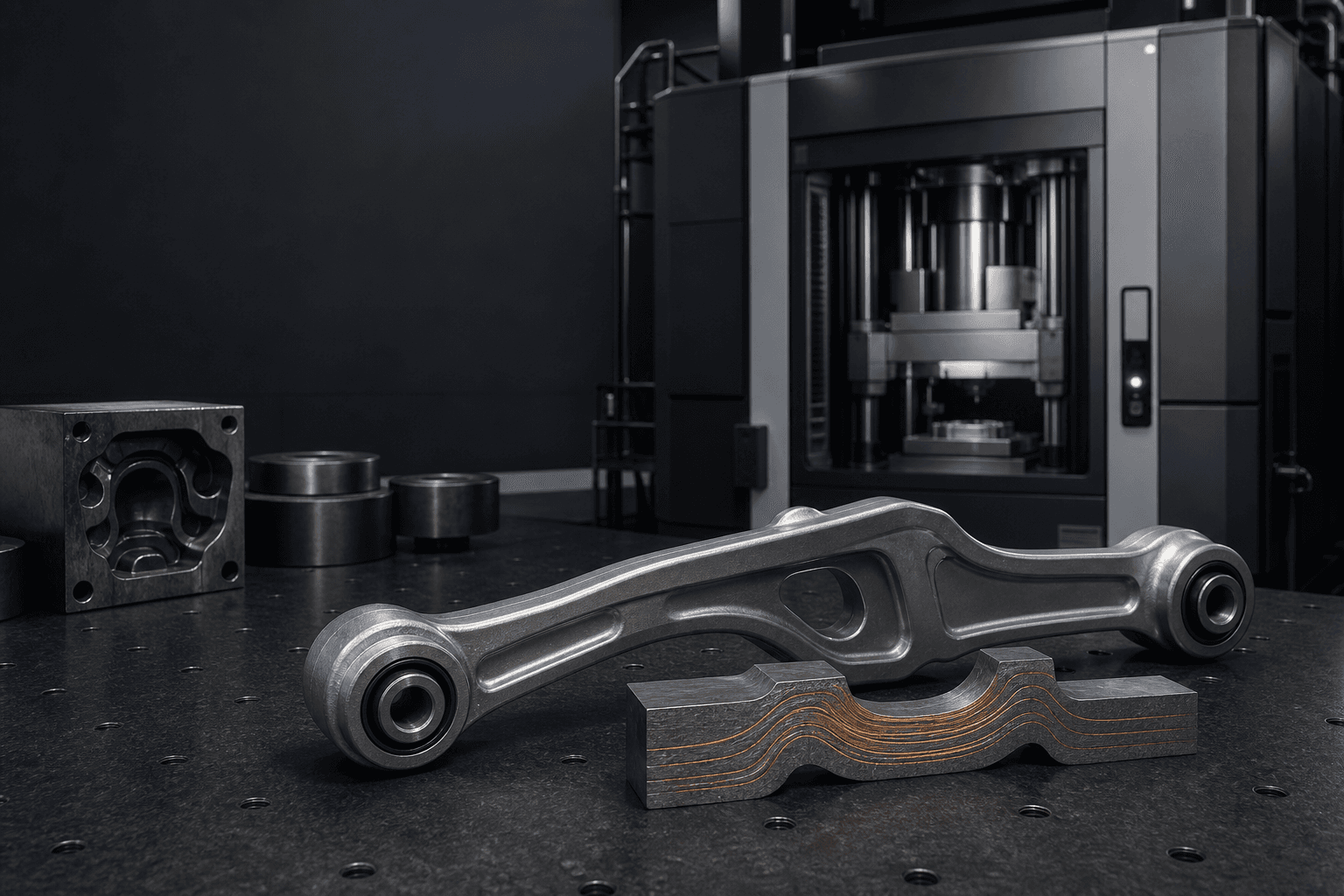
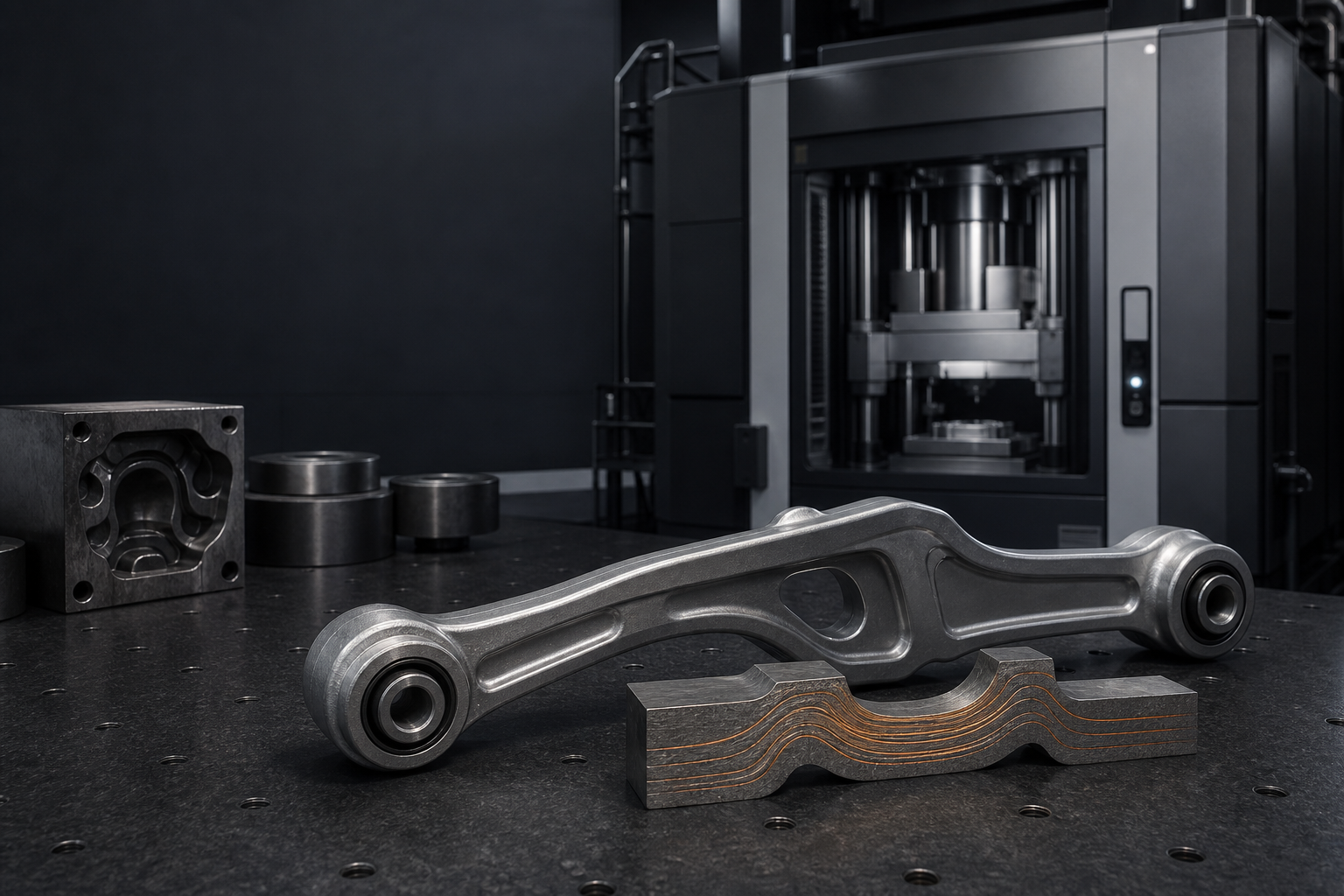
Magnesium-alloy forgings are ideal for lightweight components requiring high specific strength, fatigue resistance, and structural integrity—but aluminum forging drawings cannot be adapted simply by swapping in a magnesium alloy grade. The narrow forging temperature window, anisotropic behavior, oxidation protection requirements, and subsequent heat treatment of magnesium alloys must all be addressed during blank design.
Where Forging Value Comes From
Controlled plastic flow aligns fibrous flow lines along primary load paths and minimizes casting-type porosity defects. For brackets, hubs, control arms, or aerospace structures, forgings deliver a competitive balance of weight savings and reliability. However, performance depends critically on billet quality, forging ratio, temperature control, deformation path, and heat treatment consistency.
Six Key Design Considerations
- Define the primary load direction. Specify critical loading zones, fatigue hotspots, and sampling orientations to your forging supplier;
- Plan the parting line. Balance metal flow, flash generation, die manufacturability, and post-forging part positioning;
- Provide adequate fillets and transitions. Sharp corners and abrupt section changes increase risks of incomplete filling, folding, and cracking;
- Apply appropriate draft angles. Evaluate deep cavities, ribs, and both internal and external surfaces separately;
- Control machining allowances. Remove surface oxidation and defects while preserving beneficial flow-line continuity;
- Ensure datum inheritance. Maintain consistent, stable locating strategies across forging, heat treatment, shot peening, and machining operations.
Essential Procurement Documentation
- Applicable material and forging standards, alloy grade (e.g., AZ31B, ZK61), and billet form;
- Delivery condition, heat treatment specifications, and lot traceability;
- Forging direction, sampling locations, and mechanical property orientation;
- Surface defect limits, decarburization, and scale removal requirements;
- Dimensional tolerances, machining allowances, mismatch, and residual flash;
- NDT coverage areas (penetrant, ultrasonic, or radiographic) and acceptance criteria;
- First-article reports: flow-line analysis, metallography, hardness, and mechanical properties;
- Die life expectations, maintenance protocols, and process change approval procedures.
How to Verify Flow Lines on First Articles
Perform macro-etching or metallographic examination on representative cross-sections, correlating flow-line patterns with primary load paths, hole perimeters, and fillet regions. Interruption of flow lines by critical machined surfaces does not necessarily cause immediate failure—but must be validated via fatigue or durability testing.
Frequently Asked Questions
Are high-strength grades always suitable for complex die forgings?
Not necessarily. Higher strength often correlates with narrower processing windows and supply constraints; suitability ultimately depends on geometry, production volume, and validation capability.
Can non-destructive testing (NDT) be omitted entirely?
NDT scope must be determined by failure consequence, part geometry, and applicable standards. Safety-critical components typically require surface or volumetric inspection of key zones—with certified personnel and full documentation traceability.
Submit your load cases, blank drawings, and annual volume via Contact Us; suitable magnesium alloys and available forms are listed in our Product Center.
Sources
ASTM B91/B91M — Magnesium-Alloy Forgings ASM Handbook, Volume 14A — Metalworking: Bulk Forming