How to Develop Magnesium-Alloy Prototypes: CNC, Sand Casting, Soft-Tool Die Casting, and Transition to Mass Production
Select the optimal magnesium-alloy prototyping method—CNC, sand/low-pressure casting, soft-tool die casting, or production-tool die casting—based on validation goals, quantity, geometry, and performance requirements to prevent process mismatch between prototypes and mass production.
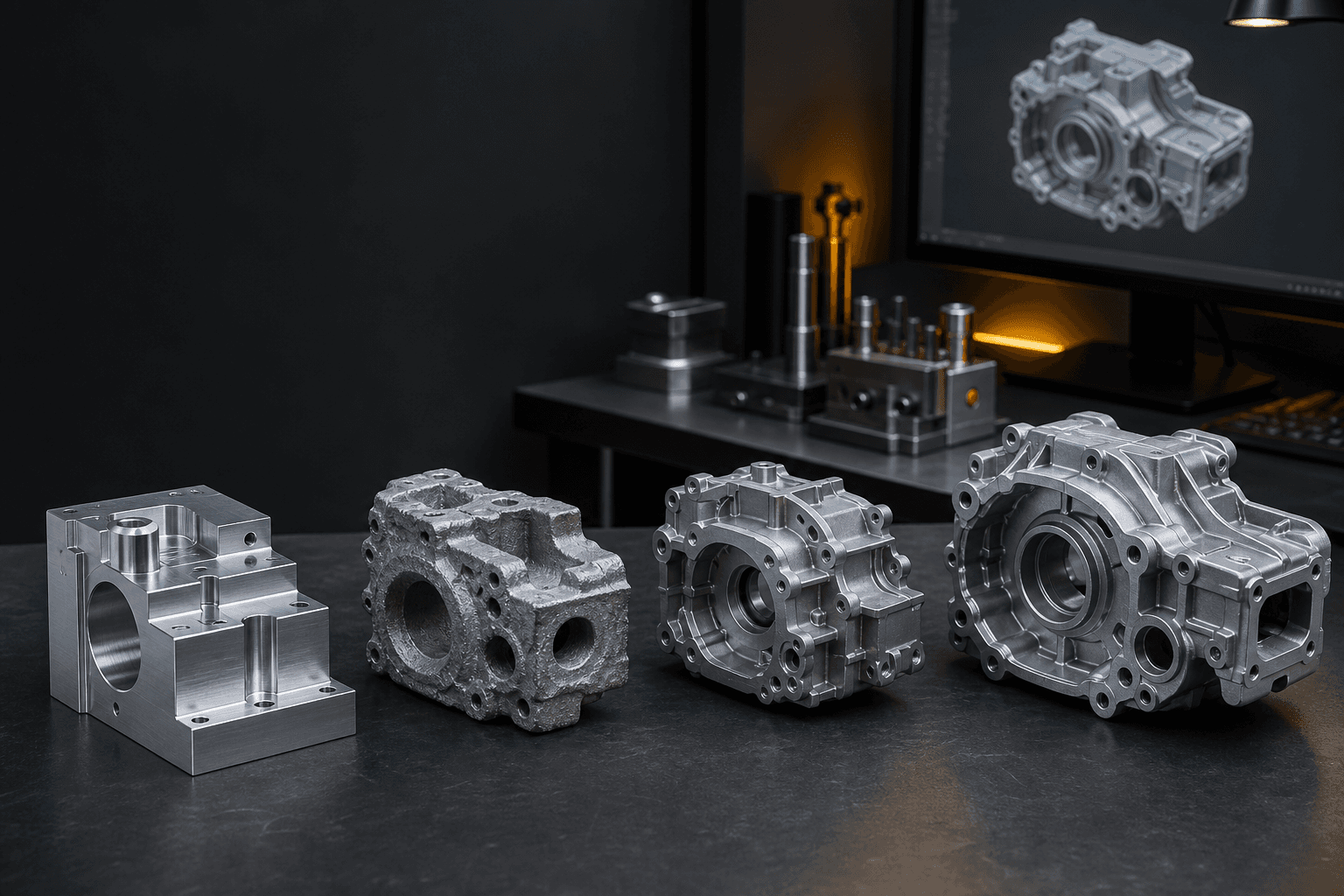
The key to magnesium-alloy prototyping is not “producing a shape as quickly as possible,” but rather using the right prototype to answer the right question. CNC-machined billets are suitable for verifying assembly and basic load-bearing behavior—but they cannot represent porosity, surface microstructure, or thin-wall fill characteristics of die-cast parts. Soft-tool die casting better approximates mass production, yet incurs higher cost and longer lead time.
First, Define What This Prototype Must Validate
- Form, fit, and ergonomics only;
- Material stiffness, strength, or thermal performance;
- Thin-wall die-casting, boss integrity, and gating/venting design;
- Coating adhesion, appearance, and galvanic corrosion resistance;
- Leak-tightness, drop performance, fatigue life, or full-system durability;
- Production takt time, yield rate, and cost.
Different objectives often require different prototypes—do not expect a single batch of CNC parts to support all conclusions.
Four Common Prototyping Routes
| Route | Best Suited For | Key Deviations |
|---|---|---|
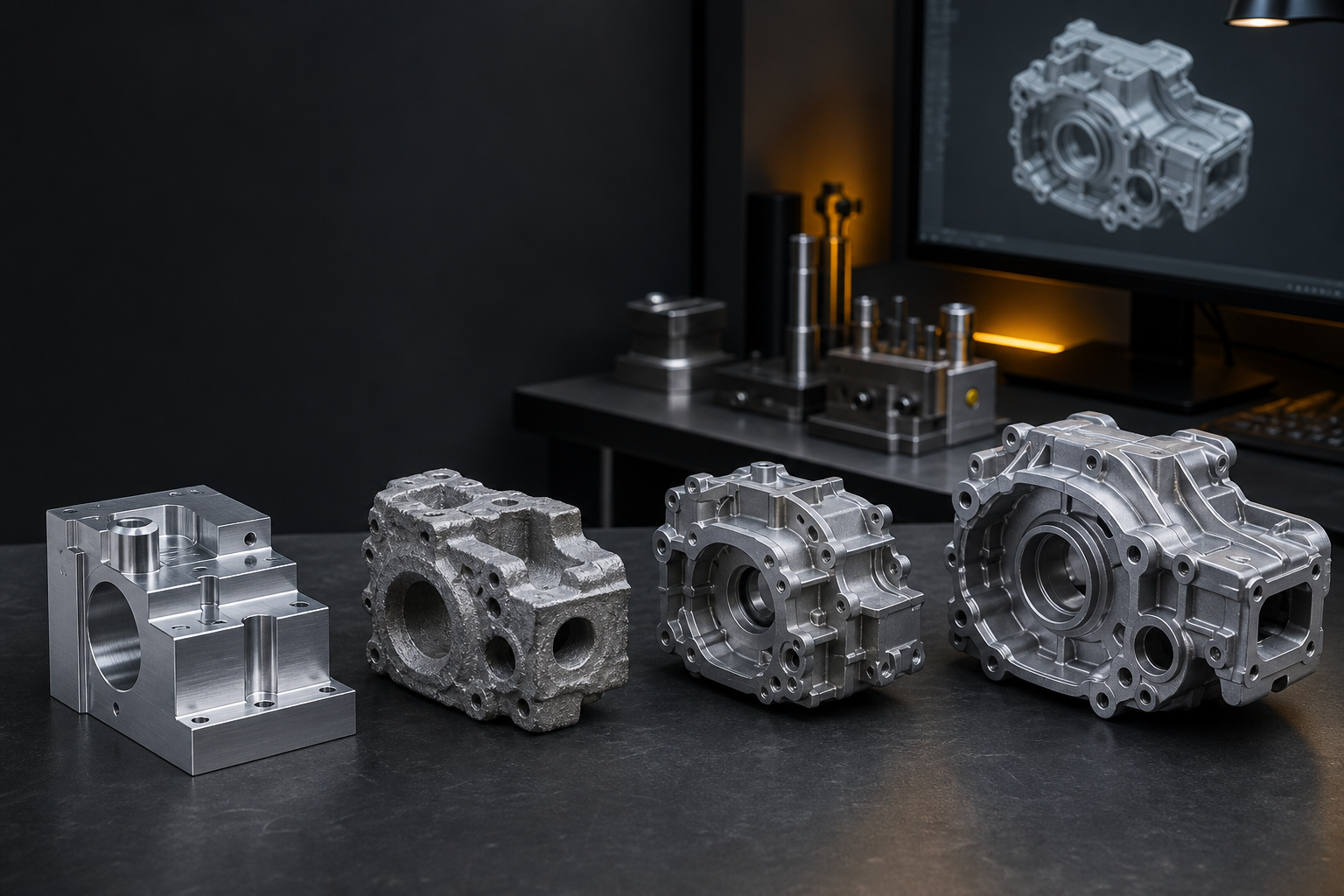
| Plate or Billet CNC Machining | Dimensional accuracy, assembly, rapid structural iteration | Microstructure and porosity do not represent die-cast parts |
| Sand or Gravity Casting | Cast material properties, thicker sections, low-volume validation | Surface finish, dimensional precision, and thin-wall capability differ |
| Rapid or Soft-Tool Die Casting | Flow behavior and porosity trends close to production | Mold thermal balance and tool life may still differ |
| Production-Tool Die Casting Trial | Final DFM sign-off, cycle time, and quality approval | Highest upfront investment and highest cost for design changes |
Ensuring Prototype Conclusions Are Transferable
Every test report must explicitly state the prototype’s material grade, supply condition (e.g., T4, T6), manufacturing route, heat treatment, surface treatment, and known differences versus the production part. For sensitive tests—including fatigue, leak-tightness, and drop performance—re-validation on production-process parts is mandatory.
Conduct DFM During Prototyping
If the target process is die casting, avoid retaining CNC-only features in your prototype model—such as zero-draft deep cavities, sharp corners, or arbitrary wall thicknesses. Maintain both a “functional model” and a “production-ready DFM model” in CAD, clearly documenting which deviations are intentional prototyping compromises.
Information Required for Quotation
3D model + critical 2D drawings, GD&T specifications, quantity, candidate alloys (e.g., AZ31B, ZK61), surface finish requirements, validation objectives, delivery timeline, approved alternative routes, and intended mass-production process. Suppliers should also disclose any material-grade discrepancies between prototype and production—rather than merely promising “equivalent material.”
Frequently Asked Questions
If CNC prototypes pass strength testing, will production die-cast parts automatically pass?
No. Differences in microstructure, defect distribution, surface layer, and anisotropy mean production parts must be re-validated independently.
When is soft-tool die casting justified?
When thin-wall fill, internal soundness, leak-tightness, or die-cast surface quality are high-risk items—and committing directly to production tooling carries excessive financial or schedule risk—soft-tool die casting helps de-risk critical decisions.
Submit your validation goals, target quantity, and planned mass-production route via Contact Us. We’ll recommend appropriate prototype materials and processes based on our Product Portfolio.
Sources
ASM Handbook, Volume 15 — Casting NADCA Product Design for Die Casting