How to Select Magnesium Alloy Sacrificial Anodes: A Procurement Guide for Freshwater, Soil, and Equipment Protection
Covers application environments, alloy types (e.g., AZ31B, ZK61), shapes, backfill materials, lead wires, installation methods, and quality acceptance criteria—emphasizing specification-driven procurement over weight-based selection.
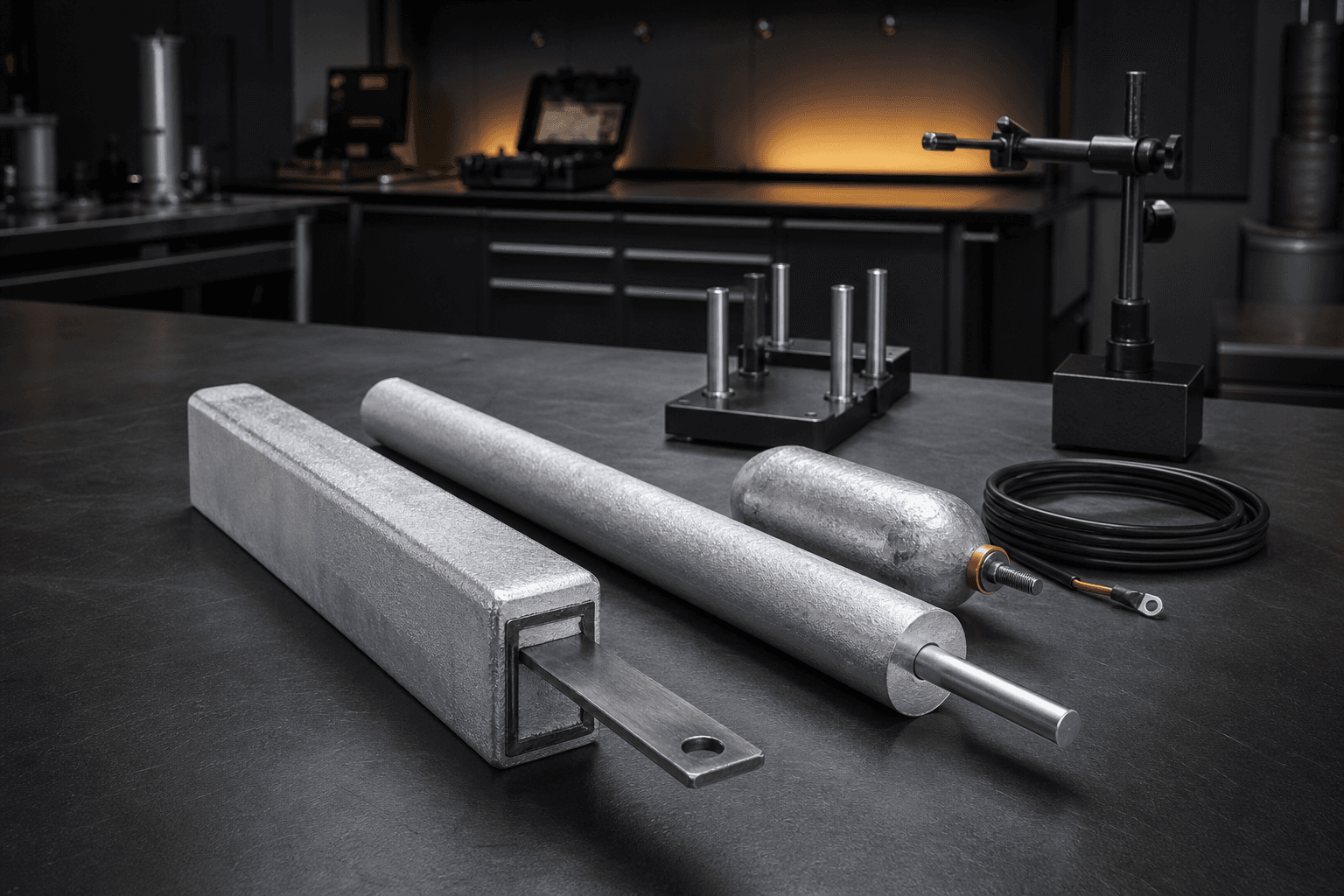
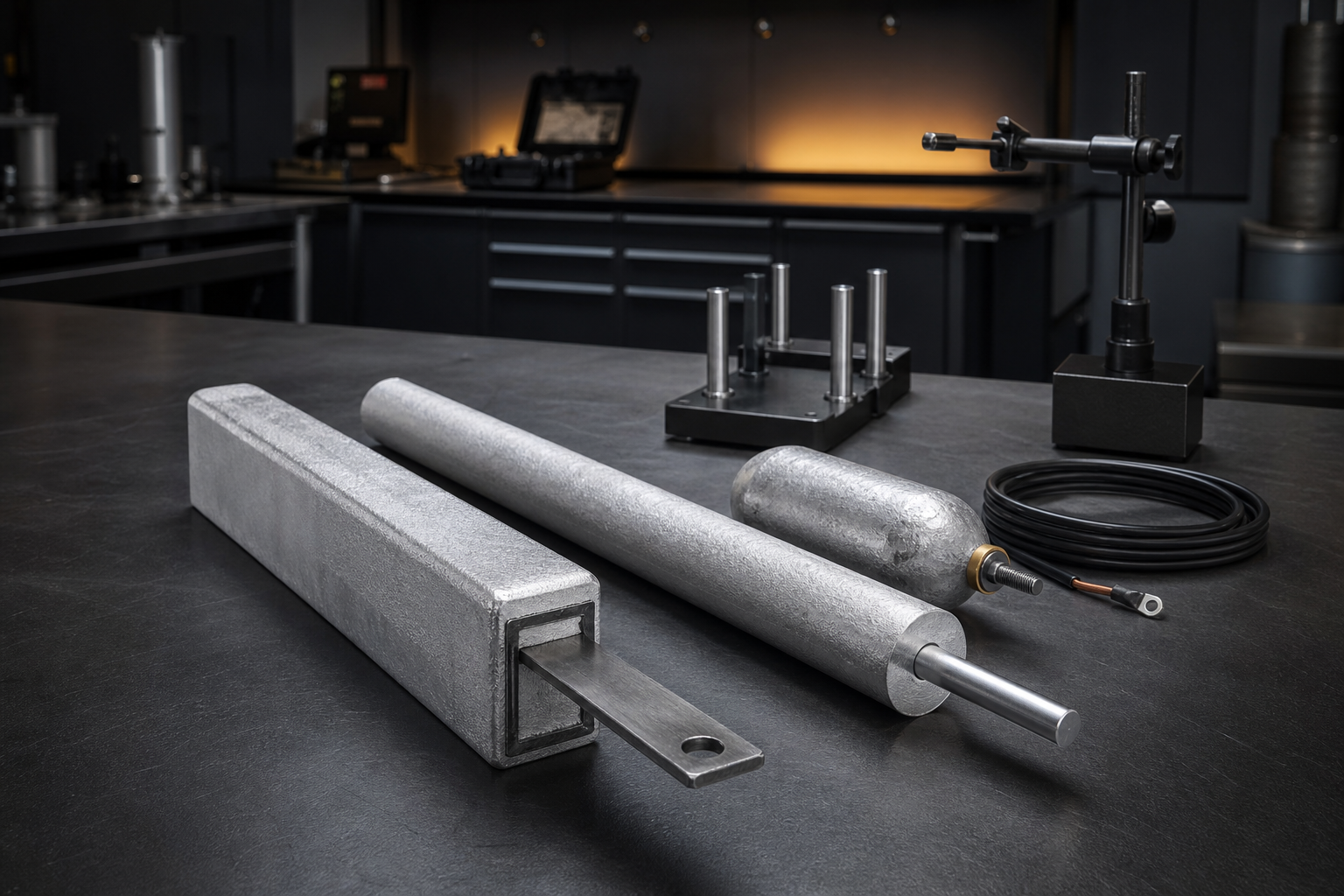
A magnesium sacrificial anode is not simply “the heavier, the better.” It must deliver sufficient driving voltage and current in the target environment while exhibiting predictable consumption, reliable electrical connectivity, and a well-defined service life. Requirements differ significantly across freshwater systems, underground pipelines, storage tanks, hot-water equipment, and soil environments—procurement should be driven by cathodic protection design, not material habit.
Why Magnesium Anodes Protect Steel Structures
When electrically connected to a protected steel structure and immersed in a conductive medium, a magnesium alloy anode preferentially undergoes electrochemical dissolution, delivering protective current to the steel. Effectiveness depends on potential difference, medium resistivity, anode surface condition, installation location, and circuit continuity.
Magnesium anodes offer high driving voltage and are commonly used in freshwater or soil environments. For seawater or other low-resistivity media, selection among magnesium, aluminum, or zinc anodes must be based on cathodic protection design and lifetime calculations—not material convention alone.
Five Key Inputs for Selection
- Protected Structure: Material type, surface area, coating condition, and design service life;
- Environment: Resistivity, temperature, and chemical composition of soil, freshwater, hot water, or other electrolytes;
- Protection Criteria: Applicable standards, target potential, and monitoring methodology;
- Installation Constraints: Buried, suspended, threaded, tank-mounted, or accessible replacement space;
- Maintenance Strategy: Frequency of measurement, shutdown capability for replacement, and residual anode assessment.
Alloy, Shape, and Backfill Must Be Matched
Different magnesium anode alloy systems (e.g., AZ31B, ZK61) exhibit distinct open-circuit potentials, current efficiencies, and consumption profiles. Standard and high-potential grades cannot be distinguished visually—specify applicable standards, chemical composition, and electrochemical performance requirements explicitly in purchase orders.
Rod, block, strap, or custom-cast geometries influence current distribution and installation feasibility. Pre-packaged buried anodes require dedicated backfill to optimize local environment and current output; backfill composition, moisture content, and compaction method must comply with design specifications—not serve as generic soil substitutes.
Lead Wires and Internal Cores Are Common Failure Points
Even with compliant anode material, failure of welds, internal steel cores, seals, or terminal connections can interrupt the protective circuit. Procurement and acceptance must verify:
- Positioning and continuity of steel cores or inserts;
- Cable gauge, length, and insulation integrity;
- Mechanical strength and sealing of lead-wire connections;
- Terminal type and field-installation compatibility;
- Electrical continuity testing between anode and lead wire;
- Protection against bending or pull-out during handling.
Quality Documentation Must Include
- Applicable standard, alloy grade (e.g., AZ31B, ZK61), and chemical composition;
- Net weight per unit, dimensions, and allowable tolerances;
- Electrochemical performance data or representative test reports;
- Casting appearance, crack/porosity limits, and core requirements;
- Lead wire, terminal, and continuity test results;
- Batch/heat number and traceability markings;
- Backfill composition and packaging status for pre-packaged units;
- Installation, storage, and safety instructions.
Commissioning and Monitoring Are Mandatory Post-Installation
Anode quantity and placement must be determined by design calculation. After installation, verify electrical continuity, structural isolation from ground (if specified), protection potential, and test station functionality. During operation, periodic measurement of potential, current, and environmental changes is essential to confirm system performance within design parameters.
Sacrificial anodes deplete over time—design life does not equate to maintenance-free operation. Coating damage, environmental shifts, stray currents, or newly connected structures may alter current demand.
Frequently Asked Questions
Do High-Potential Magnesium Anodes Always Last Longer?
Not necessarily. Higher driving voltage may increase current output—and accelerate consumption. Service life depends on capacity, efficiency, environment, and actual current demand.
Can I Compare Anodes Solely by Weight?
No. Alloy grade, effective net weight, core configuration, lead wires, backfill, electrochemical performance, and documentation all impact real-world value.
How Do I Confirm an Anode Is Working After Installation?
Measure protection potential using an appropriate reference electrode and standardized test method; verify electrical continuity and system current. Visual inspection alone cannot confirm performance.
For magnesium alloy sacrificial anodes or custom-shaped solutions, visit our Product Center and contact us at Contact Us with details on your electrolyte, structure dimensions, design life, and applicable standards.
Sources
ASTM B843 — Standard Specification for Magnesium Alloy Anodes for Cathodic Protection AMPP/NACE SP0169 — Control of External Corrosion on Underground or Submerged Metallic Piping Systems