Are Magnesium's Flammability, Corrosion and Formability Problems Solved?
Magnesium's fire, corrosion and forming risks are manageable but not universally solved. This guide separates solid parts from dust and melt hazards, explains corrosion-system design, and provides a buyer qualification matrix.
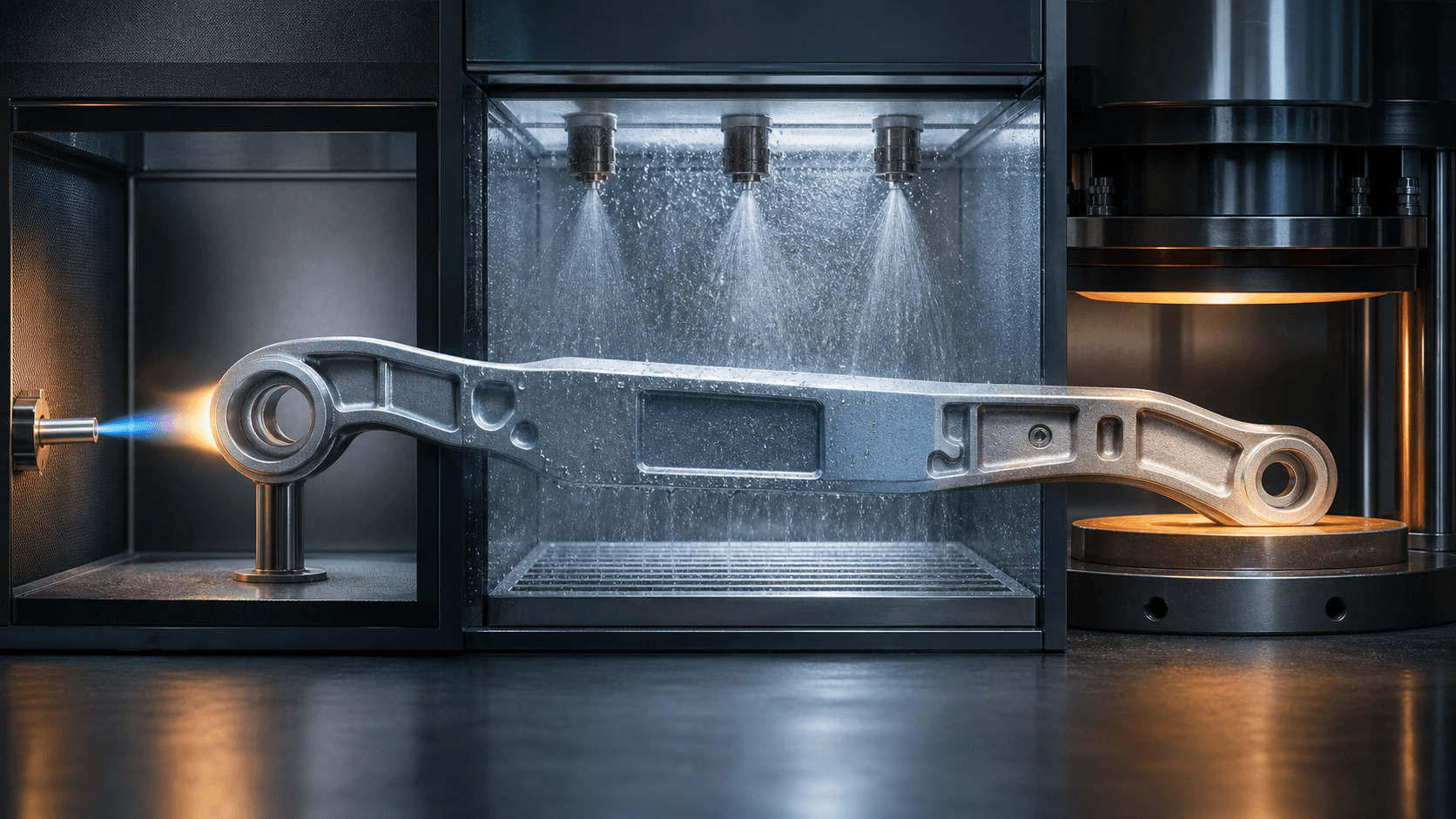
Executive answer
The three common objections to magnesium—flammability, corrosion and difficult forming—are manageable, not universally solved. Risk depends on material form, alloy chemistry, purity, geometry, temperature, manufacturing process, coating and service environment.
A solid casting in service must not be assessed like fine machining dust. A coated high-purity alloy must not be assessed like bare contaminated metal. A warm-formed sheet must not be judged by an unsuitable room-temperature bend test.
1. Flammability: form and scenario matter
Bulk magnesium components generally require very different ignition conditions from chips, dust, turnings or molten metal. The main industrial risks arise during melting, grinding, machining and dust collection.
Controls include:
- segregated, suitable dust collection and housekeeping;
- ignition-source control and bonding/grounding where applicable;
- dry, approved extinguishing agents for combustible-metal scenarios;
- melt protection, temperature control and leak containment;
- separate handling of wet chips, fines and incompatible materials;
- worker training and an emergency plan aligned with NFPA 484 or local rules.
Calcium- or rare-earth-containing alloys may improve ignition resistance, but “flame resistant” is not “fireproof.” Verify the exact alloy, specimen geometry and test method.
2. Corrosion: purity, design and coating work together
Magnesium is electrochemically active, and small amounts of Fe, Ni or Cu impurities can strongly affect corrosion. Modern alloy control, surface preparation and coatings improve performance, but design mistakes can still defeat them.
A robust system controls:
- alloy chemistry and impurity limits;
- water traps, crevices and drainage;
- galvanic contact with steel, copper-rich alloys and carbon fiber;
- conversion or anodic treatment, primer and topcoat;
- edge, thread and machined-surface coverage;
- coating damage inspection and repair.
Salt spray is useful for process comparison, but it does not alone predict years of mixed service. Validate the complete assembly under realistic humidity, salt, fluids and temperature cycling.
3. Forming and machining: choose the right route
Conventional magnesium sheet has limited room-temperature formability because of its HCP crystal structure. Practical solutions include warm forming, texture control, grain refinement, suitable wrought alloys and, in some cases, Mg–Li systems.
Die casting avoids many sheet-forming constraints and can integrate ribs, bosses and thin walls. Machining can be efficient, but chips and dust require fire-safe collection, conservative tool/process control and disciplined housekeeping.
The question is not “Is magnesium hard to process?” but “Is the selected alloy-product-form-process combination mature for this geometry and volume?”
Risk matrix
| Issue | Most exposed condition | Effective controls | Evidence to request |
|---|---|---|---|
| Ignition | dust, fines, molten metal | collection, housekeeping, melt protection, approved extinguishing media | hazard assessment, equipment design, drills |
| Corrosion | wet galvanic joints, damaged coating | purity, isolation, drainage, multilayer coating | assembly corrosion and coating tests |
| Formability | complex cold-formed sheet | warm forming, alloy/texture selection, redesigned geometry | forming-limit, bend and prototype data |
| Machining | fine dry chips and dust | extraction, segregation, tool and fire controls | process FMEA, EHS records, trials |
Buyer qualification checklist
- exact alloy designation, chemistry and product form;
- mechanical properties at service temperature;
- ignition or fire test appropriate to the material form;
- dust and molten-metal risk assessment for production;
- complete corrosion stack and galvanic map;
- forming-limit or casting-process data;
- joining, insert and coating-repair procedure;
- representative component durability testing;
- lot traceability and special-process controls;
- change-notification and requalification rules.
Frequently asked questions
Are solid magnesium parts easy to ignite?
They behave very differently from powder, dust and thin chips. Any answer must state the form, heat source and test conditions.
Can coatings completely eliminate corrosion?
No coating is a substitute for alloy purity, galvanic isolation, drainage and maintenance.
Can magnesium sheet be cold formed?
Some alloys and geometries can, but many conventional systems benefit from warm forming. Validate the exact thickness, temper and bend radius.
Are all three problems solved for mass production?
They are controlled successfully in many applications, but every new part still needs product- and process-specific validation.
Procurement takeaway
Do not accept “magnesium burns” or “all modern magnesium is safe” as complete answers. Request scenario-specific evidence and qualify the full material, process, coating and assembly system.
Sources
NFPA 484 Standard for Combustible Metals ISO 9227 Corrosion tests in artificial atmospheres — Salt spray tests ASTM B117 Standard Practice for Operating Salt Spray Apparatus FAA Report DOT/FAA/AR-11/31, Flammability of Magnesium Alloys https://www.fire.tc.faa.gov/pdf/11-31.pdf ASM Specialty Handbook: Magnesium and Magnesium Alloys