WE43 vs. Elektron 21: A Technical Selection and Qualification Guide for High-Performance Magnesium Alloys
A comparative analysis of WE43 and Elektron 21—rare-earth magnesium alloys—across product form, temperature performance, corrosion resistance, casting vs. wrought processing routes, heat treatment, data sources, and qualification requirements.
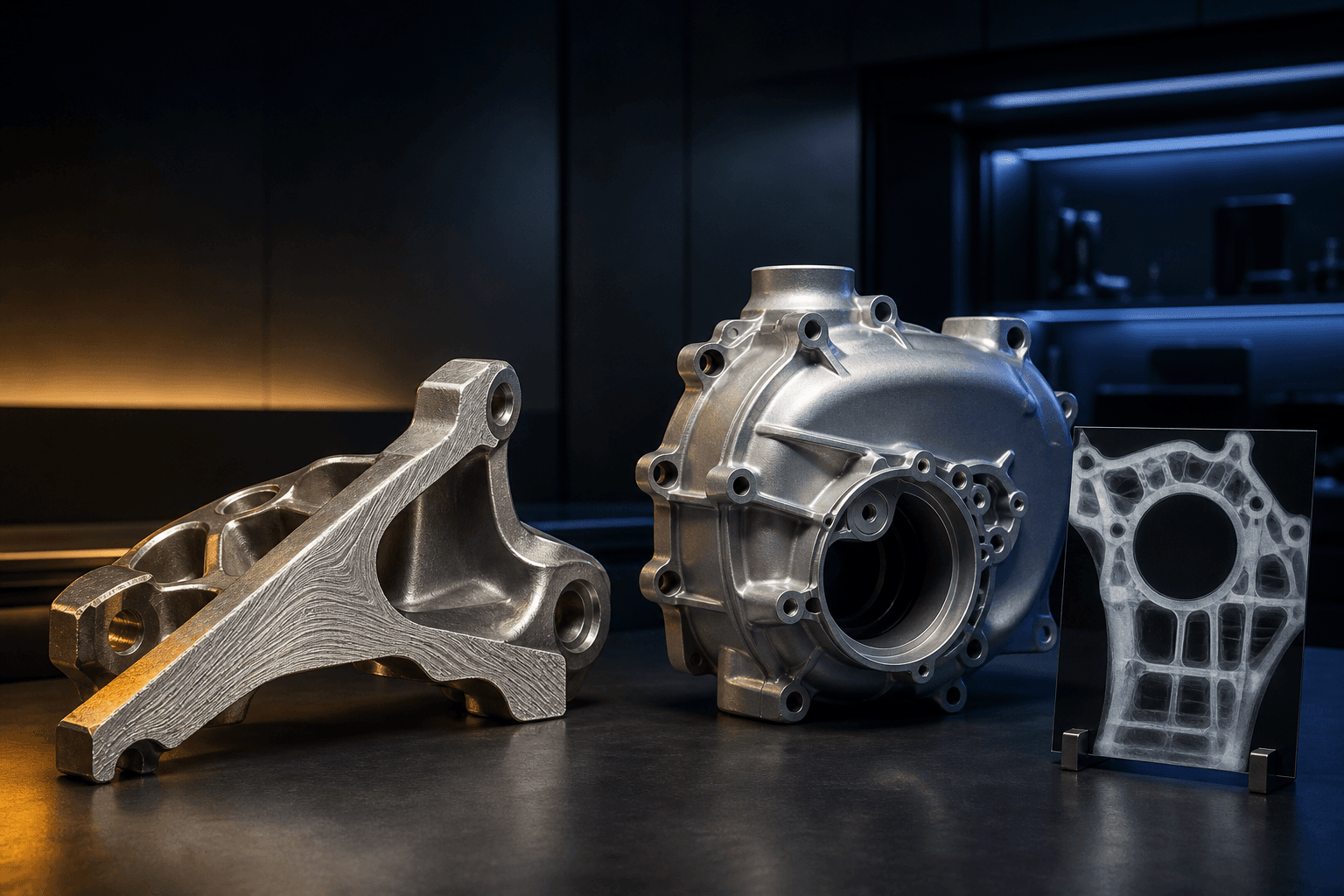
Both WE43 and Elektron 21 frequently appear on candidate material lists for aerospace, motorsport, and high-temperature lightweighting applications—but they are not interchangeable generic grades based solely on room-temperature strength. Material selection must be grounded in product form, manufacturing route, operating temperature, corrosion environment, heat treatment capability, and availability of qualified data.
Engineering Positioning First
WE43 is a high-performance magnesium alloy system containing yttrium and rare-earth elements, available in castings, forgings, extrusions, and under investigation for additive manufacturing. Elektron 21 is typically employed in high-integrity castings, with emphasis on castability, elevated-temperature performance, and corrosion resistance. Specific composition, condition, and mechanical properties must be verified against applicable specifications and supplier-qualified data.
Why Simple Ranking Is Not Valid
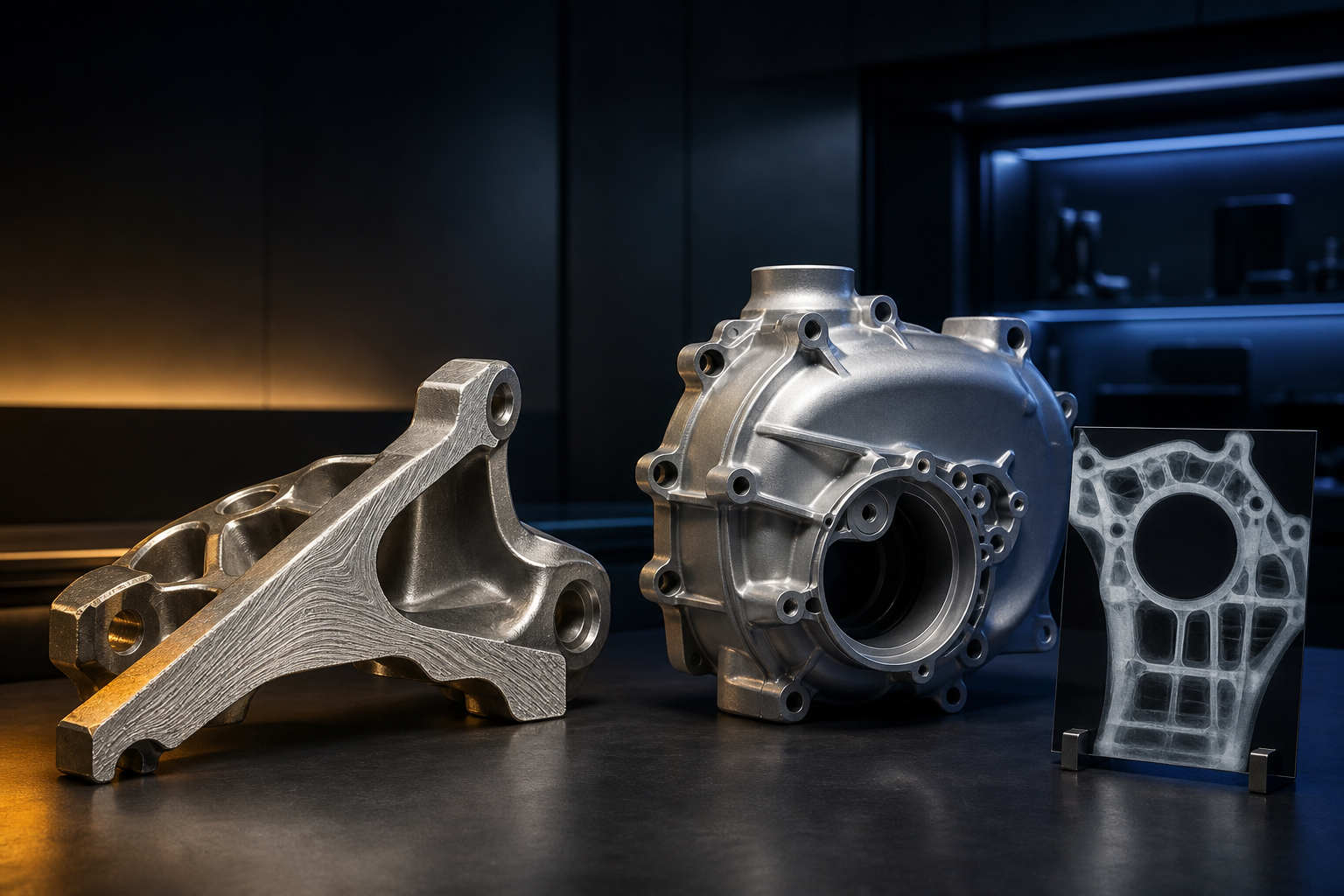
The same alloy grade exhibits vastly different microstructures and defect populations when produced via sand casting, investment casting, forging, or additive manufacturing. Heat treatment windows, section thickness, and sampling orientation significantly influence strength, elongation, creep resistance, and fatigue life. Design data must align precisely with the final production process.
Six Key Comparison Criteria
- Product Form & Dimensions: Can the supplier consistently deliver the required casting, forged billet, or plate/rod stock?
- Temperature Profile: Duration and magnitude of continuous service temperature, short-term peak temperature, and concurrent mechanical loading;
- Dominant Failure Mode: Yielding, fatigue, creep, corrosion, or dimensional stability?
- Manufacturing Maturity: Capabilities in tooling, gating, heat treatment, machining, and repair;
- Data & Specifications: Availability of design allowables, process specifications, and customer-approved data sources;
- Supply Chain Risk: Raw material availability, minimum order quantity, lead time, dual sourcing, and change control.
Corrosion and Surface Performance Cannot Be Deferred
Even rare-earth magnesium alloys require environmental-specific protection strategies. Galvanic coupling with dissimilar metals, drainage design, coating damage, and repair zones often govern service life more critically than baseline salt-spray test results. Surface treatments must also satisfy functional requirements—including bonding, electrical conductivity, and fatigue integrity.
Qualification Recommendations
Begin with base alloy qualification testing; then validate thickness effects, heat treatment uniformity, internal quality, and directional mechanical properties for the target process; followed by representative component-level testing for fatigue, creep, corrosion, and joining performance; and conclude with part- and system-level durability validation. For critical applications, freeze the qualified supplier, validated process window, and inspection plan early.
Frequently Asked Questions
Can WE43 data be applied across all product forms?
No. Before citing any data, confirm alignment with the specific process, condition, section thickness, sampling direction, and statistical basis.
Can Elektron 21 directly replace conventional cast magnesium alloys?
A full reassessment is required—including mold design, heat treatment, machining parameters, coating systems, cost structure, and qualification scope. Simply substituting the material code is insufficient.
For expert support selecting high-performance magnesium alloys, submit your temperature profile, loading conditions, and product form via Contact Us, and explore available materials in our Product Center.
Sources
SAE AMS4427 — Magnesium Alloy, Sand Castings, WE43 ASTM B80 — Magnesium-Alloy Sand Castings